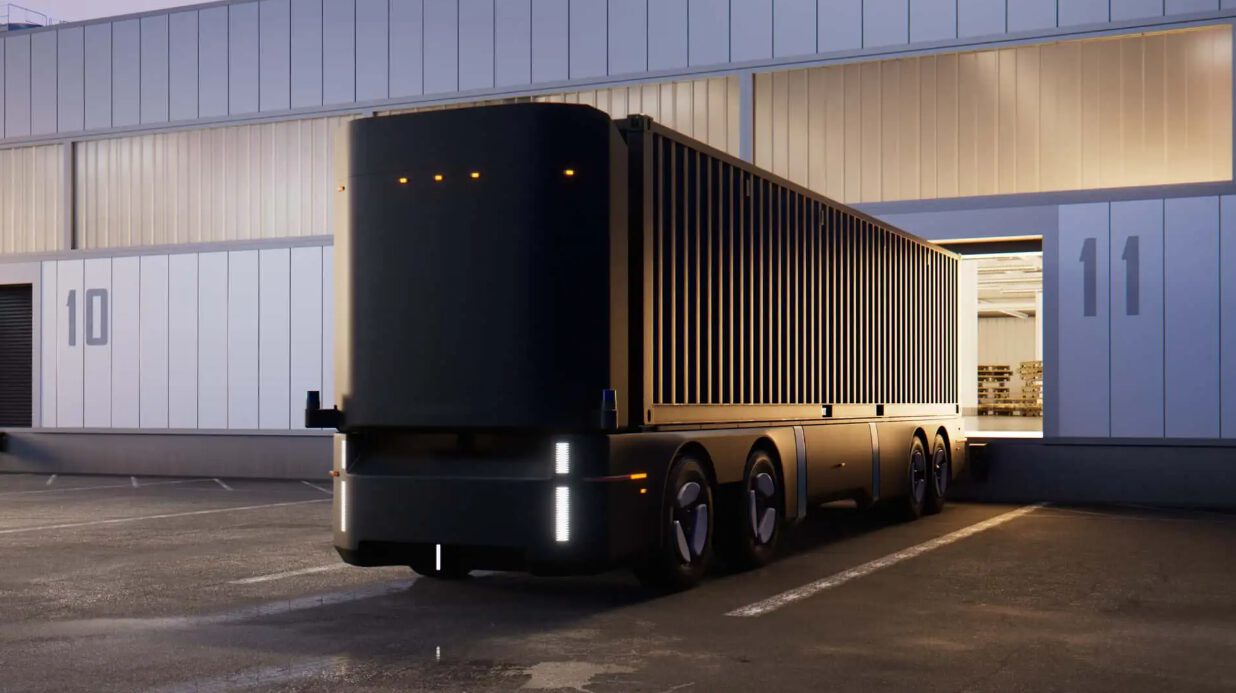
Traditional freight haulers waste space and weight on driver compartments that autonomous vehicles don’t need. The Humble Hauler eliminates this inefficiency entirely, creating a cab-less Class 8 platform that’s 20% lighter than conventional semis while delivering 360-degree sensor coverage. Think of it as turning a semi-truck inside out—all the intelligence moves to the trailer, while dual e-axles provide 200 miles of electric alternatives. This is a fundamental reimagining of how freight moves through controlled environments like ports and warehouses.
AI That Actually Reasons Through Problems
Vision-language-action models replace the rigid programming that limits other autonomous trucks.
Most autonomous freight systems follow predetermined rules, like a GPS that panics when construction appears. Humble Robotics built something different: vision-language-action AI models that can reason through novel scenarios at loading docks. Your typical robot follows scripts, but the Hauler’s system processes visual information, understands context, and makes decisions—reportedly enabling human-free unloading operations that adapt to unexpected situations. The modular “lock and twist” chassis handles everything from 40-foot containers to concrete mixers, adjusting configurations faster than a Transformer toy.
Stealth Startup Emerges With Serious Backing
Former Apple and Uber executives raised $24 million to tackle short-haul autonomy first.
Humble Robotics surfaced from stealth mode in April 2026 with founder Eyal Cohen bringing experience from Apple, Uber, and autonomous driving company Waabi. Eclipse Ventures and Energy Impact Partners led the $24 million seed round, betting that controlled-environment autonomy will succeed before highway applications. The company built its first prototype in under six months and claims partnerships with unnamed logistics leaders for pilot programs. Sometimes the most interesting innovations happen in the least glamorous places—like moving containers between dock and railyard rather than cross-country routes.
Short-Haul Strategy Could Pay Off
Targeting warehouses and ports sidesteps the complexity that’s stalled highway autonomy.
While competitors chase the highway autonomy holy grail, Humble focuses on dock-to-dock operations where speeds stay under 55 mph and routes remain predictable. You know those massive container yards that look like giant Tetris games? That’s where this technology makes immediate sense. The electric powertrain eliminates fuel volatility while promising lower maintenance costs than diesel alternatives. For logistics managers watching labor shortages squeeze operations, autonomous haulers that work 24/7 without bathroom breaks suddenly look appealing—assuming the technology delivers on its promises.