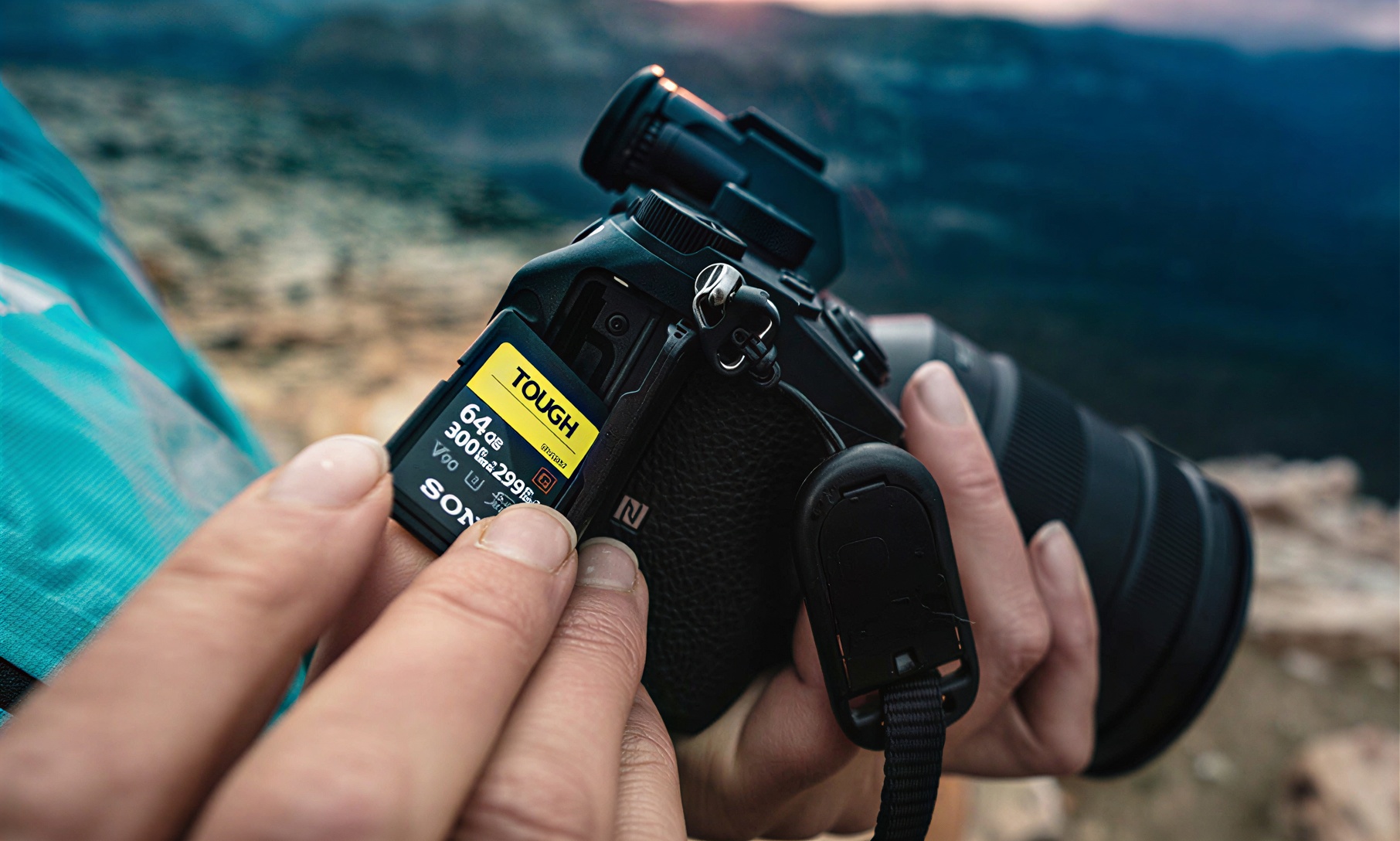
Your expensive camera just became a paperweight. Sony Japan suspended orders for nearly its entire memory card lineup effective March 27, 2026, citing “the global shortage of semiconductors” with no recovery timeline in sight. If you’re a professional photographer or videographer, the company just pulled the rug out from under your workflow—and blamed artificial intelligence for it.
The suspension hits where it hurts most. CFexpress Type A cards across all major capacities (240GB through 1920GB) are gone, along with CFexpress Type B models at 240GB and 480GB capacities. Virtually every SD card Sony makes has vanished from production too. Only the 960GB CFexpress Type B and some entry-level SF-UZ series SD cards remain in production.
Existing retail inventory stays available until depleted, but Sony won’t restock these products until manufacturing resumes. Translation: once current stock disappears from retailers like B&H Photo, you’re out of luck until further notice.
Memory card prices have already tripled in recent months, and the worst is yet to come. TrendForce forecasts DRAM contract prices will spike 90-95% this quarter, with NAND flash jumping 55-60%. That 128GB SD card you bought for $30 last year? Expect to pay north of $90 now—if you can find one. The pricing squeeze feels like trying to buy concert tickets from scalpers, except the scalpers are AI datacenters hoarding chips.
Enterprise customers building AI infrastructure have effectively outbid consumer electronics manufacturers for memory supplies. These datacenter operators treat NAND flash like rocket fuel—essential, expensive, and worth paying any price to secure. According to Sony’s official statement, “the global shortage of semiconductors (memory) and other factors” has made normal production impossible. Phison’s CEO warned that semiconductor shortages could force entire consumer electronics companies to suspend operations in 2026, making Sony’s preemptive retreat look almost strategic.
Your next camera purchase just got more complicated. Professional workflows that depend on high-capacity storage face genuine disruption, especially for cinema cameras and high-resolution photography requiring CFexpress cards. The suspension currently applies only to Sony Japan, but industry analysts expect similar constraints could spread globally if supply conditions deteriorate further.
Alternative manufacturers like SanDisk and Lexar might benefit from Sony’s absence—assuming they can secure their own chip supplies in this semiconductor cage match. The memory card crisis represents AI’s hidden tax on everyone else. As datacenters consume the chip supply chain’s capacity, consumer products become collateral damage.