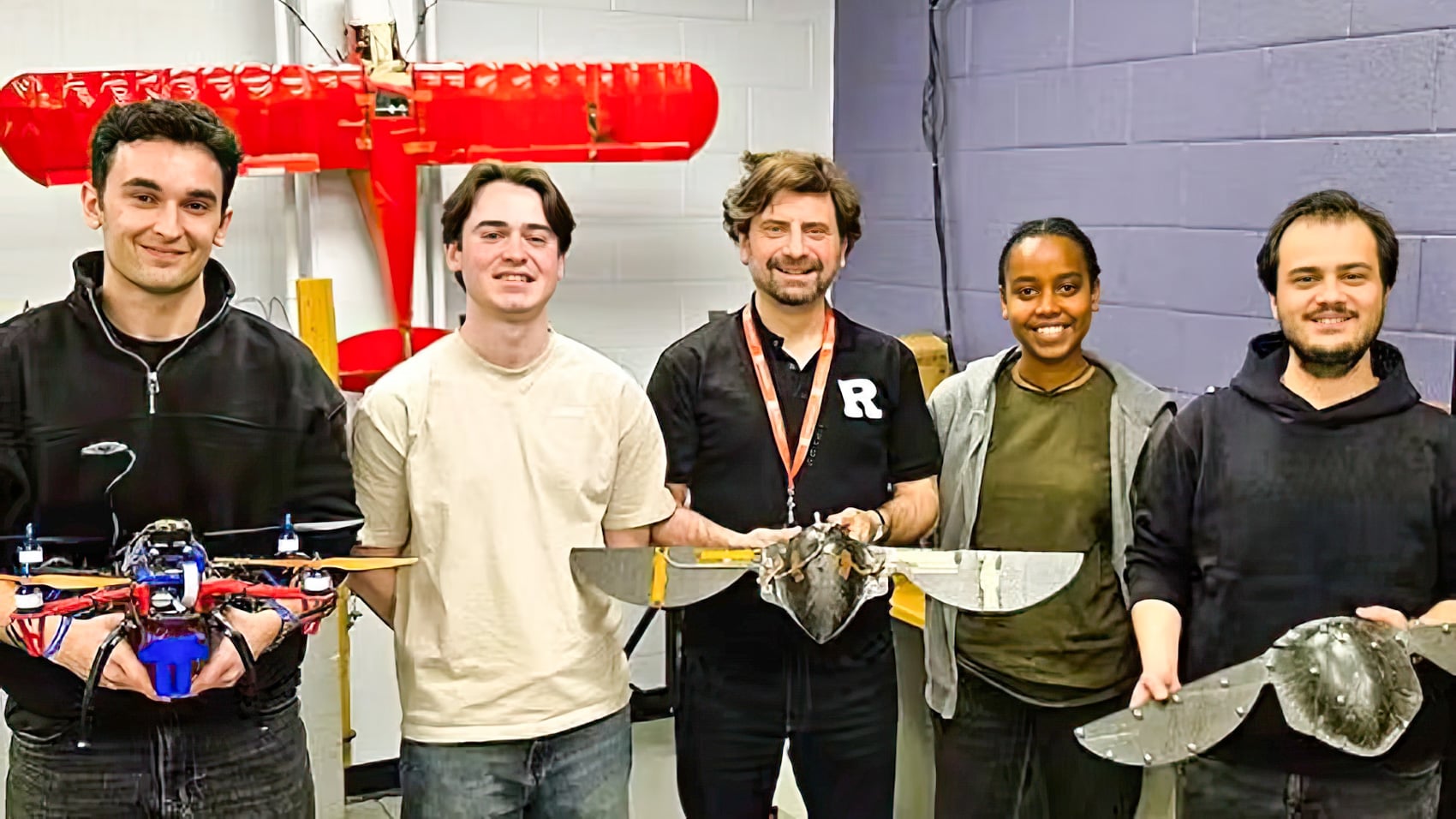
Traditional drones are mechanical nightmares—motors, gears, propellers all whirring away like angry insects. Engineers at Rutgers University think they’ve cracked the code with a “solid-state ornithopter” that flaps wings using nothing but electricity and smart materials. The catch? The materials needed to make it actually work don’t exist yet.
Artificial Bird Muscles Power Wing Movement
The secret lies in piezoelectric materials—think of them as artificial bird muscles that contract when you zap them with electricity. “We apply electricity to the piezoelectric materials… the whole composite flexes,” explains Onur Bilgen, the Rutgers professor leading this research. His team layers Macro Fiber Composites with carbon fiber, creating wings where carbon acts as “feathers and bone” while the piezoelectric elements serve as “muscles and nerves.” No motors, no gears, no mechanical parts that break.
Perfect for Tight Spaces Where Propellers Fail
This approach promises serious advantages over quadcopters in cluttered environments. Flapping wings naturally handle turbulence and obstacles better than spinning rotors—imagine a drone that could navigate collapsed buildings during search-and-rescue missions or weave between tree branches for environmental monitoring.
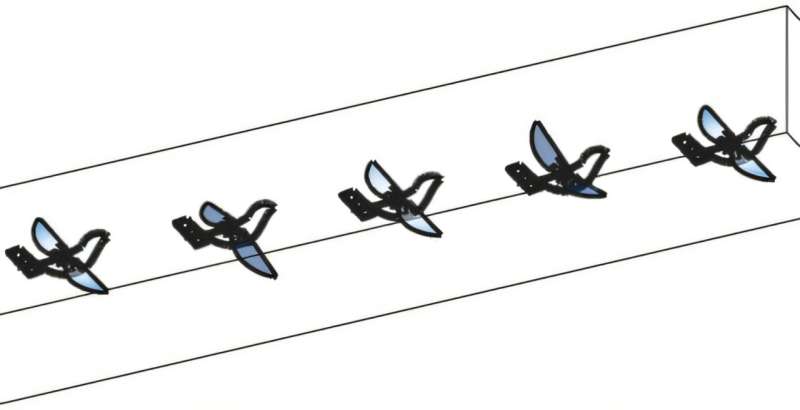
Urban package delivery becomes more feasible when your drone won’t decapitate pedestrians with exposed propellers. The “mechanism-free” design also means fewer failure points and potentially longer operational flight.
Great Idea Meets Material Science Reality Check
Here’s where engineering ambition crashes into physics limitations. Bilgen’s team published their findings in Aerospace Science and Technology, proving the concept works—in computer simulations. “We’ve scientifically demonstrated… feasibility of designs not yet physically possible,” Bilgen admits.

Current piezoelectric materials simply can’t generate enough force to lift a drone off the ground. They’ve essentially designed the perfect flying machine for materials that might exist someday.
Betting on Future Materials to Exceed Nature
Bilgen isn’t just dreaming about better drones. “We want to exceed what nature does,” he says, envisioning applications beyond flight—like adaptive turbine blades that adjust automatically to wind conditions for renewable energy efficiency. The research represents genuine innovation in bio-inspired engineering, even if it’s currently trapped in computational models. You’ll see these motor-free aircraft when materials science catches up with the vision. Based on typical advancement cycles, that could be five years or fifteen.