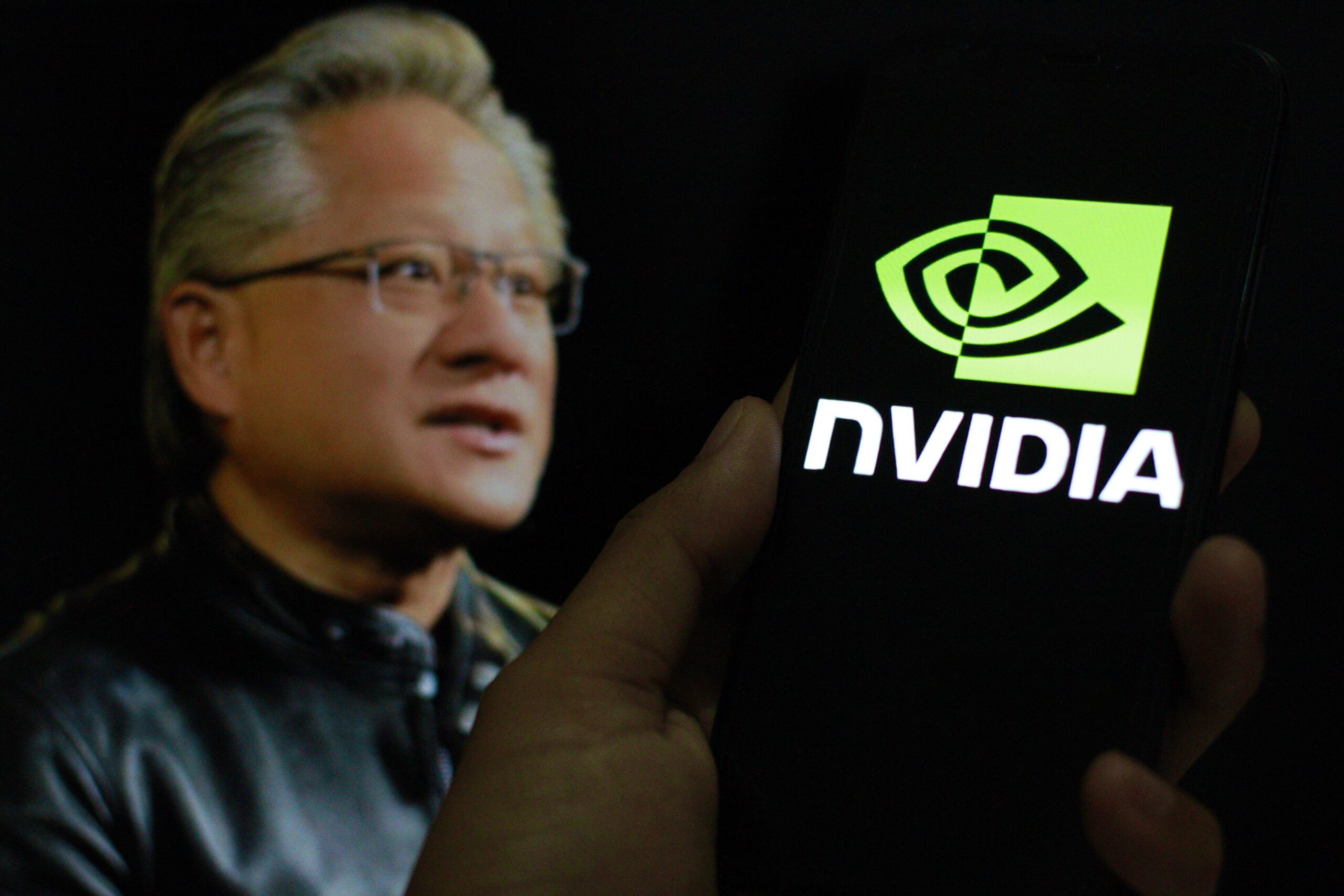
Jensen Huang just declared artificial general intelligence “achieved” on Lex Fridman’s March 22nd podcast, responding to Fridman’s definition of AGI as an AI capable of starting, growing, and running a successful tech company worth over $1 billion. The Nvidia CEO’s reasoning reveals how far we actually are from the real thing. His qualifying asterisk—”not forever”—transforms this bold AGI announcement into something closer to acknowledging really good chatbots that might briefly hit viral success.
Huang’s star example? OpenClaw, the open-source AI agent platform for local deployment that could theoretically create viral apps reaching billions of users. Think of it like those overnight TikTok sensations that dominate your feed for three weeks before vanishing completely. Sure, these AI systems might generate the next Flappy Bird or Among Us clone, potentially enabling services used by billions briefly like dot-com era hits. Yet calling temporary viral success “general intelligence” stretches the definition beyond recognition when most fade after months.
The Nvidia CEO’s most revealing moment came when discussing scale and complexity. “The odds of 100,000 of those agents building Nvidia is zero percent,” he stated. This admission demolishes his own AGI claim more effectively than any critic could. If your artificial general intelligence can’t handle the complex, sustained planning required to build a major corporation, you’re describing sophisticated automation, not human-level cognition capable of long-term planning at scale.
Meanwhile, at Nvidia’s GPU Technology Conference on March 19th’s All-In Podcast, Huang pushed a different narrative about AI productivity. He’d be “deeply alarmed” if engineers earning $500,000 didn’t consume $250,000 in AI tokens, comparing it to forgoing essential CAD tools. Nvidia is allocating $2 billion for team token access, potentially tying it to compensation. This internal mandate reveals the gap between public AGI declarations and private recognition that current AI remains a powerful but limited assistant technology.
Your takeaway? When tech leaders announce breakthrough achievements, examine their own qualifying statements. Huang’s “AGI” performs parlor tricks and creates disposable apps, not the sustained, complex reasoning that defines human intelligence. Real AGI won’t need asterisks or expiration dates—and its creators won’t need to force adoption through corporate mandates that treat AI consumption as a productivity metric.