Premature tire replacement can cost $500-plus, but these warning signs help you catch alignment problems early. Replacing a full set of tires before their time feels like flushing money down the drain. Yet that’s exactly what happens when your wheels slip out of alignment—those precise angles that keep rubber meeting road evenly. According to Bridgestone research, even a tiny 0.17-inch misalignment can slash tire life by 25%. Your car broadcasts distress signals long before you’re shopping for emergency replacements, if you know what to watch for. Smart DIY car fixes can help with some maintenance, but alignment requires professional attention.
The Steering Wheel Tells All
Two driving behaviors reveal front-end alignment issues that worsen with every mile.
When your steering wheel sits crooked while driving straight, your front wheels have gone rogue. This typically happens after smacking a pothole or getting too friendly with a curb. You’ll find yourself holding the wheel at an uncomfortable angle just to maintain your lane—a dead giveaway that alignment angles shifted.
Similarly, if your car pulls toward one side like it’s magnetically drawn to guardrails, misaligned wheels create uneven resistance. Check tire pressure first (the simple fix), but persistent pulling usually means your wheels are fighting each other instead of working together.
Physical Evidence on Your Tires
Uneven wear patterns and steering response reveal alignment damage before catastrophic failure.
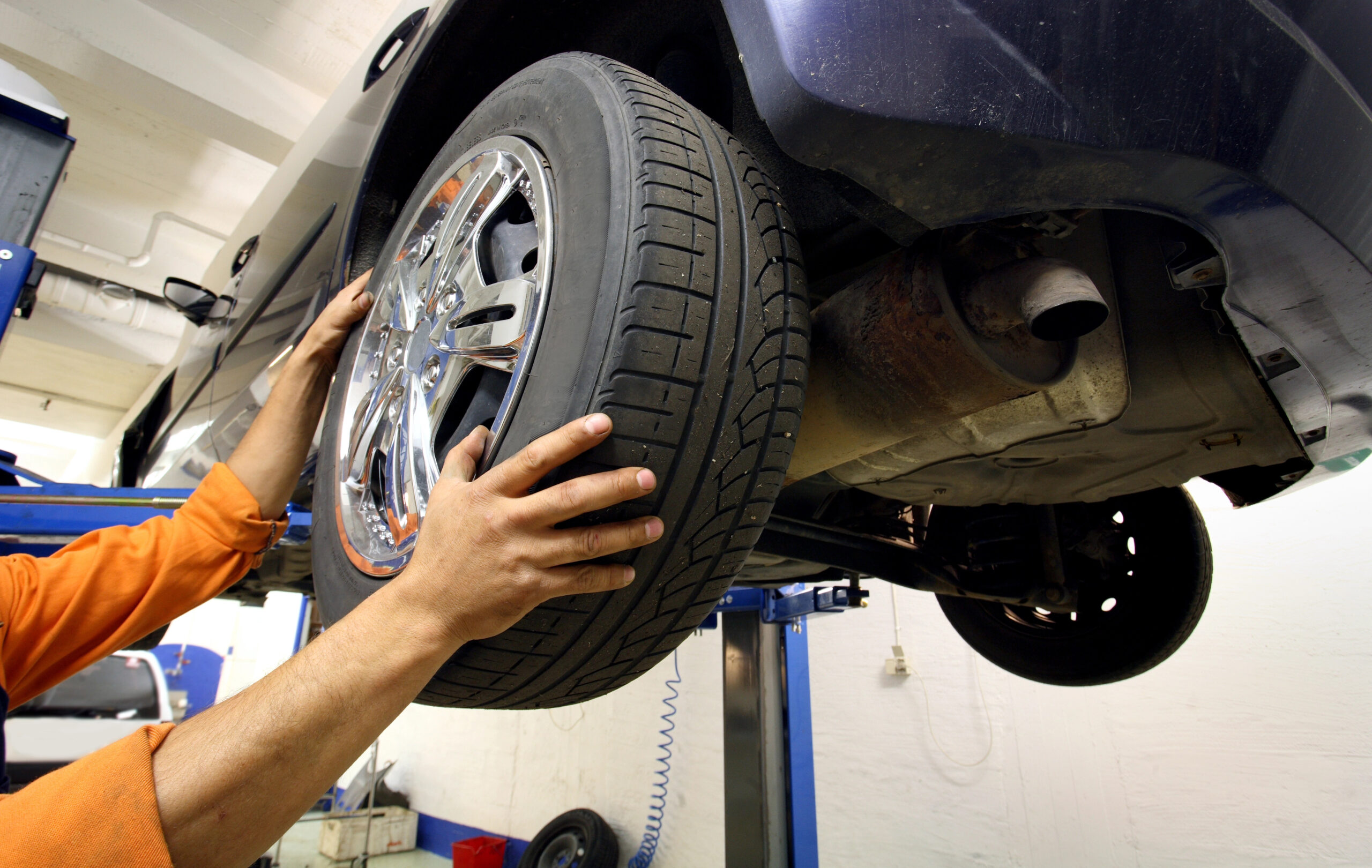
Walk around your car and examine tire treads during routine checks. Bald patches on inner or outer edges signal camber problems, while feathered wear patterns indicate toe issues. These aren’t just cosmetic concerns—they accelerate replacement timelines dramatically.
Inside the cabin, loose or vague steering response warns that tires aren’t maintaining consistent road contact. Highway driving feels floaty, lane changes become unpredictable, and your car seems disconnected from your inputs.
The Hidden Performance Drains
Fuel economy drops and tire noise increase when wheels work against your engine’s efforts.
Your ears pick up problems before your eyes do. Tires squealing during normal turns—not aggressive driving—indicate wheels scrubbing sideways instead of rolling forward smoothly.
Your gas pump notices alignment issues too. The U.S. Department of Energy reports that misalignment can drop fuel economy up to 10% as your engine compensates for wheels fighting each other. When rolling resistance increases, your wallet empties faster.
Don’t ignore recent pothole encounters or curb strikes. These impacts knock alignment angles out instantly, creating subtle shifts that compound into major problems over thousands of miles.
Most shops recommend alignment checks every 2-3 years, after impacts, or when installing new tires. Spending $75-150 on alignment service beats replacing tires prematurely—and keeps your car responding predictably when quick reactions matter most. Beware of unnecessary dealer upsells that inflate legitimate maintenance costs.