Alvin Toffler once wrote that “the illiterate of the 21st century will not be those who cannot read and write, but those who cannot learn, unlearn, and relearn.” Mastering AI communication isn’t just about keeping up—it’s about transforming how you work and create. These tools and techniques deliver real results, not marketing fluff. Whether you’re boosting productivity or impressing your boss, these methods are tested and proven.
9. AIM Framework

Structure your prompts like a pro and watch vague requests become laser-focused results.
Vague AI prompts are about as effective as herding cats. The AIM framework helps generative AI compute intent more precisely. Short for Actor, Input, and Mission, AIM structures your instructions so the AI delivers what you actually want. Think of it like this: you wouldn’t hand a contractor a hammer and yell, “Build me a house!”
Instead of vaguely asking AI to rewrite your resume, tell it: “You are the world’s most sought-after résumé editor. Here’s my resume. Give me a bullet list of 10 specific ideas.” AIM fine-tunes the robo-brain so it focuses on the task at hand, giving you more signal and less noise.
8. ChatGPT
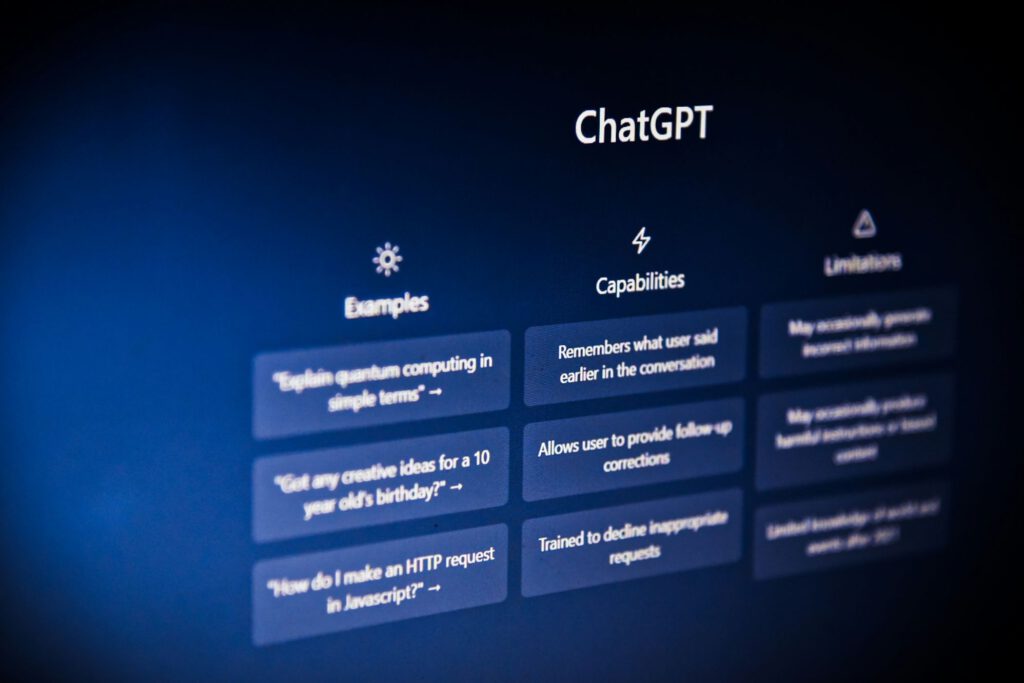
The reliable Honda Civic of AI models—perfect for learning the fundamentals.
Which Large Language Model should you start with? ChatGPT, OpenAI’s generative AI model, operates by predicting text through token probabilities. It’s like that reliable car you learned to drive in: not flashy, but dependable.
ChatGPT serves as your training ground for crafting prompts, testing limitations, and developing AI rhythm. With its mature foundation, you can practice the fundamentals without too many bells and whistles getting in the way.
7. Gemini

Google’s AI that plays nice with your entire Google ecosystem.
Gemini, Google’s AI model, shares ChatGPT’s approach of predicting the next word but tailors itself for Google’s sprawling empire. If you’re drowning in Google Docs, Gemini’s integration might feel like hitting the “easy button.”
Another foundational model for practicing your AI skills, Gemini’s core advantage is seamless integration into Google’s universe. It’s a natural fit for those already neck-deep in Google’s services.
6. Claude

The AI that excels in structured reasoning and keeps your projects running smoothly.
Claude, the AI model from Anthropic, shines in business scenarios requiring safe and helpful assistance. This isn’t just a language model—it’s designed to excel in structured reasoning, making it the choice when you need more than fast answers.
Imagine a project manager drowning in Gantt charts. Claude not only parses those charts but anticipates bottlenecks, suggests resource allocations, and drafts status reports while you grab coffee. With its focus on alignment, Claude offers AI that helps you sleep at night.
5. MAP Framework

Transform your AI from clueless dude to diagnostic genius with proper context.
Ever notice how AI sometimes sounds like your stoner roommate trying to explain astrophysics? The MAP framework builds AI context: M for Memory (conversation history), A for Assets (uploaded files), another A for Actions (tool use), and P for Prompt (instructions).
Think of MAP as seasoning for the AI’s bland palate, enhancing reasoning by grounding it in reality. Tell it, “Remember our conversation about that weird rash? Here’s the lab report.” Suddenly, the AI transforms from “clueless dude” to “Dr. House,” slashing through mysteries with actual data—not just vibes.
4. Chain of Thought Pattern

Watch AI break down logic step-by-step for clearer, more accurate outputs.
The Chain of Thought Pattern, where you tell the AI “Think step by step,” is like giving a digital toddler a coloring book with numbered instructions. This forces the AI to break down logic explicitly, turning its messy internal monologue into a clear, traceable path.
The AI essentially says, “First, I did this. Then, I considered that. Finally, I landed here.” Like watching Sherlock Holmes solve a crime, you can follow the clues and see where the algorithm went astray, improving accuracy one step at a time.
3. Verifier Pattern

Teach AI to read your mind through strategic clarifying questions.
The Verifier Pattern lets you clarify intent one question at a time, so the bot actually gets what you want. Instead of spewing out wrong answers from the jump, it asks, “What do you really want?” Think of it as speed-dating for AI: clarifying questions up front make for better long-term relationships.
The pattern works by having AI ask: “Ask me three questions that would clarify my intent, one at a time, then combine and try again.” This iterative dance refines the model’s understanding—way better than getting ghosted after the first interaction.
2. Refinement Pattern

Turn your vague prompts into sharp, targeted requests through collaborative improvement.
The Refinement Pattern improves collaboration by sharpening vague prompts. Users often ask questions that even Miss Cleo couldn’t decipher. The pattern cuts through the fog with the AI proposing two sharper question versions, then asking which you prefer.
Someone types, “Improve my marketing.” Instead, the AI fires back, “Should I focus on social media copy or email campaigns? Which is your priority?” Like a stylist for your prompts, this pattern fine-tunes them so AI gets the message.
1. OCEAN Framework

Transform vanilla AI outputs into personality-packed, human-like content.
The OCEAN framework—O for non-Obvious ideas, C for Concrete examples, E for Evident reasoning, A for Assertive stance, and N for Narrative flow—turns vanilla outputs into something with actual flavor. It’s like adding truffle oil to mac and cheese; suddenly, it’s bougie.
Tired of AI sounding like a monotone Siri? OCEAN helps inject risky angles, clear logic, and compelling stories that transform generic content into human-like masterpieces. Applied correctly, this framework isn’t just refinement—it’s a total vibe shift that makes your AI outputs stand out in a sea of robotic responses.