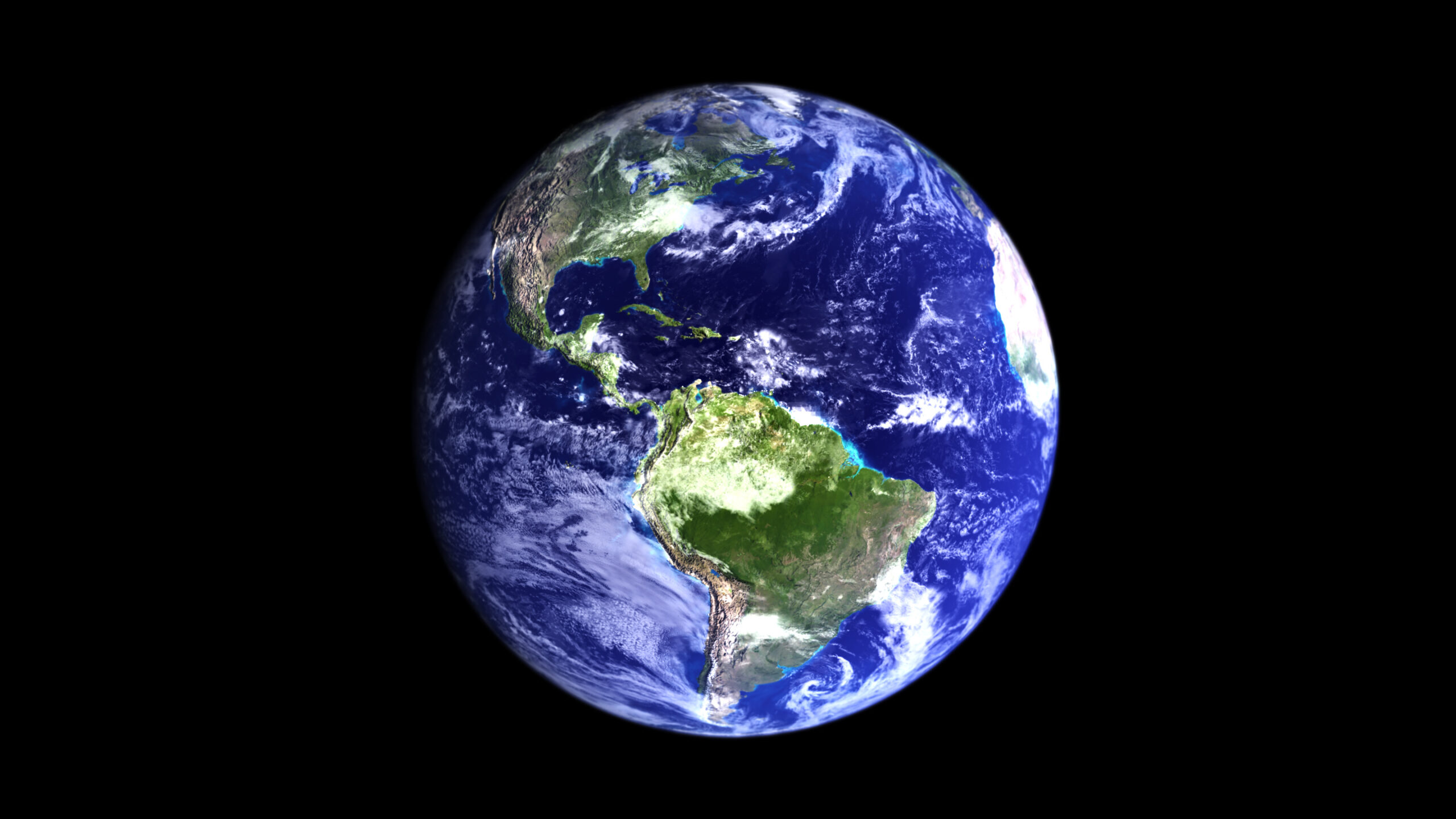
Dead satellites and drift-prone GPS coordinates aren’t your phone’s fault — they’re side effects of something unprecedented happening to our planet. Climate change is slowing Earth’s rotation at the fastest rate in 3.6 million years, stretching each day by 1.33 milliseconds per century between 2000-2020. Your navigation apps, fitness trackers, and smart devices all depend on precise timekeeping that assumes Earth spins predictably. When that assumption breaks down, your tech feels the ripple effects.
Melting Ice Is Playing Physics With Your Devices
Mass redistribution from polar ice melt creates a planetary slowdown affecting consumer technology.
Picture a figure skater extending her arms to slow her spin — that’s exactly what’s happening to Earth. Melting ice sheets and glaciers pump water toward the equator, redistributing mass and applying planetary brakes. This process lengthened days at an unprecedented rate between 2000-2020, according to research from ETH Zurich published in the Journal of Geophysical Research: Solid Earth.
The physics are simple, but the implications for your gadgets are complex. Every GPS chip in your smartphone calculates position based on satellite timing that assumes consistent planetary rotation speeds.
Your Tech Stack Wasn’t Built for Climate Delays
GPS systems and financial networks face timing disruptions as Earth’s rotation becomes less predictable.
Leap seconds — those tiny adjustments that keep atomic clocks synchronized with Earth’s rotation — are already getting delayed. A negative leap second that should have occurred in 2026 got pushed to 2029, throwing off GPS accuracy calculations your phone relies on.
Navigation systems, satellite communications, and even high-frequency trading platforms depend on split-second timing precision. When Earth’s rotation becomes unpredictable, everything downstream feels the lag. Your wearable’s GPS might take longer to lock onto your location, and satellite-dependent services could experience subtle but measurable delays.
Climate Will Soon Outpace the Moon’s Influence
By century’s end, human-caused changes will dominate planetary timekeeping more than lunar forces.
Here’s the kicker: “By the end of the 21st century, climate change is expected to affect day length even more strongly than the Moon,” says Benedikt Soja from ETH Zurich. The Moon has been Earth’s primary rotation influencer for billions of years, contributing about 2.4 milliseconds per century to day lengthening.
But climate effects could reach 2.62 milliseconds per century by 2100, surpassing lunar influence for the first time in planetary history. Your future devices will need adaptive timing systems that can handle this new reality — think quantum clocks and GPS chips designed for a climate-altered world.
Scientists Used Ancient Fossils to Crack the Timeline
Deep learning models analyzed millions of years of sea-level data to confirm the unprecedented nature of current changes.
Researchers didn’t just guess at this conclusion. They analyzed benthic foraminifera fossils — tiny sea creatures whose remains record ancient sea levels — using physics-informed AI models to reconstruct 3.6 million years of day-length variations.
As lead researcher Mostafa Kiani Shahvandi notes, never before has the planetary “figure skater” raised her arms and redistributed mass this quickly. Your smartphone exists during a genuinely unique moment in Earth’s history, when human activity is literally changing how fast the planet spins.
The timing infrastructure supporting your daily tech habits is adapting to climate change whether you realize it or not.