Sticky chest electrodes connected to waist monitors define heart rhythm tracking today, but they’re about as practical as wearing a pager in 2024. You remove them for showers, they irritate skin during sleep, and most critically, they only capture 24-48 hours of data. For the 340,000 UK residents living with inherited heart conditions, those brief monitoring windows often miss the intermittent arrhythmias that kill 12 people under 35 every week.
Smart Fabric Beats Smart Watches
Imperial College London‘s prototype embeds 50 sensors in washable sportswear fabric.
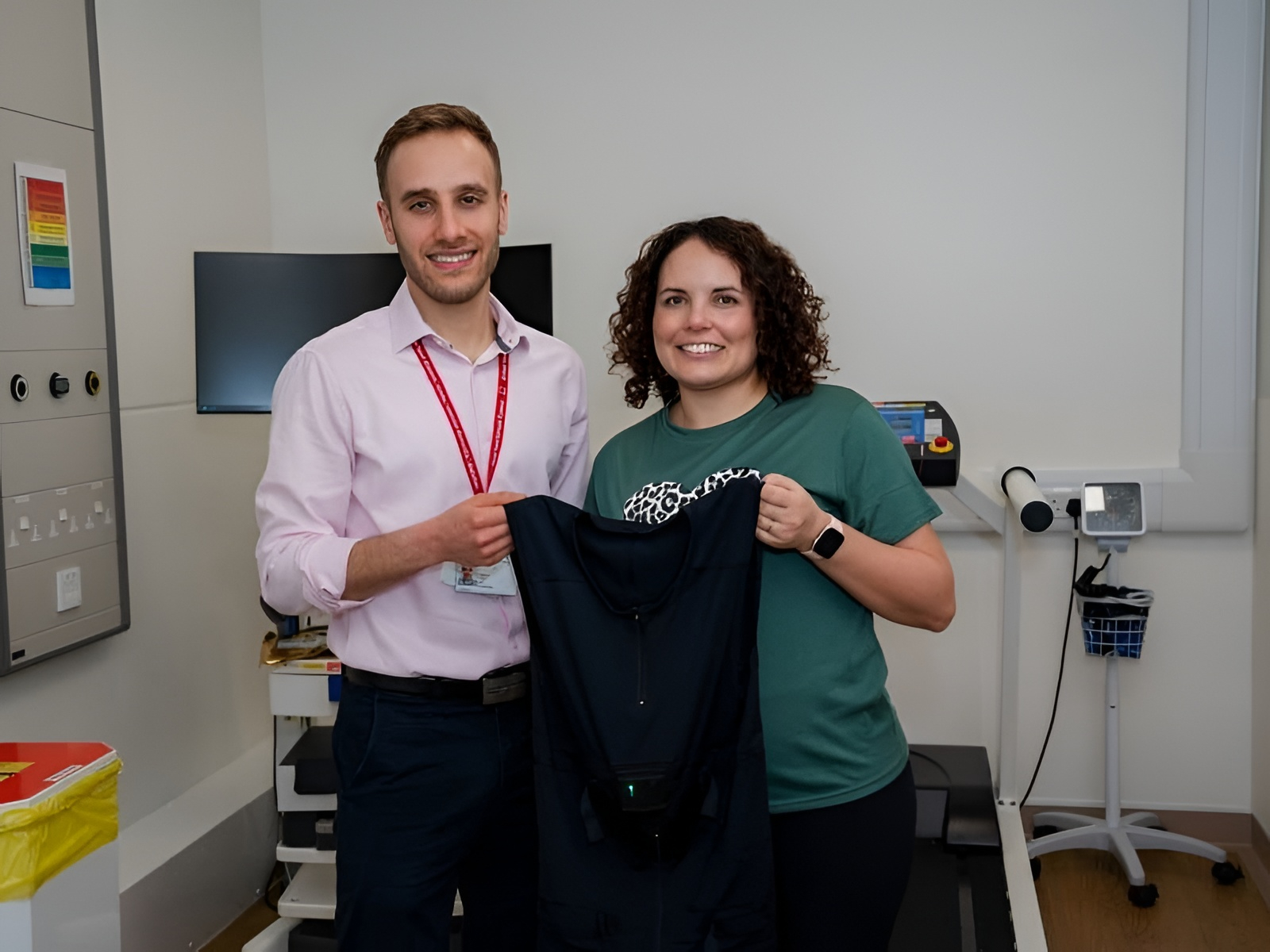
Imperial College London’s AI-powered T-shirt flips the script entirely. Instead of external patches, up to 50 ECG sensors weave directly into soft, sportswear-style fabric you wear like any undergarment. The result? Continuous monitoring for weeks or months—through workouts, sleep cycles, and yes, even washing machines. No adhesives, no removal anxiety, no shower interruptions. Just pull it on like your favorite athletic tee and forget it exists.
Three-Month Trial Targets Silent Killers
Researchers are testing continuous monitoring on 200 adults to catch conditions like Brugada syndrome.
The real test happens at Hammersmith Hospital’s Peart-Rose unit, where 200 volunteers wear these smart shirts for up to three months straight. The AI system, trained on ECG data from over 1,000 individuals, specifically hunts for patterns indicating Brugada syndrome—a genetic condition causing dangerous heart rhythm abnormalities—and similar inherited disorders that traditional 10-minute hospital tests routinely miss. “Far too many people die from inherited heart conditions,” explains lead researcher Professor Zachary Whinnett. “We hope our AI-assisted t-shirt will provide a practical and comfortable solution.”
Five Years to Your Medicine Cabinet
Clinical availability depends on trial results and regulatory approval, with expansion planned for children.
If you’ve got family history keeping you up at night, mark your calendar for approximately 2031. That’s when this technology might graduate from research prototype to clinical reality, pending successful trials and regulatory approval. The British Heart Foundation’s Professor James Leiper sees the bigger picture: “This innovative research will leverage the power of AI to help clinicians unmask these hidden conditions.” Future versions could monitor children and detect atrial fibrillation—turning your laundry rotation into life-saving surveillance.