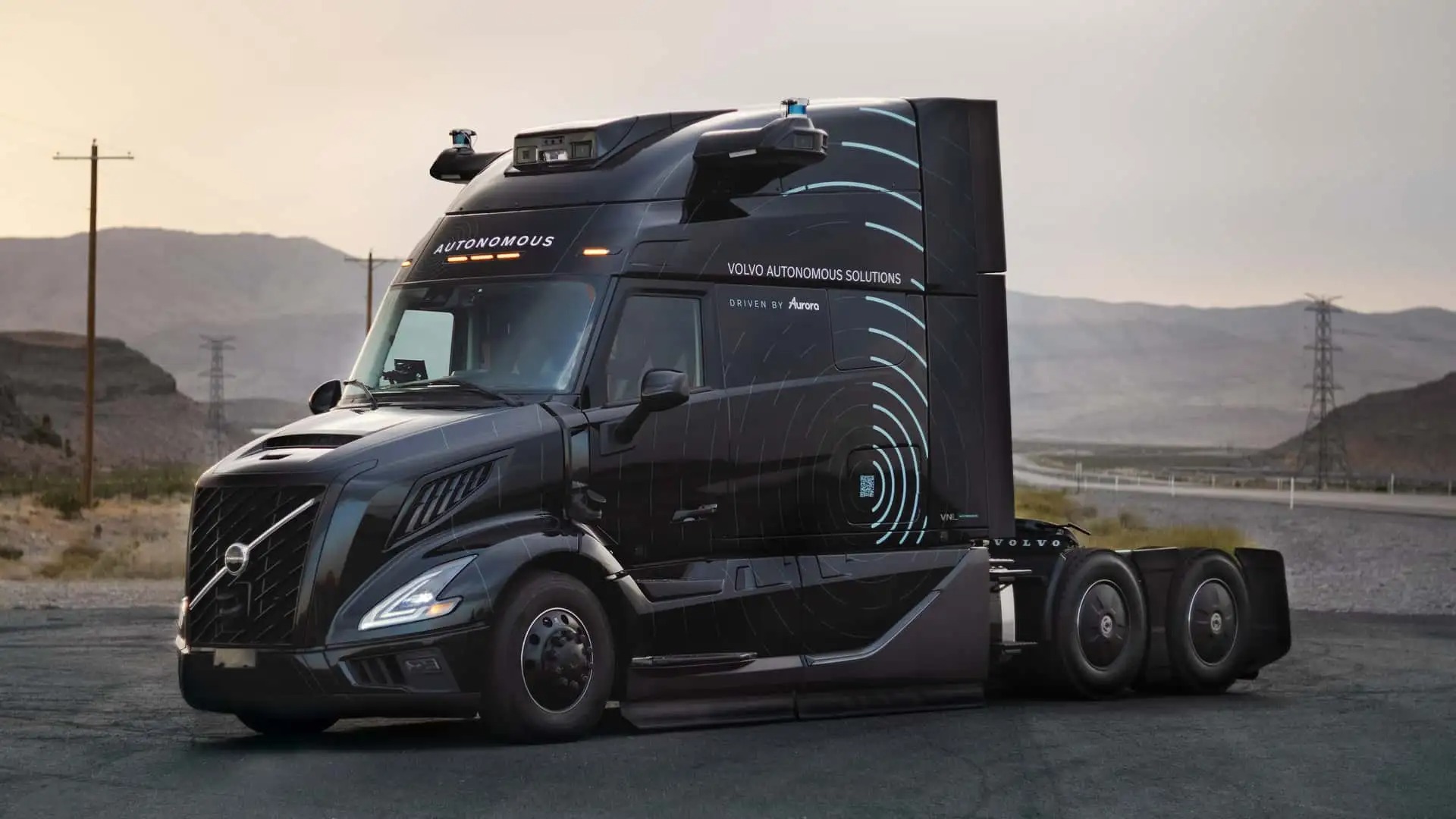
Aurora’s latest software release achieved a breakthrough in autonomous logistics: a driverless truck completed the 1,000-mile Fort Worth-to-Phoenix corridor in about 15 hours without stopping. That’s physically impossible for human drivers, who face federal Hours of Service regulations limiting them to 11-hour maximum drive times with mandatory 30-minute breaks every eight hours.
This isn’t just incremental progress—it’s the moment autonomous trucking leaped beyond human capabilities. CEO Chris Urmson calls it “the dawn of a superhuman future for freight,” and for logistics executives watching their transit times get halved, that’s not hyperbole.
Scale Meets Safety Record
Zero collisions across 250,000 miles while tripling route networks to ten corridors.
Aurora tripled its driverless network to ten routes with this fourth software release since launching commercial operations in April 2025. The expanded coverage includes:
- Dallas-Houston
- Fort Worth-El Paso
- El Paso-Phoenix connections
This creates a Sun Belt freight web that customers like Hirschbach, Uber Freight, Werner, and FedEx are already using.
The safety numbers back up the ambition: 250,000 driverless miles with zero attributed collisions. Industry statistics show commercial truck accident rates significantly higher than Aurora’s perfect record, making these results genuinely impressive rather than marketing spin.
Revenue Reality Check
Commercial operations generate $4 million against $816 million in losses as scaling accelerates.
Aurora’s financial picture tells the familiar startup story—$4 million in adjusted 2025 revenue against $816 million in net losses.
But unlike other AV companies still burning cash on promises, Aurora has paying customers and 30 trucks operating (10 fully driverless), expanding to over 200 by year-end.
The company’s Q3 2026 capacity is already committed, suggesting demand exceeds supply. When autonomous systems can work around the clock while human drivers need federally mandated rest, the productivity math becomes compelling enough for major carriers to commit real money.
Like Netflix’s early streaming bet or Tesla’s EV timing, Aurora appears positioned at the inflection point where futuristic technology becomes essential infrastructure. The question isn’t whether superhuman logistics will dominate freight—it’s whether Aurora maintains its lead as the industry scales.