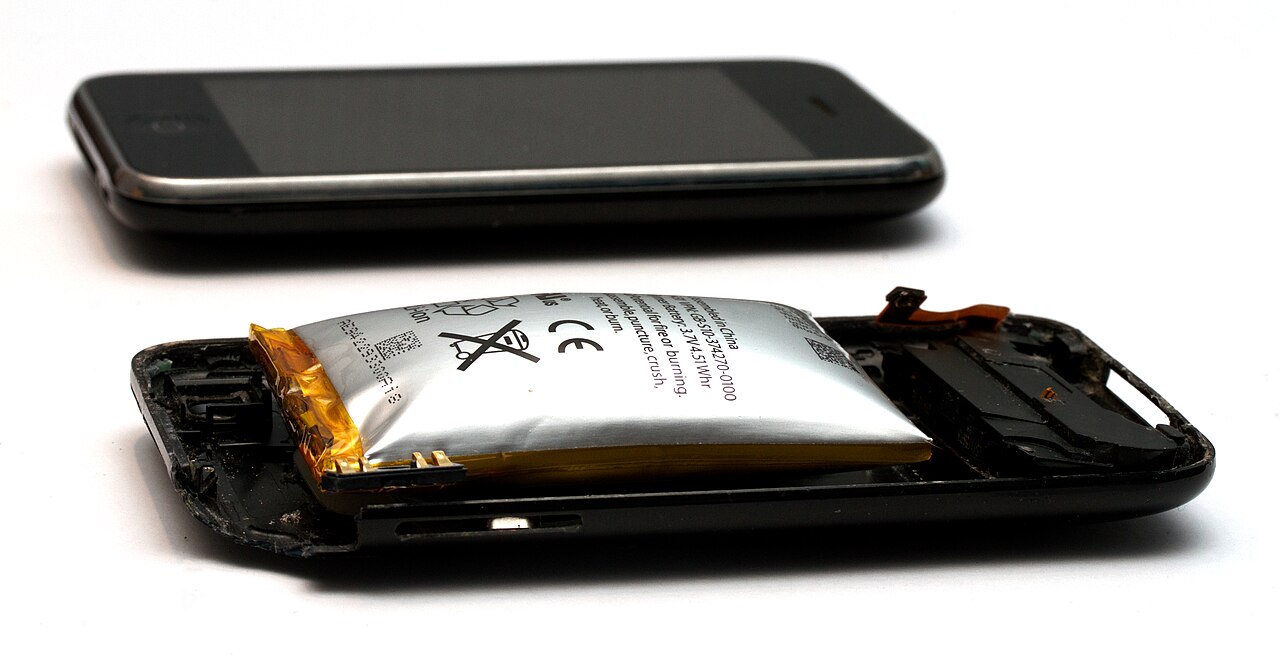
Your phone battery hitting 20% by lunch isn’t just annoying—it’s expensive. Replace that degraded battery or buy a new device every few years, and you’re looking at hundreds of dollars in what feels like planned obsolescence. University of Maryland researchers might have found an escape route.
Chemical Trick Protects Battery Hearts
New technique creates protective coating on cathodes using existing manufacturing processes.
The breakthrough centers on a deceptively simple chemical reaction that forms a protective layer around the cathode—the battery component that typically degrades fastest. Think of it like applying a screen protector, but at the molecular level.
Chunsheng Wang’s team at UMD’s Center for Research in Extreme Batteries discovered they can control this protective coating formation using organic chemistry principles. The technique uses an organic chemistry-inspired reaction to adjust electrolyte decomposition, enabling controlled formation of a stable cathode-electrolyte interphase in high-oxidative conditions where conventional electrolytes normally fail.
One Solution, Multiple Battery Lives
Technique can be tuned for everything from smartphone speed to grid storage durability.
The real cleverness lies in tunability. Need your EV battery to charge faster? The researchers can create a thinner protective layer that allows quicker ion transport. Want your home solar storage to last decades? They’ll build a thicker, more durable coating using standard materials and manufacturing processes.
Your smartphone could get the goldilocks treatment—balanced for both longevity and performance. According to Michel Armand from CIC energiGUNE, “If one can ensure the formation of the cathode-electrolyte layer, this will be a step forward in ensuring longer cycling of the battery.”
Reality Check on Battery Immortality
Early testing shows promise, but your next phone won’t benefit immediately.
Before you cancel that battery replacement appointment, pump the brakes. Wang’s technique remains in early testing, with long-cycle validation data still pending. The good news? This isn’t some lab fantasy requiring billion-dollar factory overhauls.
The process integrates with existing lithium-ion manufacturing and safety standards. Wang calls it “a relatively straightforward tweak to existing batteries”—the kind of incremental improvement that actually reaches consumers rather than gathering dust in research journals.
Like watching Netflix buffer in 2010, battery anxiety feels permanent until suddenly it isn’t. This cathode protection technique won’t solve every battery problem, but it tackles the core degradation issue without requiring manufacturers to rebuild their entire supply chain. Your future devices might finally outlast your upgrade itch.