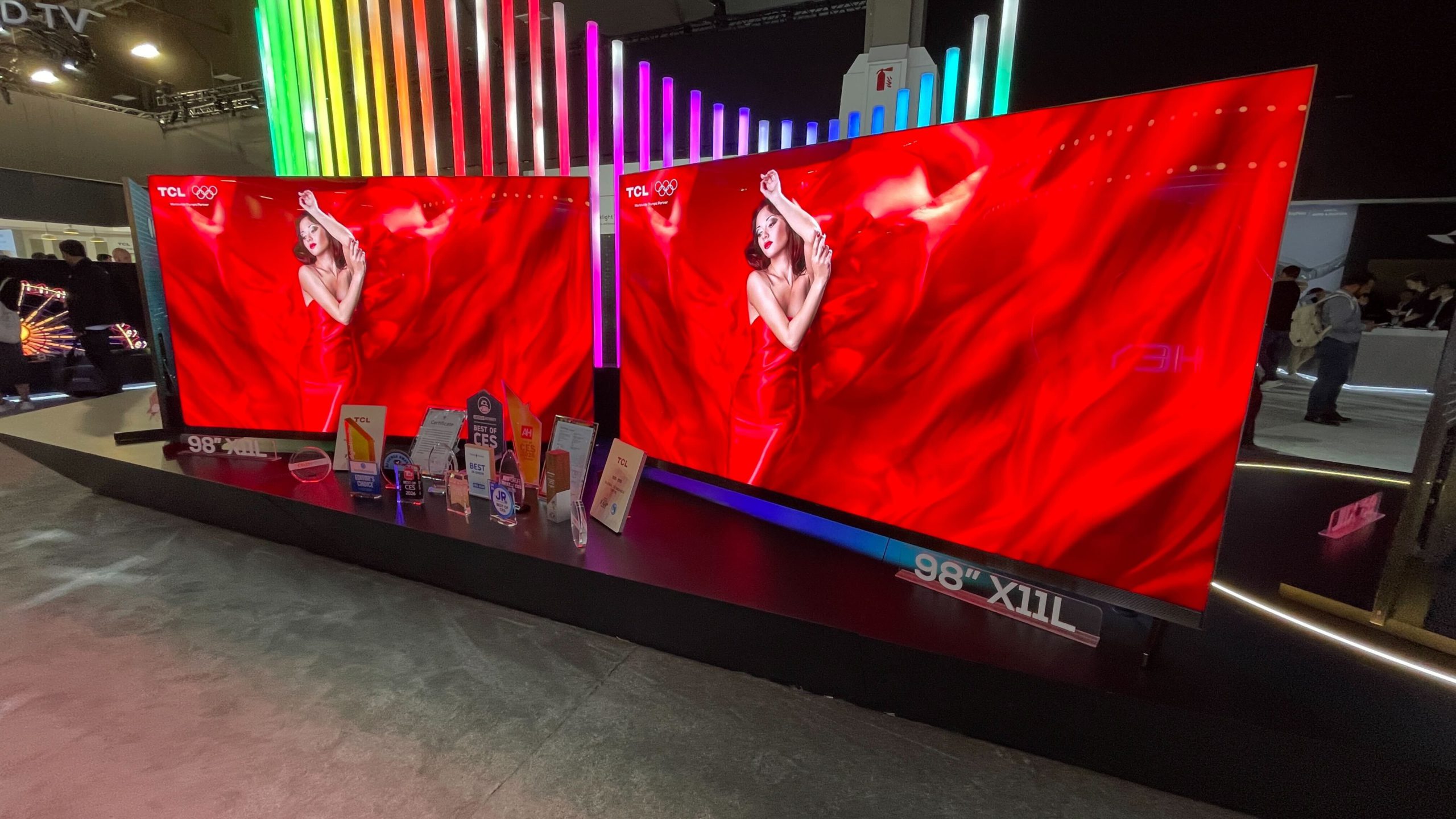
Sunlight streaming through your living room windows shouldn’t kill movie night, yet most premium TVs surrender to glare like vampires at dawn. TCL’s new X11L SQD-Mini LED TV attacks this problem with nuclear-grade brightness: 10,000 nits of peak luminance that makes typical OLED display sets look dim by comparison.
While most high-end TVs top out around 1,000-3,000 nits, TCL executive Scott Ramirez claims the X11L’s reformulated quantum dots and ultra color filter deliver this extreme brightness while hitting 100% of the BT.2020 color standard—territory that even flagship OLEDs rarely touch.
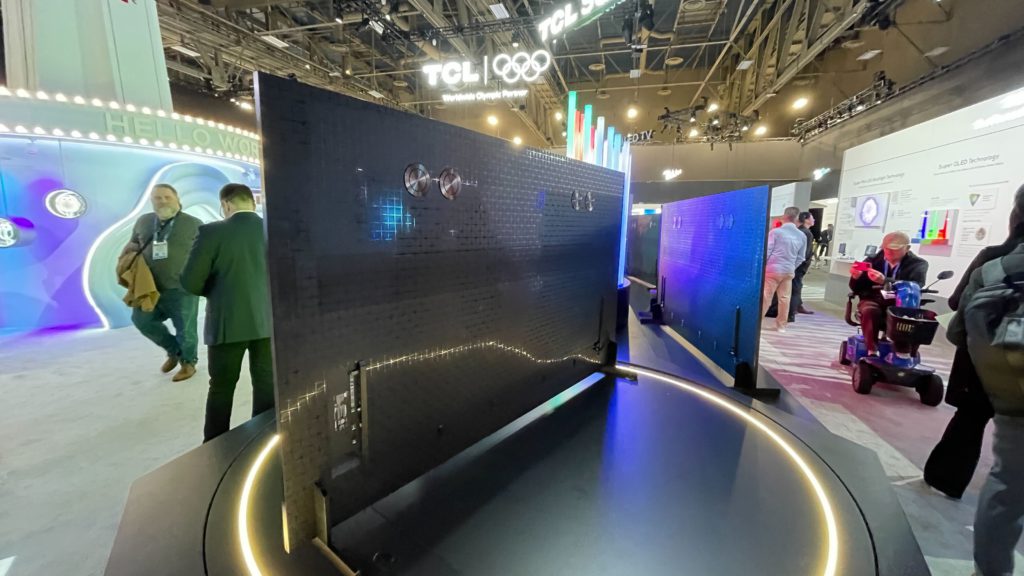
Gaming Gets the Full Arsenal
Four HDMI 2.1 ports and 144Hz panels target console and PC gamers equally.
Gaming performance matches the display aggression. The X11L runs 144Hz natively with Game Accelerator 288 VRR, AMD FreeSync Premium Pro, and four full-bandwidth HDMI 2.1 connections. Available in 75-, 85-, and 98-inch sizes, it’s sized for the kind of gaming setup that makes your neighbors question their life choices.
TCL pairs this with 20,736 local dimming zones—roughly ten times more than typical Mini LED sets—designed to minimize the blooming that ruins dark game scenes.
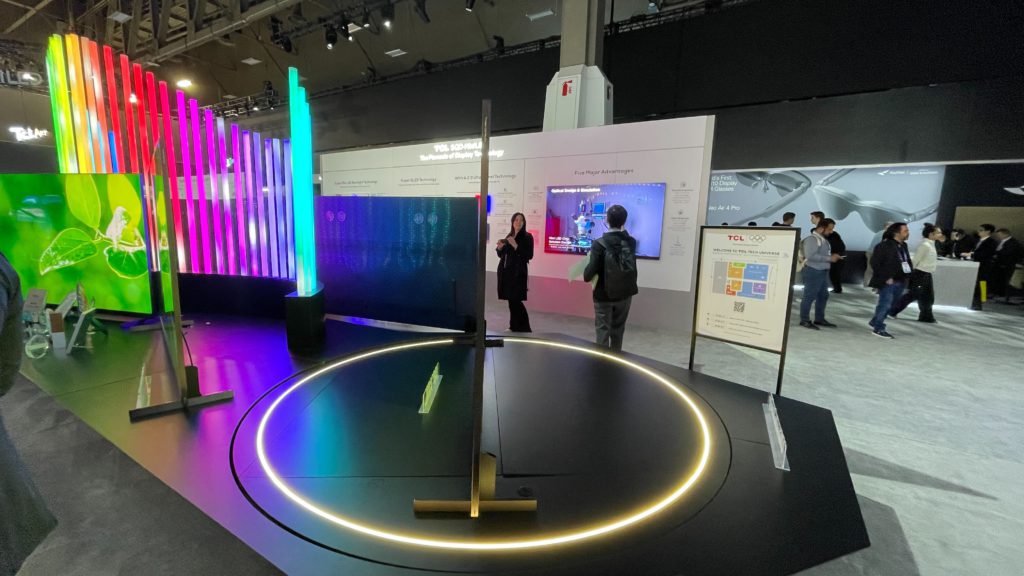
CES Reality Check
Early impressions praise brightness but independent testing remains crucial.
CES attendees called the X11L “the brightest TV I’ve ever seen,” though trade show demos rarely reflect living room reality. The bigger question: does 10,000 nits actually improve your viewing experience, or is this just spec sheet peacocking? Most HDR content mastered for 1,000-4,000 nits won’t fully exploit this headroom.
Tom’s Guide praised the “jaw-dropping display” and wide viewing angles from TCL’s WHVA 2.0 panel, but the company’s move from value-focused brand to premium competitor needs proving through independent lab measurements.
Premium Pricing Meets Premium Claims
Starting at $6,999 for 75 inches puts TCL squarely against established luxury brands.
TCL isn’t playing the budget game anymore. The X11L starts around $6,999 for the 75-inch model, with larger sizes climbing higher into territory dominated by Samsung and Sony flagships. That pricing reflects TCL’s bet that extreme brightness, Google Gemini integration, and Bang & Olufsen audio tuning justify premium positioning.
Whether that gamble pays off depends on real-world performance against OLED’s perfect blacks and QD-OLED’s color accuracy. The X11L represents LCD technology’s most aggressive challenge to OLED dominance—if the engineering matches the ambition.