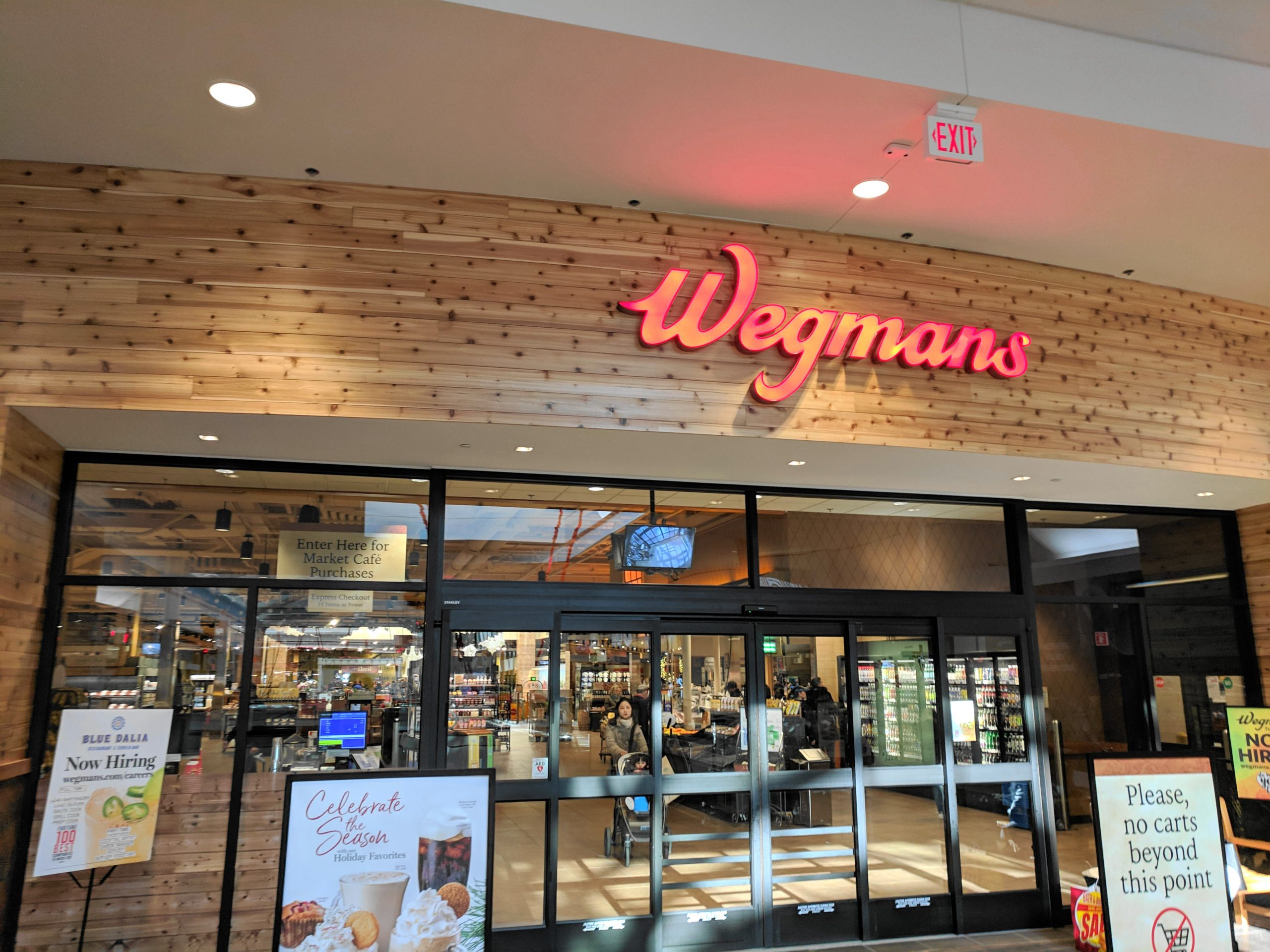
Your weekly grocery run just became a biometric data collection event. Wegmans Food Markets quietly expanded its facial recognition program from a 2024 employee pilot to full customer surveillance at select Manhattan and Brooklyn locations. The twist? They scrapped their earlier promises about deleting your data.
The Rochester-based chain now collects facial recognition, eye scans, and voiceprints from every person entering affected stores. No opt-out. No meaningful consent mechanism. Just mandatory participation if you need milk and eggs.
From Pilot Program to Privacy Erosion
Wegmans removed data deletion assurances when expanding biometric collection to customers.
The company’s 2024 pilot focused exclusively on employees and included explicit data deletion commitments. The customer expansion ditched those protections entirely. Wegmans now retains biometric data “for as long as necessary for security purposes” but won’t specify what that means, citing “security reasons.”
Posted signage complies with New York City’s 2021 biometric privacy law, which sounds protective until you realize it only requires disclosure signs. The law includes zero enforcement mechanisms—like installing smoke detectors without batteries.
When Your Face Becomes a Liability
Privacy experts warn that biometric breaches create permanent identity risks unlike stolen passwords.
“If there is a hack or a breach of that data, you can’t change your face like you would change a password,” said Michelle Dahl, executive director of the Surveillance Technology Oversight Project. Her organization also highlights how facial recognition systems “disproportionately misidentify and burden communities that are already targeted by police most often.”
The immigration enforcement angle adds another layer of concern. “It’s really chilling that immigrant New Yorkers going into Wegmans and other grocery stores have to worry about their highly sensitive biometric data potentially getting into the hands of ICE,” said privacy advocate Will Owen.
Customer Exodus Signals Broader Resistance
Shoppers are voting with their feet against involuntary biometric collection.
Customer reactions suggest this privacy overreach carries real business costs. “I really don’t like it. I don’t want no one to think I’m stealing anything or doing anything illegal,” said Johnny Jerido, 59. Fellow shopper Blaze Herbas, 29, was more direct: “We should be able to shop freely without data being saved on us. That’s obvious.”
Wegmans joins Fairway Market and other retailers normalizing biometric surveillance in everyday spaces. Meanwhile, a New York City Council bill to ban facial recognition in private businesses has stalled since 2023—leaving customers with little recourse beyond changing where they shop.
The company frames this as security theater, claiming the technology only identifies “individuals who pose a risk.” But when grocery shopping requires surrendering your biometric identity, the real question becomes: who’s securing what from whom?