Space traffic jams threaten your internet connection, but SpaceX’s latest orbital shuffle promises safer skies. The company plans to relocate more than 4,400 Starlink satellites to lower altitudes throughout 2026, addressing growing collision risks that could knock out broadband service for millions.
The Great Satellite Relocation Project
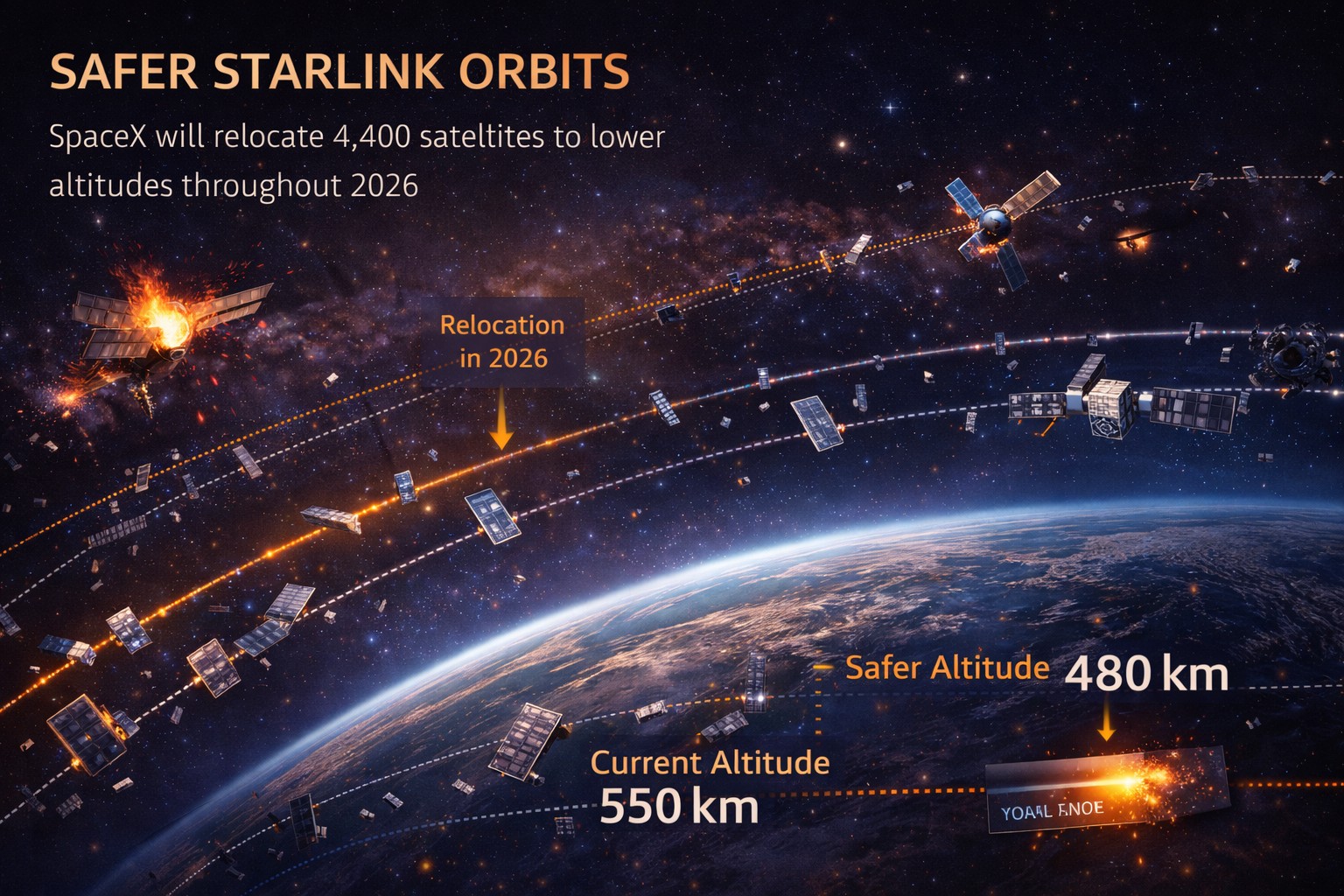
SpaceX announced it will lower approximately 4,400 Starlink satellites from their current 550-kilometer altitude down to 480 kilometers—roughly 44 miles closer to Earth. The massive orbital adjustment represents one of the largest satellite constellation movements ever attempted. VP of Starlink Engineering Michael Nicolls revealed the plan following recent close calls that highlighted dangerous overcrowding in low Earth orbit.
When Satellites Play Chicken in Space
The move comes after several alarming incidents. In December, a Starlink satellite lost communication, dropped 4 kilometers in altitude, and vented propulsion fuel before releasing trackable debris—likely from an internal explosion. Last month, a Chinese satellite passed within just 656 feet of a Starlink craft, close enough to make space traffic controllers sweat.
These aren’t isolated events in an increasingly crowded orbital highway that’s grown from 3,400 satellites in 2020 to over 13,000 today, with roughly 10,000 belonging to Starlink alone.
“Lowering the satellites results in condensing Starlink orbits, and will increase space safety,” Nicolls explained. “The number of debris objects and planned satellite constellations is significantly lower below 500 kilometers.”
Why Lower Actually Means Safer
Counter-intuitively, bringing satellites closer to Earth’s atmosphere improves long-term safety. The increased atmospheric drag at 480 kilometers acts like a natural garbage disposal, forcing dead satellites to burn up faster during reentry instead of lingering as space junk for decades. Think of it as Marie Kondo-ing orbital space—what doesn’t spark joy (or work properly) gets tidied away automatically.
For your Starlink service, this means fewer potential disruptions from debris collisions and more reliable internet during your next video conference from the middle of nowhere.