Between early June and early July 2026, five people whose work supported U.S. Cyber Command and the National Security Agency at Fort George G. Meade, Maryland, died by suicide. Families are grieving, and colleagues are frightened. The House Armed Services Committee scheduled a briefing with Cyber Command officials for September 3, but the institutions responsible for defending the country’s digital infrastructure have not yet answered the most basic public questions about what happened.
What Happened at Fort Meade
Five deaths connected to Cyber Command and NSA work were recorded within roughly five weeks, prompting reporting, congressional scrutiny, and unresolved questions about what the organizations knew and when.
Bloomberg first reported the cluster; local reporting by The Banner followed, drawing on public records and family interviews. Cyber Command leadership acknowledged three deaths in an internal communication, while public records identified two additional deaths in the same period. The precise organizational relationships of all five people remain unclear: the group included service members and affiliated or civilian personnel across different roles, and available reporting does not establish that they shared a single unit or team.
Kevin Stallings, 36, was an Air Force technical sergeant assigned to U.S. Cyber Command. Maryland autopsy records, as reported by The Banner, identified his death as a suicide on June 22. His father described him as empathetic and held in high regard by the people he worked with.
Kevin Paulson was 40. He worked as a cyberspace-effects operations officer at the NSA and served as a cyberwarfare operator in the Maryland Air National Guard. According to his sister, he sometimes worked shifts lasting as long as 16 hours, had difficulty sleeping, and was experiencing depression before his death. Those details come from family accounts and are attributed as such throughout this article.
The Environment These People Worked In
Family members and former personnel have described demanding conditions inside Fort Meade’s classified facilities, though available reporting does not establish that those conditions caused the deaths.
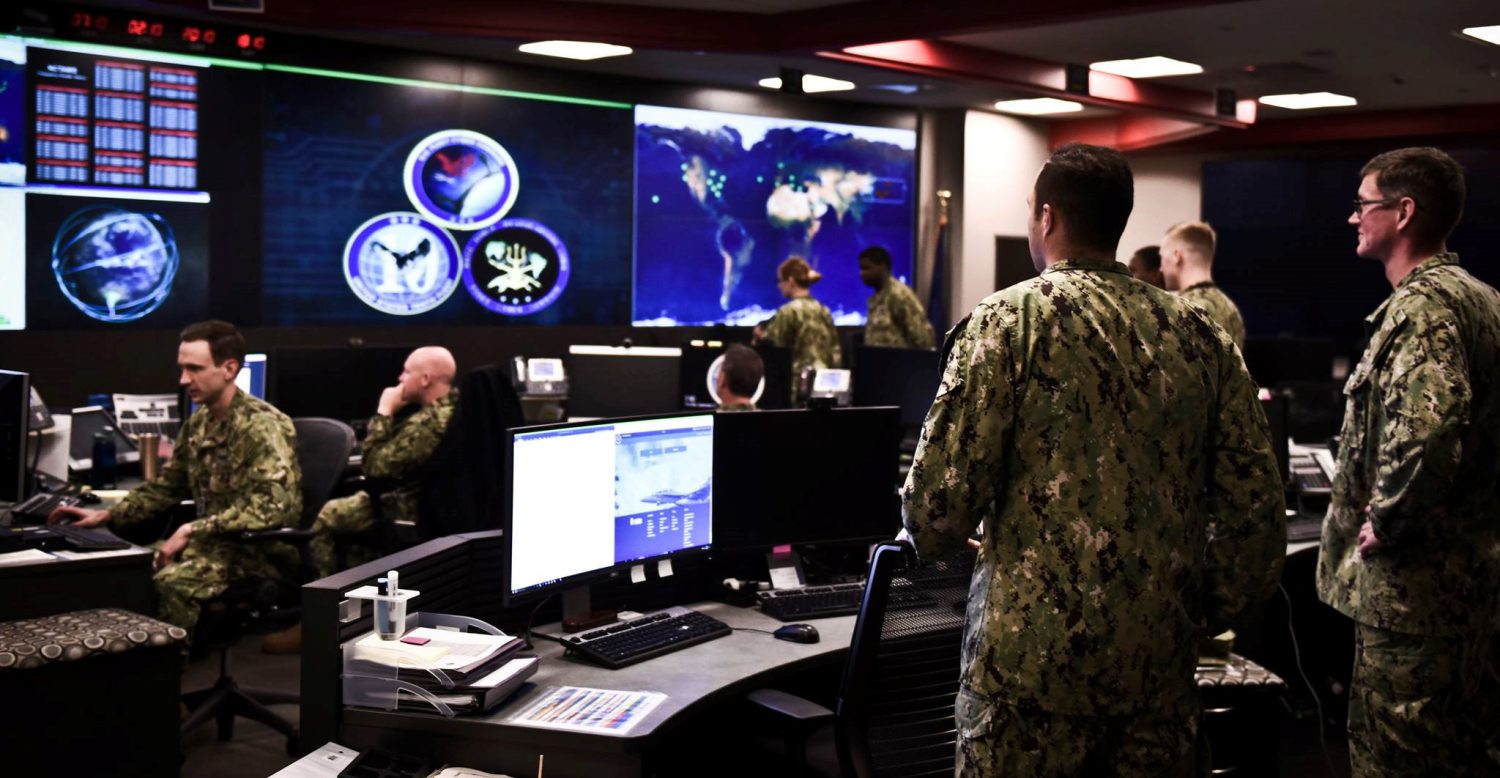
Much of the work at Fort Meade happens inside Sensitive Compartmented Information Facilities: windowless rooms where personal devices are prohibited and ordinary communication with family and friends is restricted. Some family members and former personnel described these conditions as significant and persistent sources of stress. Available reporting does not establish that these conditions caused the deaths.
Paulson’s sister told The Banner that he sometimes worked up to 16 hours a day. Reporting also describes intensified operational demands linked to the conflict with Iran and to competition over advanced artificial-intelligence development, though these claims are drawn from family accounts and published reporting rather than confirmed institutional findings.
Ryan Shaban, a cybersecurity professional and Army veteran, told The Banner that some personnel hesitate to report mental-health concerns because they fear losing or jeopardizing a security clearance. His account describes a perceived barrier, not a confirmed policy outcome. Lawmakers say that fear, regardless of whether it reflects actual clearance consequences, may itself prevent people from getting care.
“People are worried now because the crisis is so acute and right in front of us.” Rep. Sarah Elfreth, House Armed Services Committee, as reported by The Banner.
What Congress Is Doing About It
Lawmakers from Maryland are pressing for a broader cluster definition, additional funding, and faster security clearances for mental-health providers who work in classified environments.
Rep. Sarah Elfreth, whose district includes Fort Meade and who sits on the House Armed Services Committee, has questioned why the deaths were not initially treated as a cluster. She is pushing to change the Defense Department’s definition of a suicide cluster so that civilian employee deaths connected to the same workplace are counted alongside military deaths. Lawmakers have raised concerns that the mixed military-civilian workforce at Fort Meade may not be fully accounted for under current response protocols.
Sen. Chris Van Hollen has backed an $11 million request for psychological support for cyber operators. The request came from Gen. Joshua Rudd, who leads both Cyber Command and the NSA. Sen. Angela Alsobrooks has requested a formal briefing from Cyber Command on the deaths.
Cyber Command and the NSA referred press questions to the Pentagon. According to The Banner, the Pentagon did not respond to its request for comment. That gap in the public record leaves unresolved the most fundamental questions: what any formal review has found, whether the agencies have identified contributing factors, and what changes, if any, are already underway.
What Support Exists, and Where It Falls Short
Fort Meade has expanded its mental-health infrastructure in recent years, but lawmakers and a congressionally requested study suggest the resources available to Cyber Command’s workforce may not be sufficient.
Fort Meade has a multipurpose resiliency center, funded in part by $5.3 million raised by the Fort Meade Alliance. Since May 2026, up to five licensed mental-health professionals have been permitted to work at Kimbrough Ambulatory Care Center on the base, according to The Banner. A communitywide wellness training was held on July 9, three days after Paulson’s death.
A study called for by the 2024 National Defense Authorization Act examined resources available to Cyber Command’s workforce. Reporting indicates it found those resources inadequate, though the underlying study should be reviewed directly before detailed conclusions about its findings are treated as established. The gap that Elfreth and other Maryland lawmakers are now trying to close is specific: lawmakers say clearance requirements for providers who work in or near classified environments can delay access to specialized care, and they are seeking to accelerate that process.
“When we started there was a tremendous amount of resistance” to acknowledging mental-health issues. Tim O’Ferrall, Fort Meade Alliance, as reported by The Banner.
What Remains Unanswered
No formal findings have been made public, and the most consequential decisions about funding, clearance timelines, and cluster definitions are still unresolved.
No formal investigation findings were identified in the reporting reviewed for this article. Three questions carry particular weight going forward: whether the proposed $11 million will be funded, whether clearance timelines for mental-health providers will be shortened, and whether civilian employees will be formally counted in future cluster definitions. None has a confirmed answer or timeline.
Tim O’Ferrall of the Fort Meade Alliance said that when efforts to address mental health at the installation began, they met considerable resistance, suggesting that culture has shifted over time. Fort Meade today has more counseling infrastructure and, according to O’Ferrall’s account as reported by The Banner, more openness around mental health than in earlier years. Whether those resources are adequate for a workforce facing the pressures that family members and former personnel have described is the question that Congress, and the people still working at Fort Meade, are now asking.