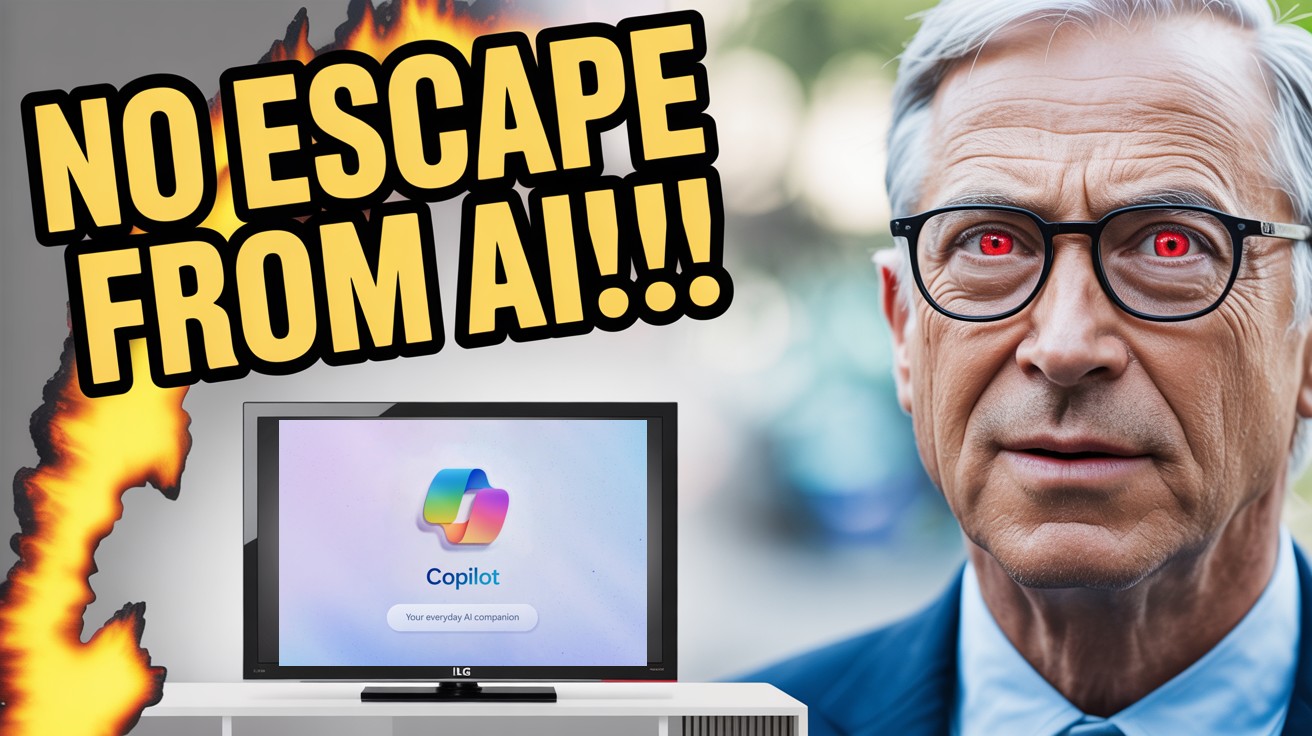
Recent firmware updates have automatically installed Microsoft’s Copilot AI assistant on LG webOS smart TVs, creating a permanent fixture that owners cannot remove. The app appears prominently on home screens across 2022-2025 LG models, including OLED and UA8000 series TVs, following what LG markets as part of their “AI TV” ecosystem push.
Your expensive television just became Microsoft’s billboard, whether you wanted it or not. LG’s official documentation confirms that system apps—including this new Copilot installation—cannot be deleted, with no trash bin option available. Some users report being able to hide the app from their home screen through privacy settings, but the software remains permanently installed on the device.
User Backlash Exposes Broader Control Issues
Reddit users voice frustration over forced AI integration and privacy concerns.
The response has been swift and predictable. “Pre-installed crap is universally dogshit. If I wanted it, I’d have installed it myself,” posted Reddit user ASouthernDandy in the r/mildlyinfuriating forum. Users are raising legitimate concerns about potential microphone access and data collection—the same privacy concerns that plagued early smart speakers. This backlash reflects growing frustration with the “you don’t own your devices” reality, where manufacturers push monetization strategies through mandatory updates long after purchase.
Industry-Wide AI Invasion Accelerates
LG joins competitors in making artificial intelligence unavoidable across smart TV platforms.
LG’s move follows CES 2025 announcements positioning AI as central to their television experience, complete with “AI Remote,” AI Picture Pro, and AI Sound Pro features. The company isn’t alone—Google’s Gemini comes built into new TCL TVs, while Samsung supports both Copilot and incoming Perplexity AI integration. What distinguishes LG is the aggressive, non-optional deployment combined with extensive AI integration across every feature category.
Smart TV Ownership Rights Under Siege
Forced software installations highlight ongoing tensions between consumer choice and manufacturer control.
This controversy illuminates the fundamental shift in smart TV ownership. Manufacturers increasingly treat your living room screen as advertising real estate and data collection infrastructure rather than hardware you control. The Copilot installation represents another step toward TVs becoming subscription-like services with ongoing obligations to corporate partners rather than one-time purchases serving your entertainment needs.
The message is clear: your smart TV belongs to whoever writes the firmware updates, not whoever bought it.