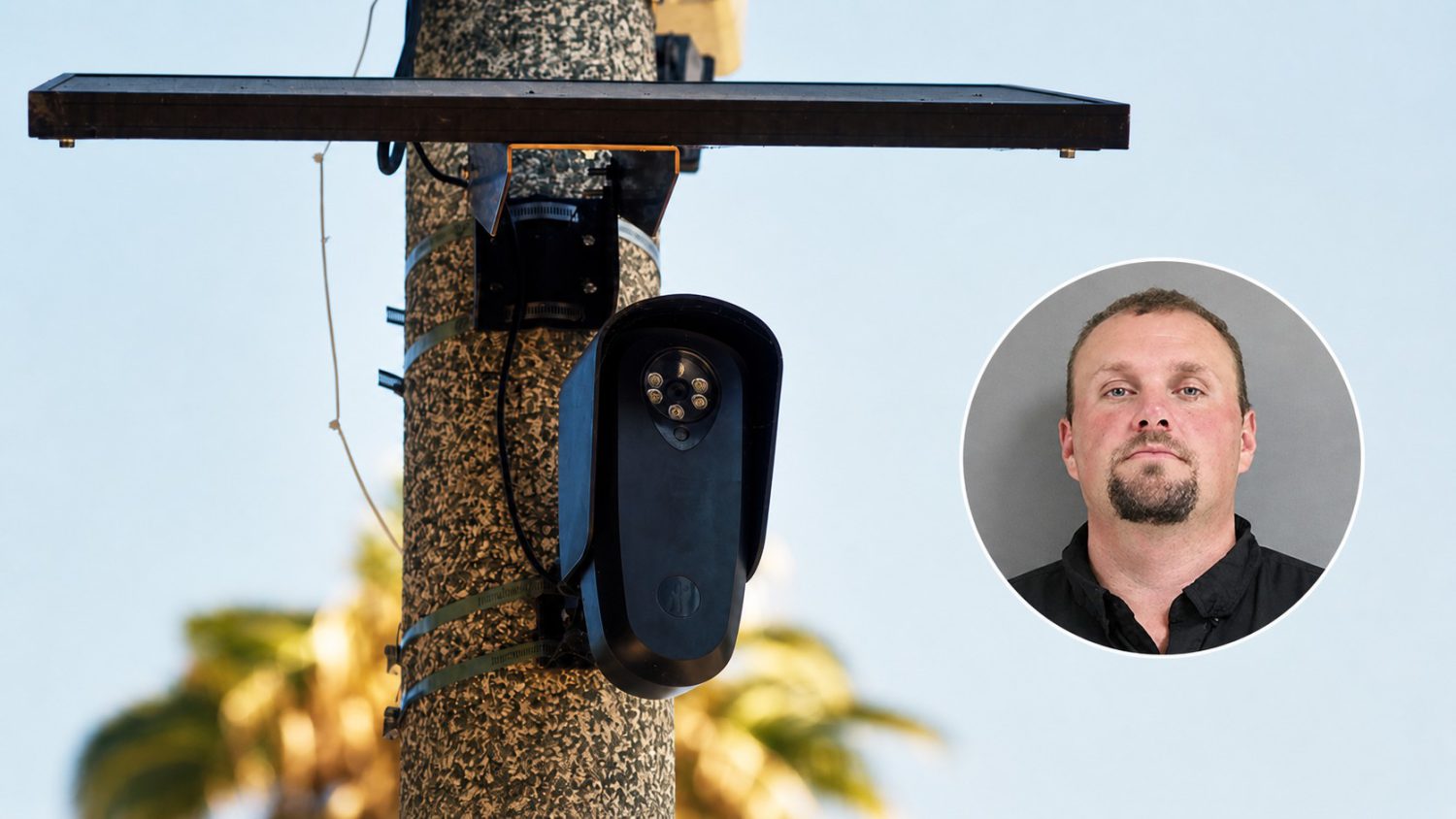
Every time you drive past one of those roadside cameras, the assumption is reasonable: crime-fighting tool, public safety, move along. In Lufkin, Texas, that assumption just collapsed under the weight of a 100-count felony indictment. Zachary Anthony Klein, an 11-year Lufkin PD veteran, was arrested by the Texas Rangers in August 2026 and subsequently indicted on 100 counts of misuse of official information — each a third-degree felony — for allegedly using police surveillance cameras to track 11 private citizens for nongovernmental purposes over more than a year, according to the research brief. Lufkin PD has since suspended all camera operations. This story travels well beyond East Texas, and Lufkin isn’t an isolated case — it’s more like a logbook kept without your knowledge or consent, quietly filling up over months — as seen in cities grappling with a Flock Problem of their own.
What Flock Cameras Actually Do
Most people have no idea what these roadside devices are actually collecting — or how easily officers can search that data.
Flock Safety builds AI-driven automated license plate reader (ALPR) systems that capture the plate, make, model, and color of every vehicle that passes. That data feeds what’s described as the largest vehicle surveillance database in the country. Here’s what that means practically:
- Officers can search accumulated data with a few keystrokes, typically without a warrant
- A “national lookup” feature lets officers search vehicles captured by participating departments across the country — also generally without warrants
- Lufkin City Council approved Flock use in 2023 for crime-fighting purposes
- Texas DPS has formal policy explicitly prohibiting non-law-enforcement ALPR use — a rule Klein allegedly disregarded for over a year
A Pattern Bigger Than Lufkin
Lufkin is not an outlier; it’s the latest entry in a growing national log of documented Flock misuse cases.
According to the indictment filed in the 159th Judicial District Court, Klein used his police credentials to run repeated, targeted queries on 11 specific individuals for nongovernmental purposes. Prosecutors must show under Texas law that the data wasn’t publicly available and was accessed with intent to obtain a benefit or harm or defraud another. A second, unnamed Lufkin officer is currently on administrative leave pending further investigation.
“While the investigations are ongoing, we have suspended the use of Flock cameras within the department.” — Lufkin Police Chief Travis Brazil
Lufkin isn’t an isolated case — it’s more like a logbook kept without your knowledge or consent, quietly filling up over months. A Washington Post investigation identified dozens of officers nationally accused of misusing Flock’s network, including alleged stalking of women, according to CBS News Texas. Hood County, Texas physically covered its Flock cameras after resident pressure and national reporting on misuse. The ACLU has accused Flock Safety of misrepresenting its practices to city councils and enabling tracking of sensitive activities, including travel for medical care — a pattern that echoes the reach of a covert surveillance app built to monitor private citizens without their knowledge.
The counterargument deserves an honest hearing. Texas police association representatives argue that audit trails and prosecution capability prove the system’s safeguards function as designed. The record is genuinely mixed: Austin’s city auditor found zero wrongful stops over one 12-month period beginning March 2024, while a 2021 IPVM test found Flock misread license plate states roughly 1 in 10 reads, according to Business Insider. These concerns are compounded by broader documented cases of institutions secretly tracking users without consent.
Lufkin Police Chief Travis Brazil has backed an independent Texas Rangers investigation, and city leadership has publicly called the allegations serious and urged accountability. If Klein is convicted, the case may set Texas precedent for charging officers under misuse-of-official-information statutes specifically for ALPR abuse — and that matters to every city council currently voting on a Flock contract. The cameras were sold as a crime-fighting tool. The audit trail that surfaced Klein’s alleged conduct proves the system can work. What it doesn’t prove is that catching bad actors after more than a year of alleged surveillance is good enough.