Pop-up toasters emit 1.73 trillion ultrafine particles per minute—even when they’re just sitting there, not toasting anything. That’s the unsettling discovery from Pusan National University researchers who tested everyday appliances in controlled lab conditions. Your morning routine just got a lot more complicated.
The Hidden Hazard in Your Counter Appliances
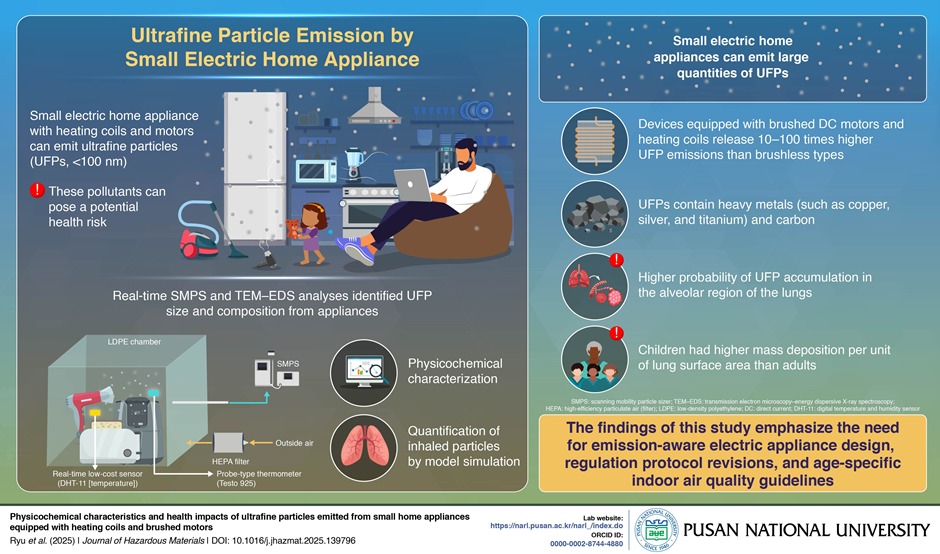
Professor Changhyuk Kim’s team measured emissions from hair dryers, air fryers, and toasters using advanced particle detection equipment. These ultrafine particles (UFPs) measure smaller than 100 nanometers—tiny enough to slip past your nose’s natural filters and deposit directly in your lung tissue.
Unlike the dust bunnies you can actually see, these microscopic invaders enter your bloodstream without permission. The study, published in the Journal of Hazardous Materials, found that brushed DC motors—the kind powering most budget appliances—emit 10 to 100 times more particles than brushless alternatives.
Think of it like the difference between a gas-guzzling truck and a Tesla, except instead of fuel efficiency, we’re talking about the air you breathe while making breakfast.
Metal Particles Target Your Cells
These aren’t harmless dust specks. The particles contain heavy metals including copper, iron, aluminum, silver, and titanium scraped from heating coils and motor components. “These associated heavy metals increase the risk of cytotoxicity and inflammation when the particles enter the human body,” according to Kim.
Children face the highest risk since their smaller airways concentrate particle deposits more intensely than adult lungs. The health implications read like a medical thriller: inflammation, cellular damage, increased asthma risk, and potential cardiovascular complications. Your kitchen appliances are basically microscopic metal confetti cannons aimed at your respiratory system.
The Brushless Motor Solution
Here’s where engineering offers hope. Appliances with brushless motors dramatically reduce emissions—sometimes by 99%. These designs eliminate the physical contact between carbon brushes and metal components that creates particle-generating friction.
Expect manufacturers to quietly start advertising “brushless” as the new “organic” for kitchen gadgets. The research suggests we need emission standards for small appliances, similar to fuel efficiency requirements for cars.
Until regulations catch up, your safest bet involves checking motor types before buying and ensuring adequate kitchen ventilation. Your lungs will thank you for reading the fine print.