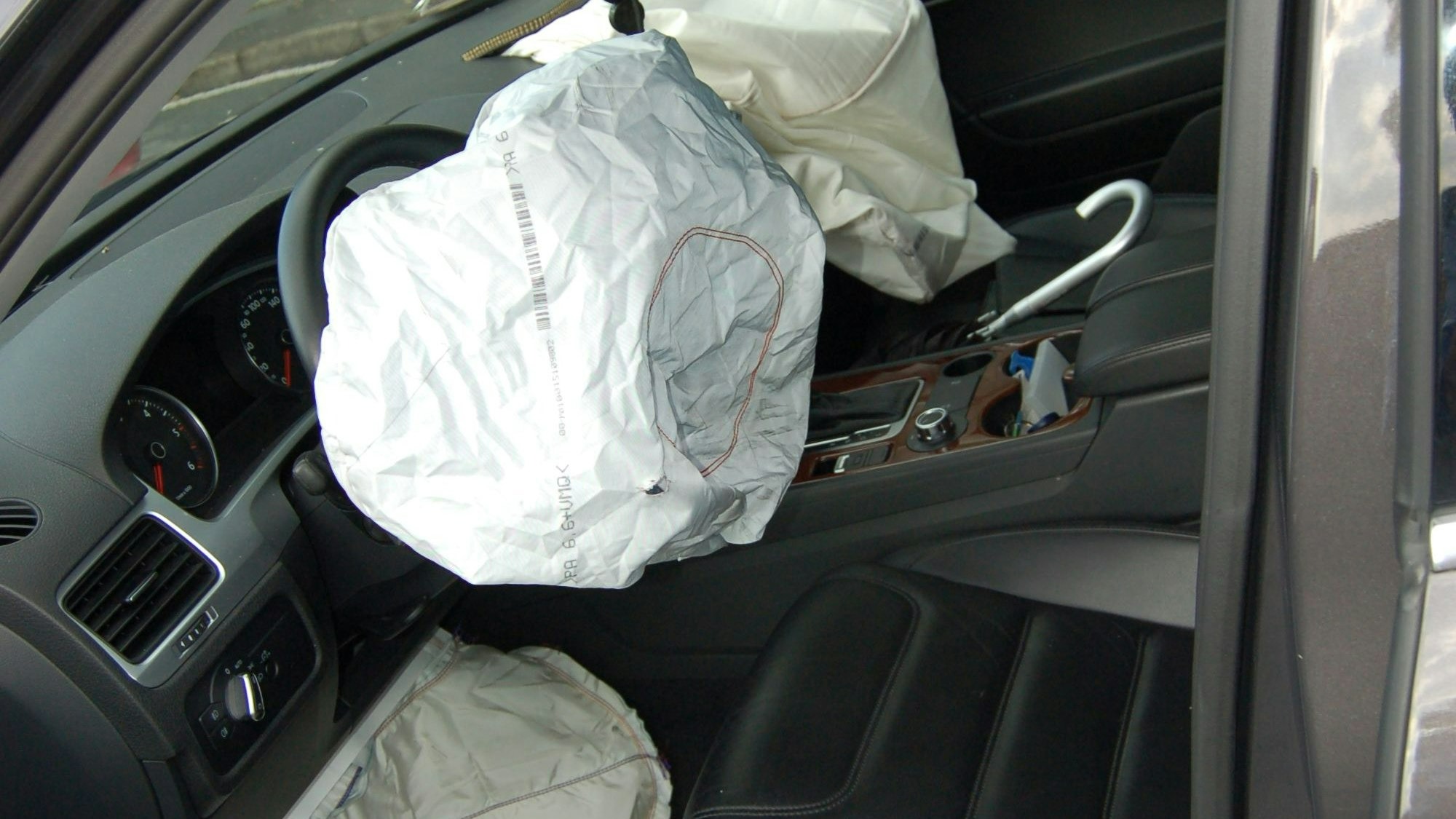
Racing down the freeway, you trust that metal-wrapped cushion behind your steering wheel to save your life. Instead, millions of airbags across America are primed to explode like grenades, sending razor-sharp metal fragments into drivers’ faces and necks. The Takata airbag crisis—the largest automotive recall in history—remains an active threat lurking in tens of millions of vehicles right now.
The Chemical Recipe for Disaster
Your airbag uses ammonium nitrate propellant to inflate during crashes. According to NHTSA data, Takata’s version lacks a crucial drying agent, meaning humidity and heat cause the chemical to degrade over time. When deployment happens, instead of controlled inflation, you get explosive over-pressurization that shatters the metal housing into shrapnel aimed directly at your face, neck, and chest.
The results are horrifying. At least 25 deaths and more than 400 injuries were reported worldwide due to flying metal fragments. Some victims suffered decapitation. Others bled out from severed arteries. This isn’t theoretical—it’s happening in everyday fender-benders that should be survivable.
Millions Still Drive Death Traps Daily
Despite recalls running since 2014, the crisis continues. NHTSA prioritized fixes based on vehicle age and climate—older cars in hot, humid areas get fixed first. However, parts shortages persist, causing waits stretching months or years for free repairs.
California alone has over 700,000 unrepaired vehicles as of 2026. Some manufacturers now issue “do not drive” warnings for high-risk models like 2003 Dodge Rams and 2005-2010 Dodge Chargers. The message is clear: your morning commute could be your last if that airbag deploys incorrectly.
Corporate Cover-Up Compounds the Crisis
Internal tests revealed problems two decades ago, with failures hidden from clients like Honda. Worse, some replacement airbags initially used the same faulty propellant—meaning “fixed” cars remained dangerous. Only recently did manufacturers switch to safer alternatives with proper drying agents.
Check your VIN immediately through NHTSA’s recall database. Even with repair delays, knowing your risk beats driving blind into potential disaster. Your vehicle might be among the approximately 67 million affected airbags still waiting for proper repairs.