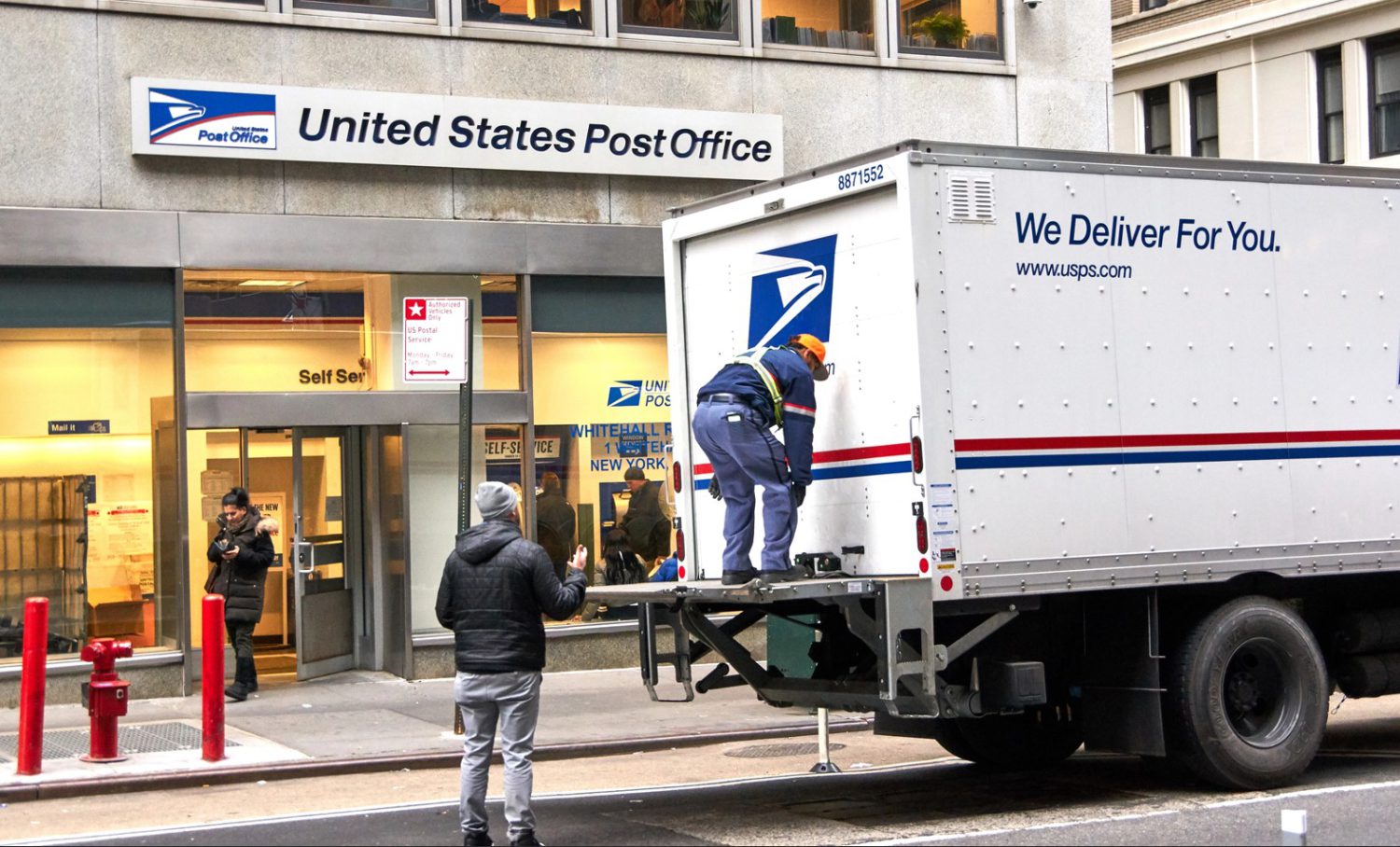
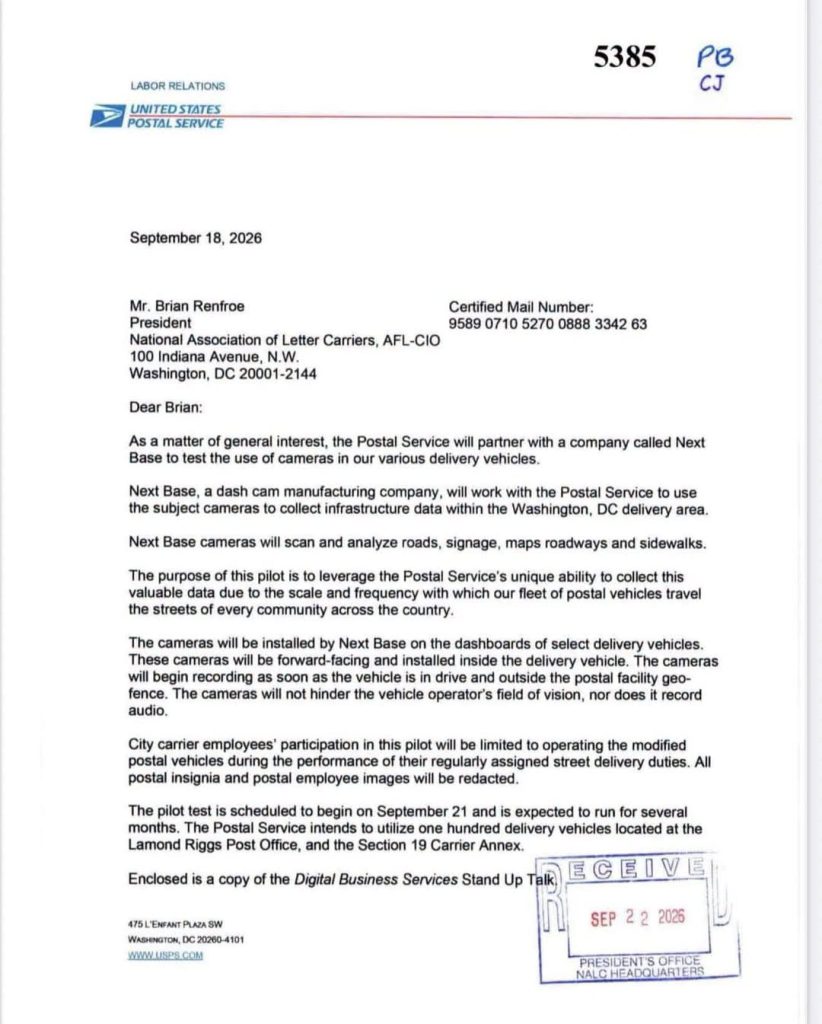
The United States Postal Service is testing forward-facing Nextbase dashcams in approximately 100 delivery vehicles in the Washington, D.C., area, according to a labor-relations letter sent to National Association of Letter Carriers President Brian Renfroe and reported by 404 Media. Cameras begin recording when a vehicle leaves the postal facility and is placed in drive, scanning roads, signage, roadways, and sidewalks. USPS says the pilot includes privacy safeguards, records no audio, and does not use automatic license plates-reader software.
The pilot is small. The logic behind it is not.
What the Cameras Actually Do
“No ALPR” sounds reassuring, but it covers less ground than most people assume.
A forward-facing camera can still record your front door, your parked car, a pedestrian, or a kid on a bike without converting any of it into a searchable database. The privacy consequences depend on what USPS does with the footage afterward: how long it is retained, who can access it, and whether any of it is ever shared. Those details remain unclear in the available reporting.
The exact Nextbase model being used, and whether footage is processed onboard, in the cloud, or both, are also unconfirmed. What USPS did confirm, in its own words, is why it considers this worth doing at scale.
“The purpose of this pilot is to leverage the Postal Service’s unique ability to collect this valuable data due to the scale and frequency with which our fleet of postal vehicles travel the streets of every community across the country,” according to the USPS labor-relations communication as reported by 404 Media.
That framing deserves scrutiny. Before this program expands, several questions remain unanswered:
- How long is raw footage retained, and who can access it?
- Can Nextbase use the data to train commercial models?
- Are faces, license plates, and house numbers automatically redacted?
- Can supervisors view footage to evaluate worker performance?
- What legal authority governs any sharing with law enforcement or other agencies?
Why the Financial Pressure Matters
USPS’s deepening losses give the agency a structural reason to find new value in the infrastructure it already operates.
USPS reported a $9 billion GAAP net loss for fiscal year 2025, according to the agency’s own financial disclosures. Its FY2026 plan projects an $8.1 billion loss. That kind of sustained financial pressure creates a real incentive to extract more value from existing assets.
This does not prove USPS intends to sell neighborhood imagery to mapping companies or insurers. That scenario is not established by any available evidence. Google Street View and Waymo have already demonstrated the commercial value of repeated, high-resolution street-level data, though. USPS operates a nationwide delivery network with broad and frequent route coverage that dwarfs either of those programs. The question of commercial licensing deserves a direct answer from the agency, not just a “community safety” characterization.
What Good Governance Looks Like Here
Road monitoring and accessibility data are legitimate public-works goals, but legitimate goals still require a clear framework.
The pilot is not inherently problematic. Road condition monitoring and sidewalk analysis serve real public needs. What is missing is the governance structure that would make any expansion defensible.
Responsible scaling requires published data-retention limits and vendor contracts that explicitly prohibit commercial reuse. It also requires a clear prohibition on using footage for employee performance evaluation, plus independent oversight before any expansion beyond the pilot. USPS sent NALC a notification about this program. Whether any meaningful consultation occurred before that letter was sent remains unclear, according to 404 Media’s reporting. That distinction carries weight: the cameras face outward, but they sit in vehicles driven by workers who have their own stake in how this data is used.
If USPS wants to turn its delivery fleet into a sensing platform, the burden of transparency belongs to the agency. The unanswered questions above are a reasonable place to start, much as stories of secretly tracking users have prompted calls for stronger oversight in comparable government data-collection programs.