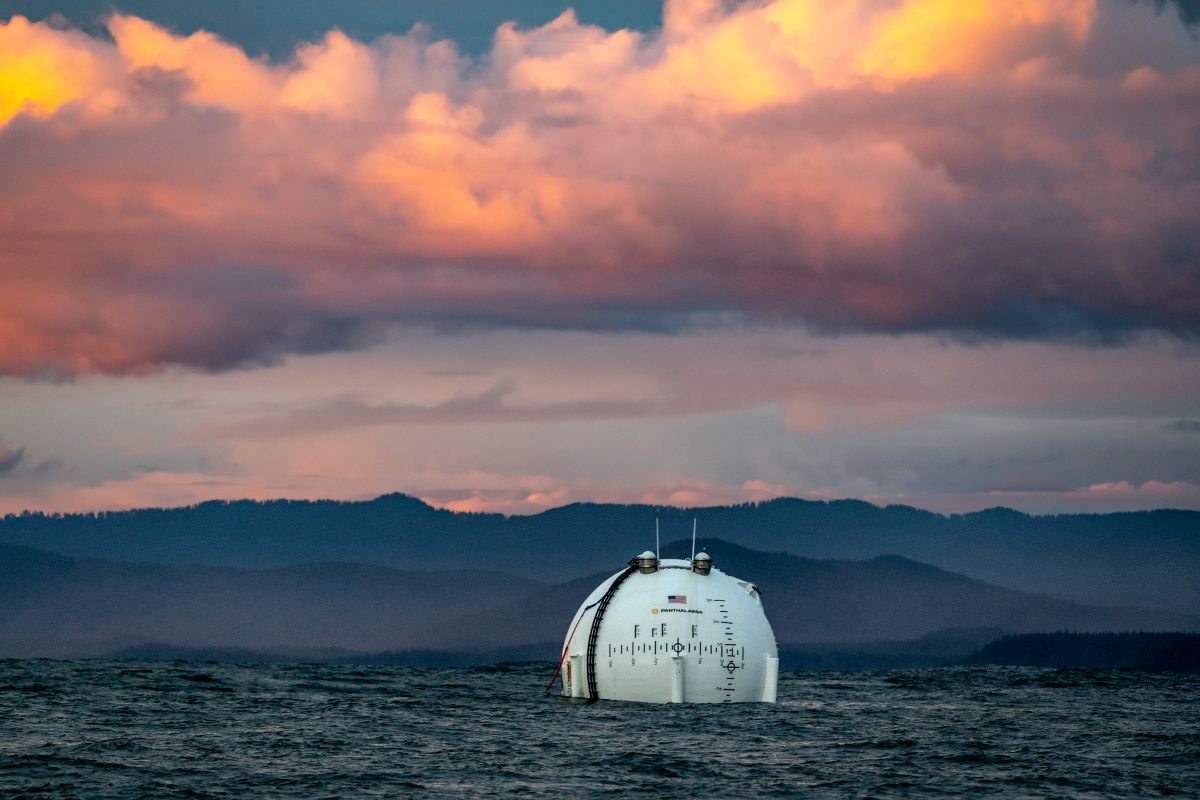
Peter Thiel just led a $140 million funding round for something that sounds ripped from a sci-fi screenplay: floating data centers powered entirely by ocean waves. Panthalassa, the Oregon-based startup behind this audacious concept, now carries a nearly $1 billion valuation based on solving AI’s most pressing bottleneck—where to find enough clean energy to feed humanity’s computational hunger.
The Deep Ocean Data Center Play
These aren’t your typical server farms—they’re as tall as Big Ben and mostly submerged.
The company’s “nodes” are 85-meter solid steel structures that bob in remote ocean waters, using their hull shape to force seawater through turbines as waves rock them endlessly. No engines, no gears, no connection to land-based power grids. Just hermetically sealed AI servers cooled by the surrounding ocean, connected to the world via SpaceX’s Starlink satellites.
This approach reportedly generates more energy than tidal or wind alternatives while avoiding shipping lanes. The structures deploy vertically after being towed horizontally to their ocean locations, targeting wave-rich areas where traditional infrastructure simply can’t reach.
Silicon Valley’s Ocean Frontier Fantasy
Ex-SpaceX and Google engineers claim they’ve cracked the code on untethered offshore computing.
“The future demands more compute than we can imagine,” Thiel said, describing the investment as opening “the ocean frontier.” This isn’t his first bet on oceanic ambitions—the PayPal co-founder has long championed seasteading concepts that bypass traditional infrastructure limits.
Panthalazza’s team reads like a who’s who of tech engineering: SpaceX veterans who caught rockets on drone ships, former Disney Imagineers, and NASA alumni. CEO Garth Sheldon-Coulson, previously at Bridgewater, claims these nodes capture “twice-concentrated sunlight” by operating 24/7 in wave-rich areas that concentrate solar energy transferred to ocean motion.
The Reality Check on Ocean Computing
Commercial deployment timeline faces the ultimate stress test: actual ocean conditions.
Marc Benioff, Max Levchin, and legendary VC John Doerr have joined the funding round, with Doerr calling it a “game changer” for clean power generation. The technology supposedly minimizes marine impact through limited water circulation while manufacturing uses earth-abundant steel for rapid scaling.
But here’s the trillion-dollar question: can steel structures bobbing in harsh ocean conditions actually deliver enterprise-grade computing reliability? Panthalassa targets commercial deployments based on their October 2023 announcement, aiming for remote wave-optimal locations where traditional data centers simply can’t reach.
If the physics work as promised, you’re looking at AI infrastructure that could bypass every grid limitation and environmental concern plaguing land-based computing. If not, it’s a very expensive lesson in oceanic engineering that even Thiel’s track record can’t guarantee will float.