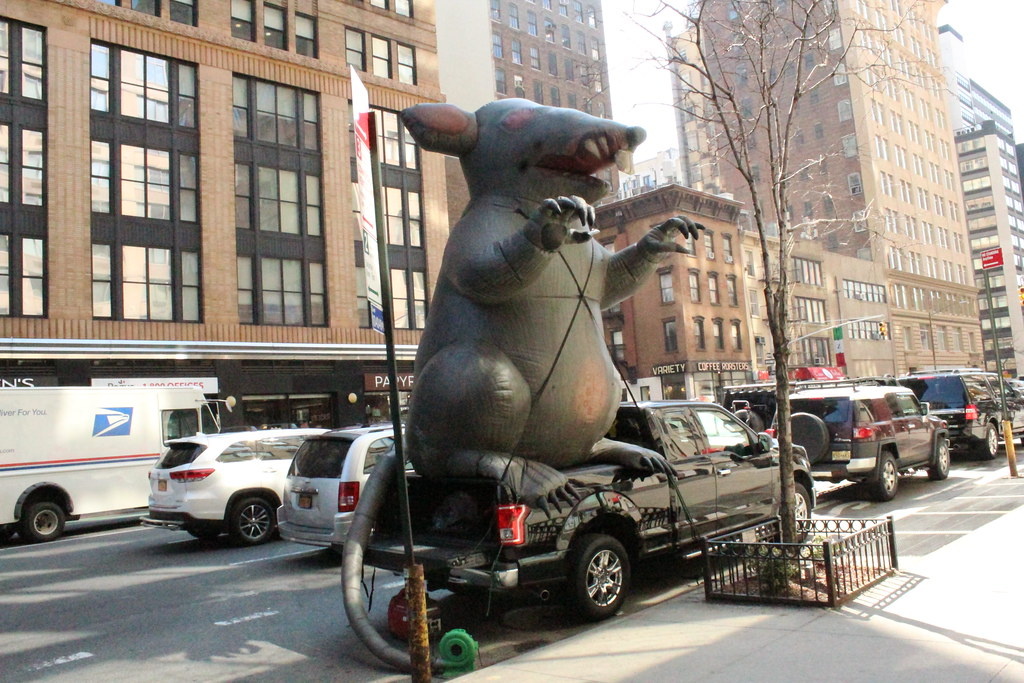
That bait station beneath the kitchen sink is increasingly decorative for most urban mice — and a new genetic study explains exactly why. Researchers analyzed DNA from 147 house mice and 143 Norway rats trapped across New York, New Jersey, Pennsylvania, and Washington, D.C., zeroing in on the VKORC1 gene — the molecular switch controlling vitamin K recycling. Block it with anticoagulant poison, and a rodent bleeds out internally. Mutate it, and the poison barely registers.
The numbers are stark:
- 84% of urban house mice carry at least one VKORC1 mutation
- Nearly 70% carry variants already confirmed to reduce anticoagulant effectiveness
- One in five mice carry two resistance mutations simultaneously
- 35% of Norway rats showed some VKORC1 variation — but whether those mutations actually confer resistance remains unknown
- Previously unrecorded variants appeared in both species, with functional impact still an open question
“We found that resistance appears to be much more widespread in house mice than many people realized,” said Jin-Jia Yu, a Rutgers postdoctoral researcher. Two mutations — Y139C and L128S — appeared in 42% and 33% of mice respectively. Lab work on similar variants has shown they can slash mouse mortality from anticoagulants from above 80% down to single digits.
Here’s what the “mutant sewer rat” headlines get wrong. Norway rats aren’t beating poison genetically — they’re dodging it entirely. Rutgers researchers describe sewer rats as behaviorally evasive: suspicious of new objects, unfamiliar food, and live traps. Think less Marvel villain, more street-smart survivor. Mice are the ones evolving resistance. Rats are simply refusing to play.
The Cities, the Diseases, and What Comes Next
Resistant infestations compound already serious disease risks in the Northeast’s most crowded urban corridors.
Census data paint the backdrop:
- 29% of Philadelphia households report spotting rats at home
- Manhattan sits around 15%
- D.C. hovers near 20%
The health stakes are real — 24 recent NYC leptospirosis cases were traced directly to rodent contact, and WHO confirmed nine hantavirus cases, three of them fatal, aboard a cruise ship in early 2026. Resistant populations that survive chemical control make containment measurably harder.
The pest-control playbook is shifting. UK researchers now map resistance alleles to match rodenticides to local genetics, choosing compounds that still work against each area’s specific genetic profile. Cities are testing fertility-control baits and aggressive environmental management — waste reduction, structural proofing, eliminating food sources. It’s the same logic as antibiotic resistance: keep hammering with the same tool, and you breed exactly what you cannot kill.
For anyone living in a major Northeast city, the uncomfortable reality is straightforward. That bait station is increasingly a placebo. Sanitation and building management aren’t glamorous solutions. They’re just the ones that still work.