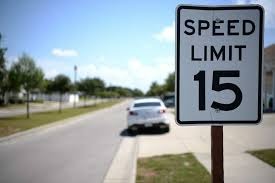
That 15 mph sign glaring at you in your neighborhood plaza? You’ve probably crawled past it like you’re hauling a trailer full of eggs, worried about getting pulled over for traffic violations. Here’s the liberating truth: most private speed limit signs carry about as much legal weight as a “Beware of Dog” sticker on a chihuahua’s kennel.
Private property owners—from HOAs to shopping centers—can post speed limit signs all they want, but they generally can’t result in actual speeding tickets unless very specific legal conditions are met.
Who Actually Controls Your Speed
Only government agencies have the authority to set legally enforceable speed limits.
Real speed limits require engineering studies, traffic investigations, and official government approval—not just someone with a sign maker and good intentions. Cities, counties, and states hold exclusive authority to establish legally binding speed limits following established procedures.
While your HOA president might dream of having citation power, posting a speed limit sign doesn’t magically grant enforcement authority. According to traffic safety experts, “No officer is going to enforce an arbitrarily chosen speed limit sign” without proper legal backing.
State Rules Create Dramatic Differences
Your location determines whether private signs have any enforcement power.
Washington state makes it completely illegal to post private signs that imitate official traffic devices. Those fake speed limit signs aren’t just unenforceable—they’re actually prohibited by law.
Ohio takes a different approach, allowing HOAs with 20+ residential units to establish enforceable speed limits under Code 334.035. However, these must meet strict requirements:
- Minimum 25 mph limits
- State-compliant signage
- Proper private property notices
Florida requires municipal agreements under Fla. Stat. §316.006(2)(b) for police enforcement on private roads. Without these specific legal frameworks, those signs remain expensive suggestions.
When Private Signs Actually Have Teeth
Some exceptions can still land you in legal trouble.
Don’t celebrate with a victory lap just yet. Even on private property, reckless driving citations remain possible if your car speed seems dangerous regardless of posted limits. Police can cite unsafe driving behavior without relying on speed limit signs.
Additionally, HOAs can fine residents internally through community rules, even when they can’t involve police. Some private roads do gain enforcement power through formal government adoption or traffic control agreements—but these require extensive legal procedures most property owners never complete.
Your New Driving Confidence
Understanding these rules reduces unnecessary road anxiety.
Next time you’re navigating a new development or strip mall and driving, look for signs indicating government authority versus private advisory notices. This knowledge won’t turn you into a speed demon, but it might prevent those unnecessarily cautious crawls through parking lots that create traffic jams behind you.