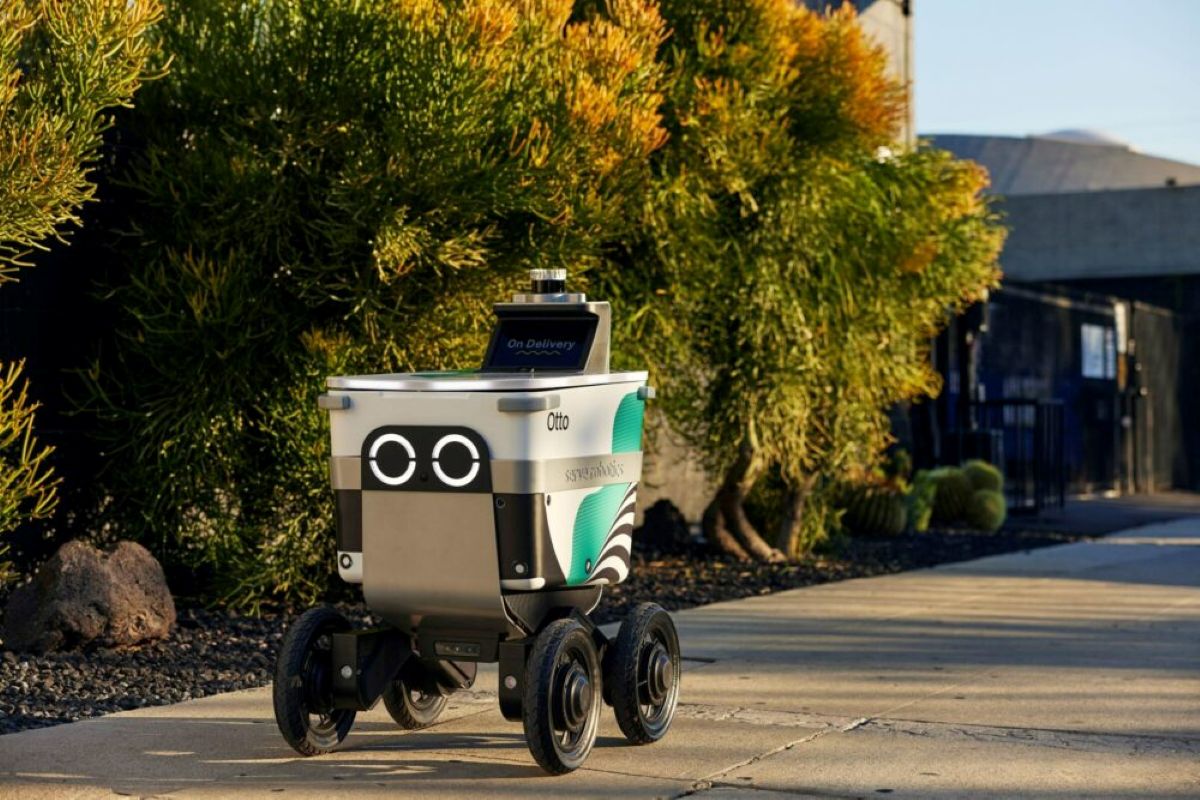
That cheerful little robot wheeling your Thai food down the sidewalk seems harmless enough. It’s about the size of a cooler, decorated with cheerful branding, and moves at walking pace while dodging pedestrians. What you probably don’t realize: it’s filming everything it sees, and that footage can end up in police hands faster than your pad thai gets cold.
When Robots Become Witnesses
The Serve Robotics case shows how delivery footage turns into criminal evidence.
Last year in Los Angeles, two men tried stealing a Serve Robotics delivery robot. Bad choice. The robot’s navigation cameras captured the entire attempted heist. Serve Robotics then handed over the footage to the LAPD, which used it to identify, track down, and convict the suspects for grand larceny.
An LAPD detective later wrote that without the robot video, there was “no way of identifying the perpetrators.” The footage proved “highly beneficial” to the investigation—essentially turning a dinner delivery into a mobile crime scene photographer.
This wasn’t some dystopian surveillance program. Just a robot doing its job, equipped with the cameras and sensors needed to navigate city streets without mowing down pedestrians or getting flattened by cars.
Serve has reached out to us with a statement that it takes privacy extremely seriously and you can check out Serve Robotics Privacy Policy here.
Your Sidewalk, Their Hard Drive
Mobile cameras capture more than fixed security systems ever could.
Unlike your corner store’s static security camera, delivery robots roam neighborhoods for hours, building a continuous visual record of street life. They film people walking dogs, couples arguing, kids playing—all the mundane moments that happen in public but feel private.
Serve Robotics claims it routinely deletes camera feeds “unless there are compelling safety or security concerns,” but that’s still a judgment call made by a private company about public footage.
The legal reality? You have virtually no expectation of privacy on public sidewalks. Robot footage sits in the same legal category as any business security camera, available to police via subpoena or voluntary cooperation. The difference is scale and mobility—these aren’t fixed cameras watching one storefront, but roving eyes that can map entire neighborhoods block by block.
Privacy in the Age of Rolling Cameras
Today’s narrow use cases could expand as robot fleets grow.
Right now, documented cases like the Serve incident appear reactive—footage pulled after specific crimes involving the robots themselves. But as fleets scale into thousands of units and law enforcement becomes familiar with these data sources, “security exceptions” could broaden.
What starts as protecting property could evolve into informal distributed surveillance, especially if video retention periods extend or AI-powered analysis becomes standard.
Cities and regulators are making decisions now that will determine whether delivery robots remain helpful infrastructure or become rolling surveillance cameras with a side business in pad thai delivery. The convenience is real, but so is the trade-off most people never see coming.
Update 8/16/2026: Title was changed to be more factually accurate, posing the question rather than a statement.
Added that Serve has reached out to us with a statement that it takes privacy extremely seriously and we added a link to their Privacy Policy so that readers can judge for themselves.