Watching your hairline retreat feels like watching a slow-motion disaster you can’t stop. But Japanese researchers just figured out what every other lab missed—and their breakthrough could rewrite everything about hair loss.
The Missing Piece Finally Revealed
Scientists identify the third cell type that makes lab-grown hair follicles actually work.
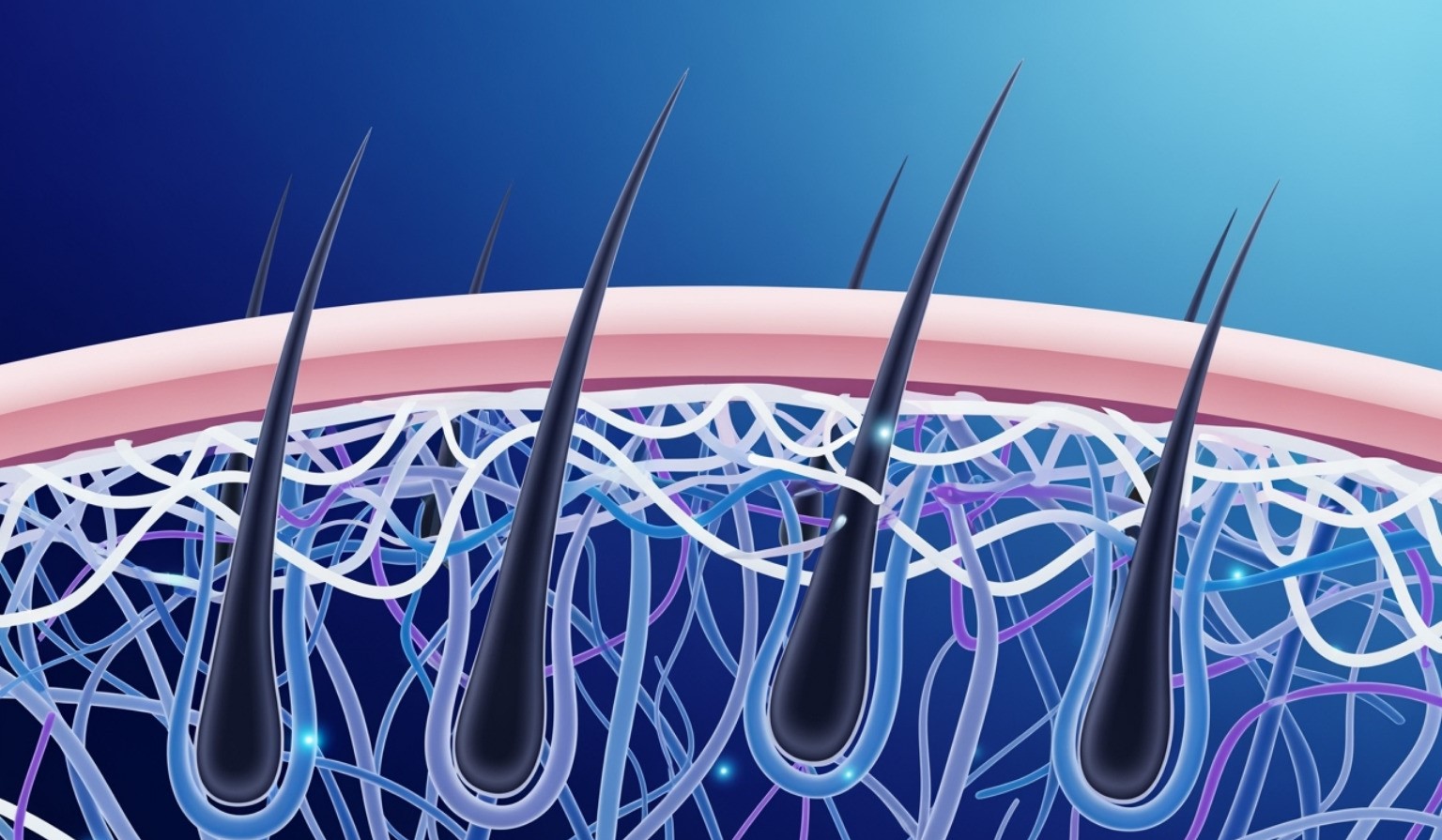
OrganTech Inc., RIKEN, and Yokohama National University cracked a puzzle that stumped researchers for decades. Published in Biochemical and Biophysical Research Communications this February, their study reveals the secret isn’t just mixing epithelial stem cells with dermal papilla cells—you need a third player.
These PDGFRα⁺ CD34⁺ Sca1⁺ mesenchymal cells from the dermal condensate region act like cellular conductors, orchestrating the entire follicle formation process. The results? Lab-grown “bioengineered hair follicle seeds” produce 3mm hair shafts with 100% efficiency in just two weeks. Complete with pigmentation.
Real Hair That Actually Cycles
Mouse transplants prove these lab-grown follicles behave like the original equipment.
Here’s where previous attempts usually failed—creating follicles that looked right but couldn’t sustain natural hair cycles. When researchers transplanted their three-cell follicles into mice, something remarkable happened.
The follicles integrated with surrounding nerves and muscles, then proceeded to grow, shed, and regrow hair for over 68 days. Like a biological subscription service that actually works. This isn’t just proof of concept anymore. It’s functional hair restoration that could theoretically provide unlimited donor follicles, eliminating the scarcity problem that limits current transplant procedures.
From Lab Bench to Your Scalp
Human trials could start late 2026, but timeline skepticism is warranted.
OrganTech plans human clinical trials by late 2026—though their previous timeline slipped from 2024, so grain of salt required. The company’s CEO Yoshio Shimo calls this “a foundational cellular configuration for functional hair follicle regeneration,” which sounds like corporate speak but actually understates the potential market disruption.
The hair restoration industry generates over $10 billion annually serving roughly a quarter of the global population experiencing hair loss. If this technology scales successfully, it could transform baldness from a permanent condition into a temporary inconvenience. Your future self might thank these researchers for making receding hairlines as obsolete as dial-up internet.