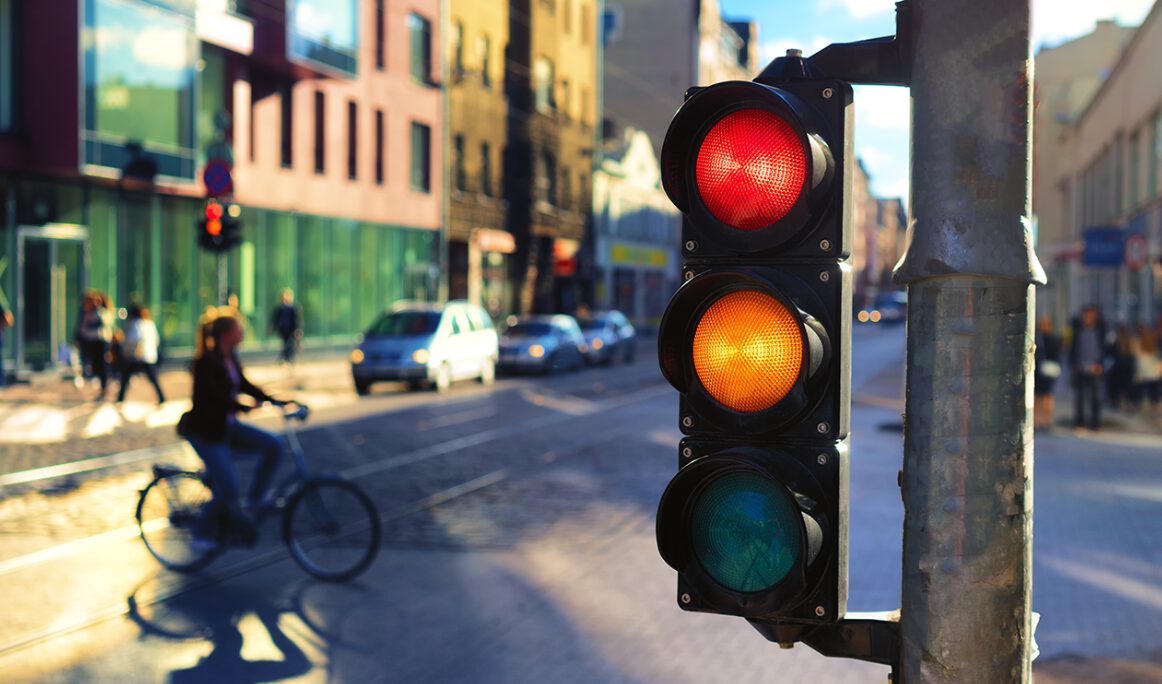
Every eight hours, someone dies from red-light running in America. That grim math—1,086 fatalities in 2023 alone—has finally pushed intersection safety beyond blinking lights and crossed fingers into genuinely smart territory.
Your daily commute just got a high-tech guardian angel, courtesy of companies that treat traffic deaths like the engineering problem they’ve always been. JSF Technologies’ solar-powered LED beacons cut collisions by 47% and nighttime severity by 54%. These aren’t your grandfather’s stop signs—motion sensors trigger aggressive flashing when they detect approaching vehicles, like having a crossing guard with superhuman reflexes.
Half of all red-light fatalities involve pedestrians, cyclists, or people in other vehicles—meaning the reckless driver often survives while innocent people pay the price.
Smart Sensors Predict Crashes Before They Happen
AI systems now calculate collision probability in real-time, extending red lights when danger approaches.
Iteris takes prediction further with their Vantage Apex system, combining radar and video to spot red-light runners before impact. When sensors detect a speeding car unlikely to stop, the system holds opposing traffic signals—essentially buying time measured in lives saved.
Omnisight’s FusionSensor adds weather-resistant HD video and AI hazard detection that works through rain, snow, and that weird fog that makes every intersection feel like a horror movie. The technology reads traffic patterns like a veteran cop spotting trouble.
According to IIHS data, red-light cameras alone reduce fatal intersection crashes by 14% and fatal red-light running specifically by 21%. Add predictive AI, and you’re looking at systems that don’t just catch violations—they prevent them.
Your City Probably Needs This Yesterday
Arizona’s 6,000 red-light crashes in 2024 show why smart intersections can’t arrive fast enough.
UCLA’s InfraShield project uses LiDAR and machine learning for conflict prediction, while INRIX taps connected vehicle data to forecast crashes through time-to-collision calculations. These systems turn every traffic light into a smart bouncer—one that actually keeps the dangerous elements out.
Your intersection safety shouldn’t depend on other people’s impulse control. When technology can predict a crash seconds before it happens and automatically adjust signals to prevent it, the question isn’t whether your city can afford these systems. It’s whether it can afford not to install them.