A 77-year-old woman walks into a spare bedroom in suburban Boston. Her kids moved out years ago. Now the room has a yoga mat and a smartphone propped against some books.
She’s done this 120 times.
No gym membership. No fancy equipment. Just an AI named Ray counting her reps and guiding her through bodyweight exercises. She stays mobile. She keeps moving.
“What happens is she signs up for Ray and talks to her,” says Colin Raney, co-founder and CEO of the Cambridge-based startup. “She goes into her bedroom that her kids used to have, and she does bodyweight exercises, and that’s fine for her, but it keeps her mobile and it keeps her moving.”
This is the vision that Raney and Rich Miner, co-founder of Android, have spent two years building. Miner helped create the operating system running on more than 4.5 billion devices worldwide. Now he’s focused on a different problem: getting people to actually exercise.
The $44.8 Billion Problem
Americans spent $44.8 billion on fitness last year. Gym memberships were purchased. Peloton bikes were delivered. By mid-January, most of those investments were collecting dust.
Research from the National Institutes of Health points to one solution that consistently works: personal training. People who work with trainers lose more fat, build more muscle, and stick with their programs longer. The catch is obvious. Personal training costs $50 to $150 per hour. Most people can’t sustain that.
“Personal trainers are amazing,” Raney said. “I think everyone should have one. Everyone can’t afford one.”
Raney spent eight years at IDEO, the legendary design firm, before becoming CMO of PillPack. That startup, later acquired by Amazon for nearly $1 billion, solved a similar behavioral problem. People forget to take their medications. PillPack sorted pills by dose and shipped them in dated packets. Adherence improved.
After PillPack, Raney kept searching for a fitness solution that worked for him. He tried every app. He hired trainers. Nothing stuck.
“It was always frustrating because they always sucked,” Raney said. “I mean, it was always that everybody would tell you exactly what you were supposed to do. Depending on how much you’re paying, it would be a little bit better of an experience. Or not. But nothing really helped you.”
To build something better, Raney became a certified personal trainer himself. He wanted to understand what actually makes the trainer-client relationship work before trying to replicate it with AI.
“Actually, it’s not so dissimilar from fitness,” Raney explained. “You get all the content, you get all the things, but the behavior and the routine, you have to do it yourself.”
Exercise presents the same challenge. YouTube has infinite workout videos. ChatGPT can generate a training program in seconds. The content isn’t the bottleneck.
“You can go get a workout from bodybuilder.com,” Raney said. “There’s really no difference. You can chat with ChatGPT, build you a program, and you can go get it for free. I mean, I can give you twenty places on the internet. The problem is, can it evolve with you?”
Ray Isn’t a Workout Factory
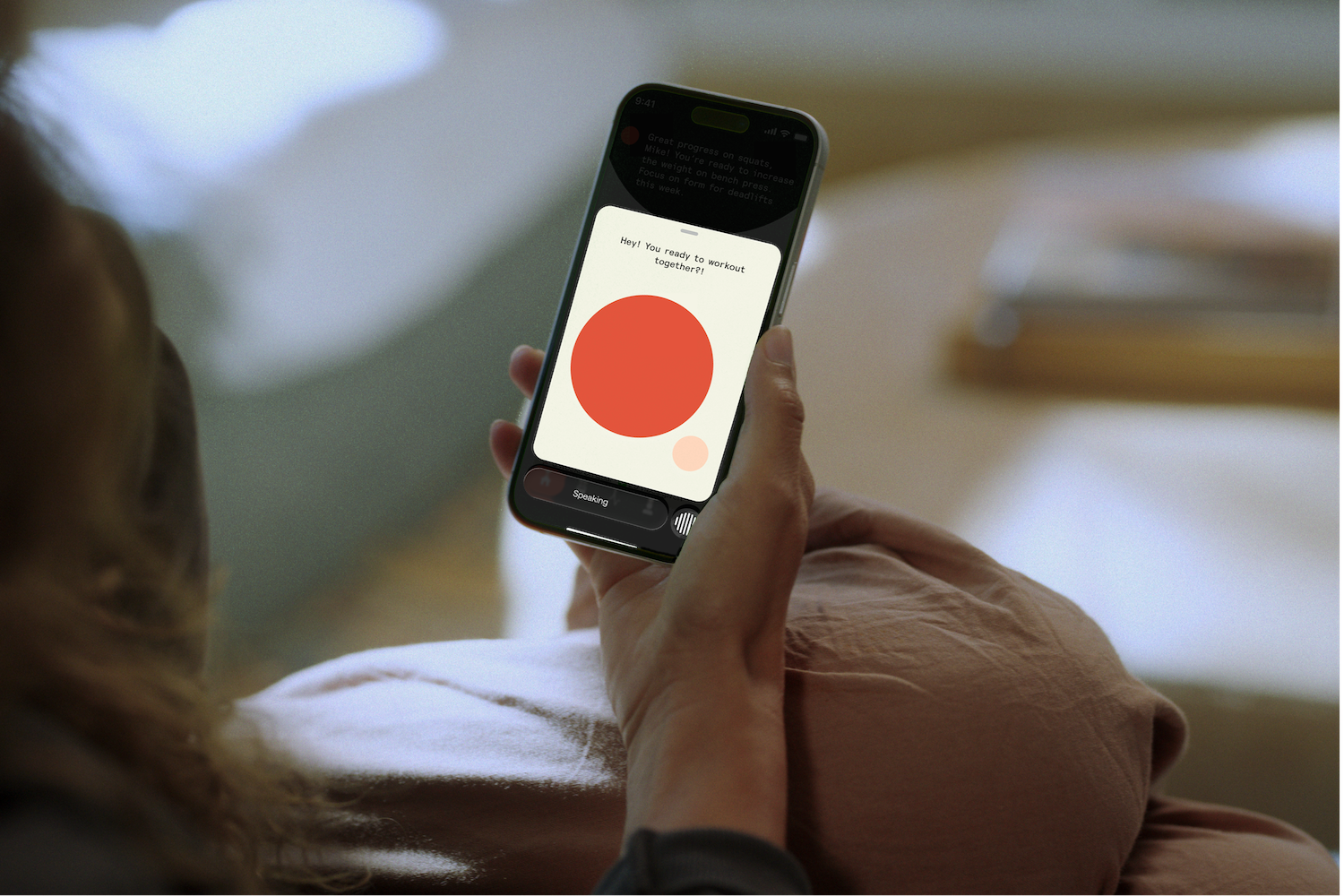
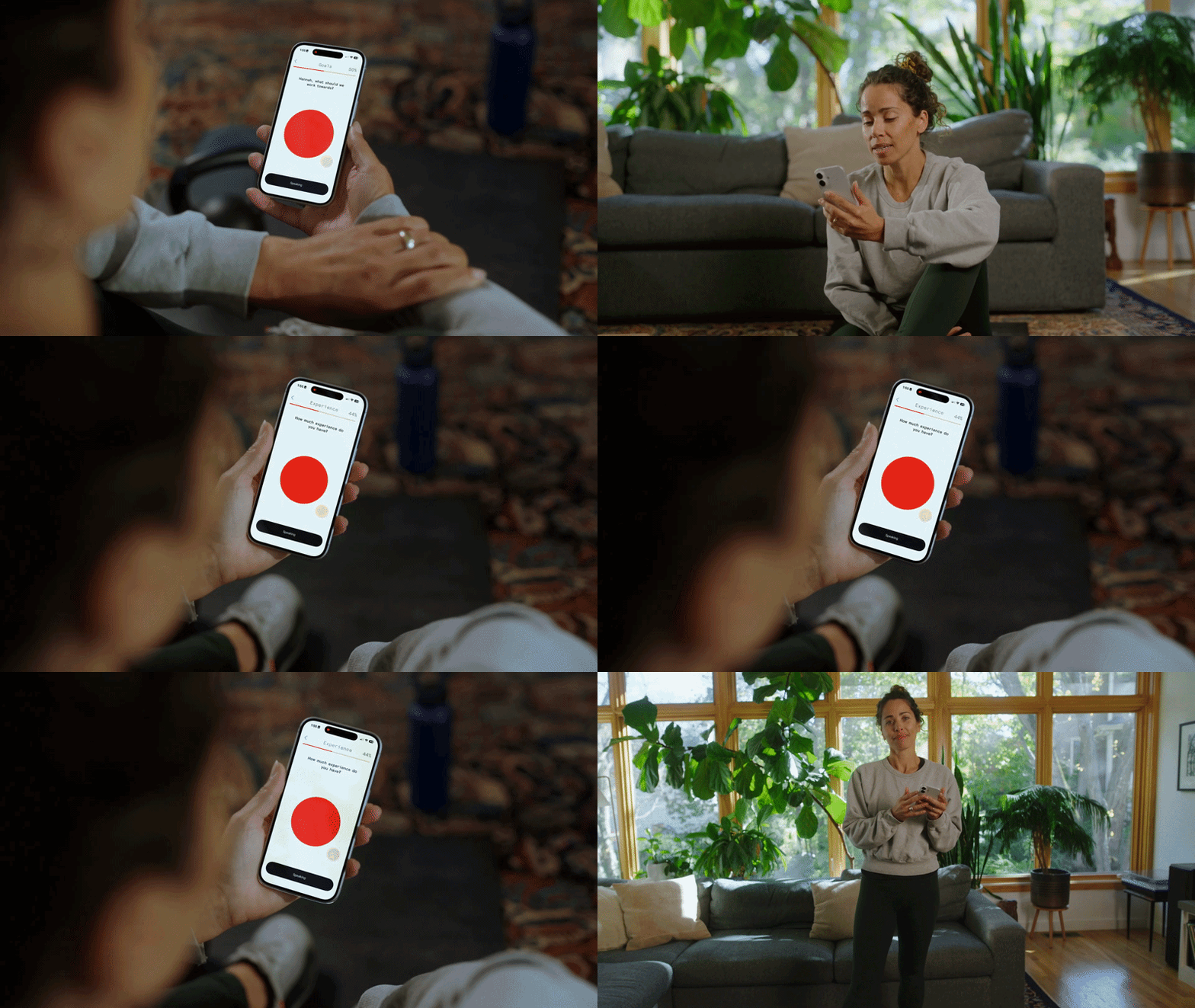
When you open Ray, you don’t scroll through a library of pre-recorded classes. You talk to it.
Tell Ray you have a tricky shoulder that acts up sometimes. Mention you only have 20 minutes before a meeting. Say you’re in a hotel gym with limited equipment. The AI adapts.
“What the AI allows us to do is navigate that vagarity of people’s lives and bodies and how they live and work,” Raney said. “But landed in a place that they don’t have to back-solve.”
During our conversation, Raney demonstrated this by speaking directly to the app.
“Hey, Ray, I’ve been pretty busy this week, but I would love to do, like, some kind of something, little recovery. Can we do some kind of recovery moving around thing for maybe like 20 minutes?”
Ray responded within seconds: “I’ve set up a 20-minute recovery session with some movement and stretching for you today. This will get you moving without overdoing it. Active recovery, but with zero guilt for taking it easy.”
The app currently offers around 700 exercises. For roughly 60% of them, Ray can optionally use your phone’s camera to count reps through computer vision. It’s not required. But if you want it, you prop up your phone and it watches you move.
“Ray will offer to count your reps,” Raney said. “You can go put the phone over and it will center you on the phone. Then, as you do it, it will count with you.”
The feature is still being refined. Raney describes it as a beta that works better in some lighting conditions than others.
The computer vision processing happens entirely on the device. No video is recorded or uploaded.
“All of that stays within either the phone or on the servers of Ray,” Raney said. “There’s no taking personal information out into the world.”
Built for People Who Have Other Things to Do
Ray isn’t chasing the fitness hobbyist. The target customer is someone 30 or older who juggles a lot of responsibilities and knows exercise would help but can’t figure out how to make it stick.
“Fitness should be for everybody,” Raney said. “It should not just be for people who are like shaved and sweaty and all the tropes.”
The app integrates with Apple Health, pulling data from Whoop, Oura, Apple Watch, Eight Sleep, and other devices. But here’s the thing: we’ve never had more fitness data. Wearables track sleep, heart rate variability, recovery scores, steps, and calories. The problem is none of it tells you what to actually do.
Your Oura ring knows you slept poorly. Your Whoop says your recovery is in the tank. Now what?
Ray uses that information to adjust your programming. Bad sleep? Maybe today’s not the day for heavy squats. Crushed your recovery? Time to push harder.
“The world doesn’t seem to need any more devices, doesn’t seem to need any more content,” Raney said. “But what it really seems to need is help with people building that behavior.”
The app costs $19.99 per month after a two-week free trial. Discounts are available for longer commitments.
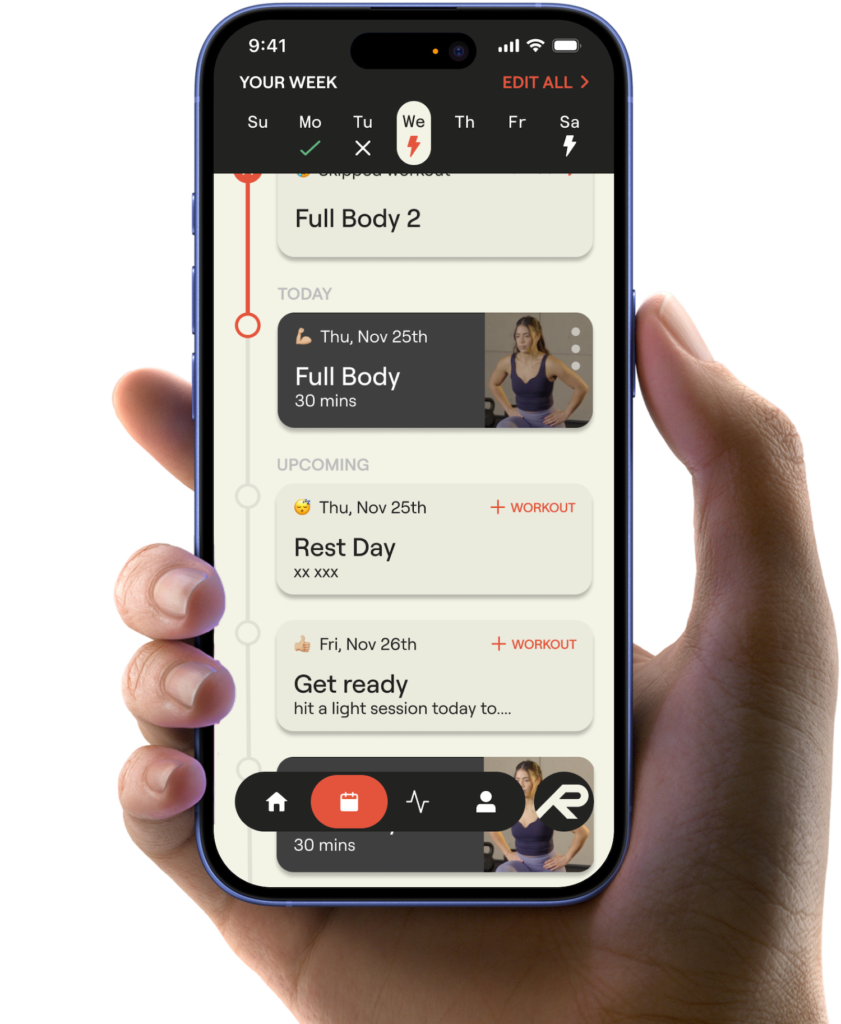
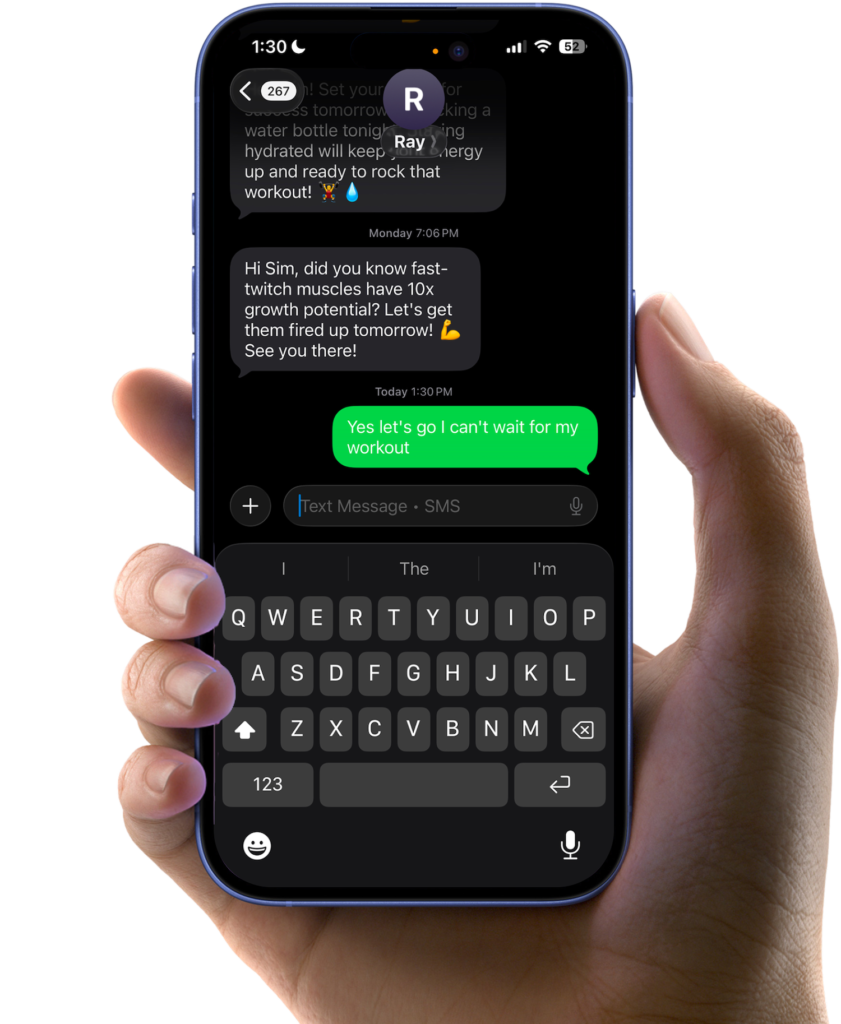
Raney describes Ray as more of an agent than a workout factory. It texts you the night before a scheduled workout. It adapts when your schedule changes. It remembers what you’ve done and programs accordingly.
“The point is trying to understand you, flex with you, move with you, send you text the night before,” Raney said. “So we just keep in a healthy, kind of way, nudging you and guiding you and taking the decisions out of the way that would make it so easy. It actually becomes something you enjoy.”
The Technology Under the Hood
Ray uses large language models, leaning primarily on OpenAI, to handle the conversational interface and personalization. The company switches between models as needed.
The workout content itself is not AI-generated. Every video was shot by Ray’s team.
“We do all our own stunts,” Raney said. “There may be a time when AI is good enough that it can personalize to people and all kinds of things. I think by the time we get there, that Overton window will have shifted.”
For now, the team believes authentic human demonstrations build more trust than synthetic imagery.
“If you have a synthetic image of somebody doing an exercise, it doesn’t give you more confidence that you can do it,” Raney said. “But if you can see a real human doing it, then that translates.”
What’s Next
The computer vision features are still early. The bigger vision includes form correction and mobility assessments that could inform smarter programming.
“We have a lot bigger vision for how vision works,” Raney said. “I think towards the point around form correction too. But this stuff is… you need to train the models, and you need to figure out for each of the exercises.”
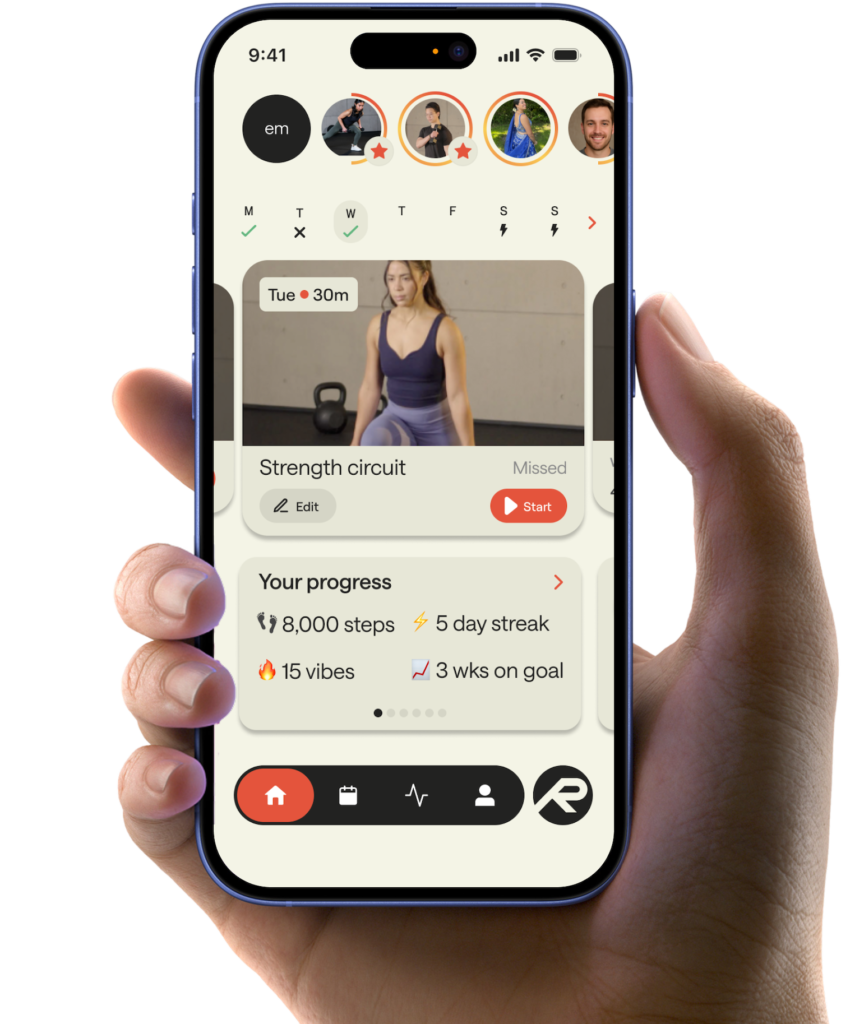
The company launched quietly in May and has been refining the product based on user feedback. Ray holds a 4.88 rating in the App Store. The company declined to share daily active users or download numbers.
For Miner, who co-founded Android in 2003 and later became a general partner at Google Ventures, this is a return to building consumer products. He’s been working on AI for decades and holds patents on some of the earliest voice assistant wake words.
“And the minute when that came on the scene and I was coding with it and playing with it, I was like, no. I think over time, you could give this thing a memory, a long-term memory, a short-term memory,” Raney said, describing conversations with Miner about the potential of generative AI. “It could understand you. It could talk to you, it could guide you.”
The fitness market is crowded. Apple Fitness+, Peloton, and countless apps compete for attention. Raney acknowledges this.
“The fitness market is incredibly crowded, as you know,” he said. “But I think it’s such a moment and it’s so powerful that you’re not going to change unless you try. And if it was easy and if it was obvious, it would have already been done.”
Ray is currently available on iOS with Android support coming soon. A two-week free trial is offered to new users.