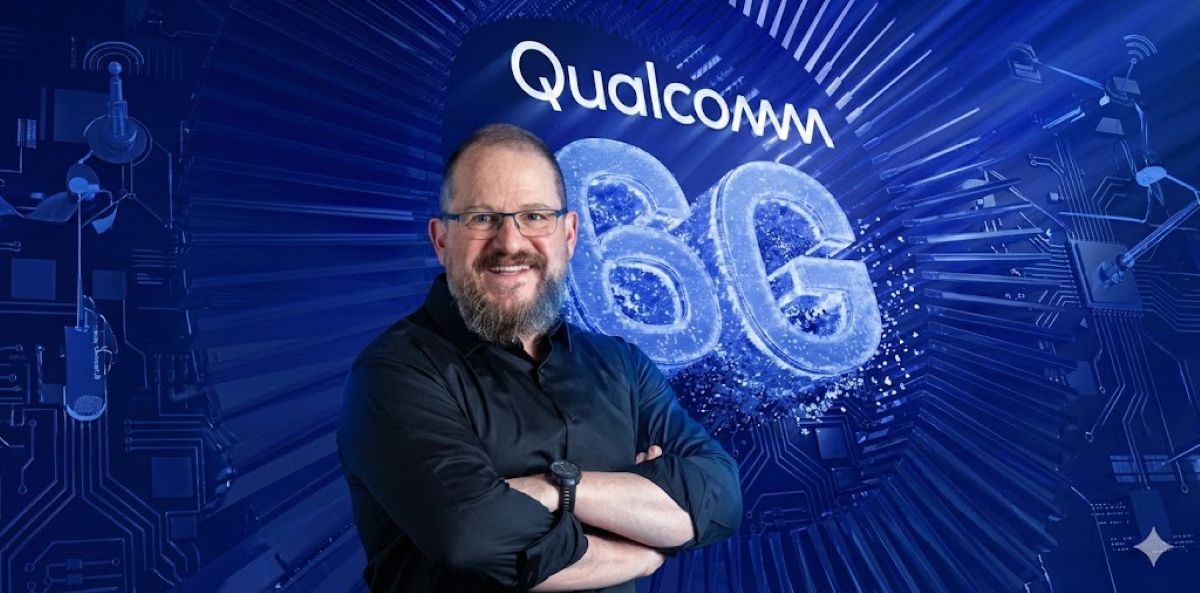
Resistance is futile. Qualcomm CEO Cristiano Amon didn’t mince words at Computex 2026, declaring that autonomous AI agents will inevitably replace smartphones as the center of your digital life. His vision spans roughly 10 billion devices — phones, earbuds, PCs, cars, smart glasses — all serving as terminals for persistent agents that sense, plan, and act continuously on your behalf.
The Economics Behind Agent Inevitability
Distributed computing makes always-on agents financially viable, according to Amon
Amon’s “resistance is futile” line isn’t sci-fi posturing — it’s pure economics. Running these omnipresent agents entirely in the cloud would be prohibitively expensive. Instead, Qualcomm’s “compute continuum” spreads workloads from 2-milliwatt earbuds up to kilowatt-scale data centers, cutting costs by up to 4× compared to cloud-only approaches. The agent follows you seamlessly across devices, accumulating context like a digital shadow that never sleeps.
Walking Cameras and Digital Surveillance
6G networks will turn every radio connection into a motion sensor
Here’s where Amon’s vision gets dystopian. He envisions 6G networks functioning as city-wide radar systems, with millions of high-frequency radio connections detecting vehicles, cyclists, and pedestrians in real time. Combined with smart glasses that “see what you see,” this infrastructure creates digital twins of entire neighborhoods. Your wearables become “walking cameras“ feeding continuous visual and spatial data to agents.
The Security Blind Spot
New attack vectors emerge as agents operate outside traditional monitoring systems
Security researchers are sounding alarms about “parallel poisoned webs” — malicious websites that serve benign content to humans but hidden prompts to AI agents. These attacks can hijack agents invisibly, exfiltrating data while you remain oblivious. Endpoint agents also operate at the OS level, accessing clipboards and files in ways that traditional security tools can’t detect.
Your Jarvis or Your Jailer?
The convenience-surveillance trade-off becomes unavoidable
Qualcomm promises a future where agents proactively manage your schedule, prioritize tasks, and orchestrate smart home devices before you realize you need them. But this convenience requires surrendering granular control over what’s monitored, logged, and analyzed about your daily routines. Unlike today’s privacy settings that you can toggle off, these agents need continuous context to function — creating an all-or-nothing proposition.
The infrastructure is already rolling out through “AI PCs” and always-listening wearables. Your choice isn’t whether this happens, but how much agency you’ll retain once the agents arrive.