Giant robots grip our collective imagination with equal parts awe and technological possibility. These aren’t just movie props or manga fantasies anymore. From space-exploring assistants to battle-ready behemoths, these mechanical marvels push engineering to its breaking point. As noted in BuiltIn’s comprehensive analysis of humanoid robots, these innovations represent some of the most ambitious engineering efforts of our time.
Think of them as the mechanical equivalent of concept cars – wild, sometimes impractical, but absolutely essential for moving technology forward. Each metallic giant serves as a testing ground for breakthroughs in AI, materials science, and human-machine interfaces. Ready to meet the robots that make your smartphone look about as impressive as a pet rock? Let’s roll out.
13. Martin Montano’s Walking Beast: The Ultimate Party Crawler

When your standard party bus won’t cut it, there’s always the option of building a mechanical monster with controlled flamethrowers. That’s what Oregon engineer Martin Montano did with the Walking Beast – a massive walking platform that’s captured attention in the maker community.
The Walking Beast, widely reported to be 11 feet tall and 24 feet long, carries operators and passengers across varied terrain at a leisurely 6 mph. The four-legged creation features LED light shows and controlled flamethrowers. Montano spent three years building this $50,000 passion project that demonstrates how individual creators can produce remarkable mechanical innovations without massive engineering teams or corporate backing.
12 Kuratas: Japan’s Million-Dollar Mech Toy

Kuratas represents that uniquely Japanese ability to make something simultaneously adorable and terrifying. This 13-foot tall creation from Suidobashi Heavy Industry looks battle-ready with its imposing frame, rocket launchers, and machine guns – until you learn those weapons fire fireworks and BBs. It’s essentially the world’s most expensive paintball accessory.
Created by Kogoro Kurata (yes, he named it after himself because why not?), this wheeled wonder reaches speeds of 6 mph using 30 articulated joints that respond to pilot commands. With a price tag around $1 million, Kuratas occupies that fascinating space between serious engineering and elaborate art installation – similar to how Supreme sells ordinary objects at extraordinary prices by reframing them as cultural statements.
11. Letron BMW e92: The Transformer That Actually Transforms

In 2016, a Turkish company called Letrons decided childhood dreams deserved to be real and built what Michael Bay’s CGI team could only simulate – an actual transforming car. Their red BMW e92 doesn’t just sit pretty; it unfolds from ordinary luxury vehicle into a towering robot through a mesmerizing ballet of hydraulics and mechanical wizardry.
The Letron’s head rotates a full 120 degrees while extending wings and articulating fingers move with the precision of a mechanical surgeon. Unlike many robotics projects that require viewers to use their imagination to see the potential, the Letron delivers immediate visual satisfaction – that “no way!” moment when a familiar object becomes something completely different before your eyes. It’s the mechanical equivalent of a magic trick where the audience knows there’s engineering involved but still can’t quite believe what they’re seeing.
10. Kabutom RX-03: The One-Man Mechanical Beetle Revolution

In 1997, when most 60-year-olds were planning retirement, Hitoshi Takahashi decided to build a giant mechanical beetle instead. This isn’t the beginning of a joke – it’s the origin story of the 36-foot long, 17-ton Kabutom RX-03, which lumbered into public view in 2008 after eleven years of obsessive tinkering. It’s the robotics equivalent of building a cathedral by yourself.
The six-legged colossus breathes smoke from its nose like a mechanical dragon disguised as an insect. What makes this creation remarkable isn’t just its appearance but the fact that one determined person made it happen. Takahashi’s beetle-bot works as a perfect counterargument to the notion that groundbreaking tech requires massive corporate backing or youth-driven startups.
9. Land Walker: When Speed Is Optional, But Looking Cool Is Mandatory

The Land Walker stands as a notable early attempt at rideable mech design. This Japanese creation from Sakakibara Kikai towers over 11 feet tall and weighs in at 2,200 pounds – impressive stats until you learn it moves slower than a casual stroll. With a top speed under 1 mph, it prioritizes appearance over practicality.
Often reported to cost approximately $345,000, this bipedal mech comes equipped with rubber ball-firing gun ports that make it more of a novelty than a practical machine. Yet Land Walker’s significance isn’t in its application but its aspirational status – it’s the awkward adolescent phase of mech development that every technology must pass through. Like early aircraft that barely flew, this slow-moving giant represents that crucial first step toward more capable machines.
8. Super Godzilla: When Disaster Relief Gets Industrial

When standard construction equipment falls short, specialized heavy machinery comes to the rescue. Taguchi International has developed impressive disaster response equipment with robust mechanical systems designed to handle challenging environments. These machines tackle terrain that would defeat conventional equipment.
Equipped with oversized tires capable of traversing debris-filled areas, these specialized machines bring practical solutions to devastated areas by clearing obstacles that would otherwise require extensive manual labor. Beyond their technical capabilities, these heavy-duty machines can provide a psychological boost to communities facing disaster recovery. The engineering behind specialized disaster response equipment represents an important intersection between mechanical innovation and practical humanitarian needs.
7. Wired Mech: Hollywood’s Low-Tech, High-Impact Robot

In a world obsessed with cramming AI and electronics into even the most basic gadgets, the Wired Mech from Legacy Effects and Stan Winston Studio takes a refreshingly analog approach. This ingenious creation operates like a sophisticated puppet – no motors, no hydraulics, just an elegant system of parallelograms that translate human movement into mechanical action with zero latency.
When the operator raises an arm, the mech raises its arm. When they make a fist, the mech makes a fist. It’s the robotics equivalent of acoustic music in a digital age – somehow more authentic despite (or perhaps because of) its technical limitations. The Wired Mech proves that sometimes the most elegant solution isn’t adding more technology but stripping it away to focus on fundamental mechanical principles. Just as concept cars point toward the future, many of these robots serve as testbeds for futuristic tech ideas that will shape tomorrow’s world of engineering and design.
6. Fedor: The Cosmonaut That Couldn’t

Space: where even robots get humbled. Fedor stands 6 feet tall with a hefty 160 kg frame – essentially the mechanical equivalent of that gym buddy who looks impressive but struggles with coordination. Developed by Android Technics for the Russian space program, this humanoid aimed to handle spacewalks too dangerous for humans.
Engineers had to immobilize Fedor’s legs during spaceflight, and its grip strength proved about as reliable as WiFi in a tunnel. Yet Fedor’s struggles weren’t a complete failure – the robot delivered valuable data about the gap between Earth testing and space reality. Every robot since owes Fedor a debt for taking one small, wobbly step so others could eventually make giant leaps.
5. Prosthesis: When Athletes Become Mech Warriors

Remember when adding flames to your bicycle felt cool? Prosthesis laughs at your childhood ambitions. This 8,000-pound metal beast stands 13.7 feet tall and stretches 16.4 feet wide – basically the size of your first apartment but with hydraulics. Created by Furrion, this exoskeleton turns its human pilot into the main character of a sports genre that doesn’t fully exist yet.
This fully electric giant reaches 20 mph and runs for two hours per charge, making it the Tesla of mech sports. The custom suspension system handles rough terrain better than most SUVs despite weighing as much as four cars. What makes Prosthesis revolutionary is how it creates a dance between human and machine – every movement of the pilot gets amplified through mechanical poetry.
4. Robot Method 2: Budget Explosion, Robot Explosion

Method 2 represents that classic tech story where ambition collides with reality. This 1.6-ton South Korean behemoth from Hankook Mirae Technology stands 13 feet tall and mirrors human movements with eerie precision. While the project’s exact budget figures vary across reports, it represents a significant investment in cutting-edge robotics development.
Despite development challenges, Method 2 delivers serious mechanical magic. It mirrors human movements with remarkable precision and is designed with impressive lifting capabilities, though exact performance specs would benefit from independent verification. Currently tethered by stability cables (the robot equivalent of training wheels), Method 2 still hasn’t achieved full autonomy. The machine embodies cutting-edge robotics: breathtaking capabilities, heartbreaking limitations, and substantial development costs.
3. Megabots Mark 2: America’s First Mech Flex

When Megabots Mark 2 stomped into Maker Faire, it changed the robot game forever – like when smartphones made flip phones obsolete overnight. This 15-foot tall, 6-ton partnership with Autodesk wasn’t just big; it was America announcing its arrival to the giant fighting robot party. Watching this behemoth walk, twist, and fire paintball cannons shattered expectations of mechanical engineering.
The bot switched between driving mode and battle stance smoother than most people parallel park. Those paintball cannons weren’t just for show – they pummeled junked cars with enough force to make crowds collectively whisper “glad that’s not me.” Mark 2’s true achievement wasn’t technical specs; it was cultural impact. It sparked an international robot arms race that would eventually lead to the first-ever giant robot duel between nations.
2. Mantis: The Six-Legged Diesel-Powered Backyard Marvel

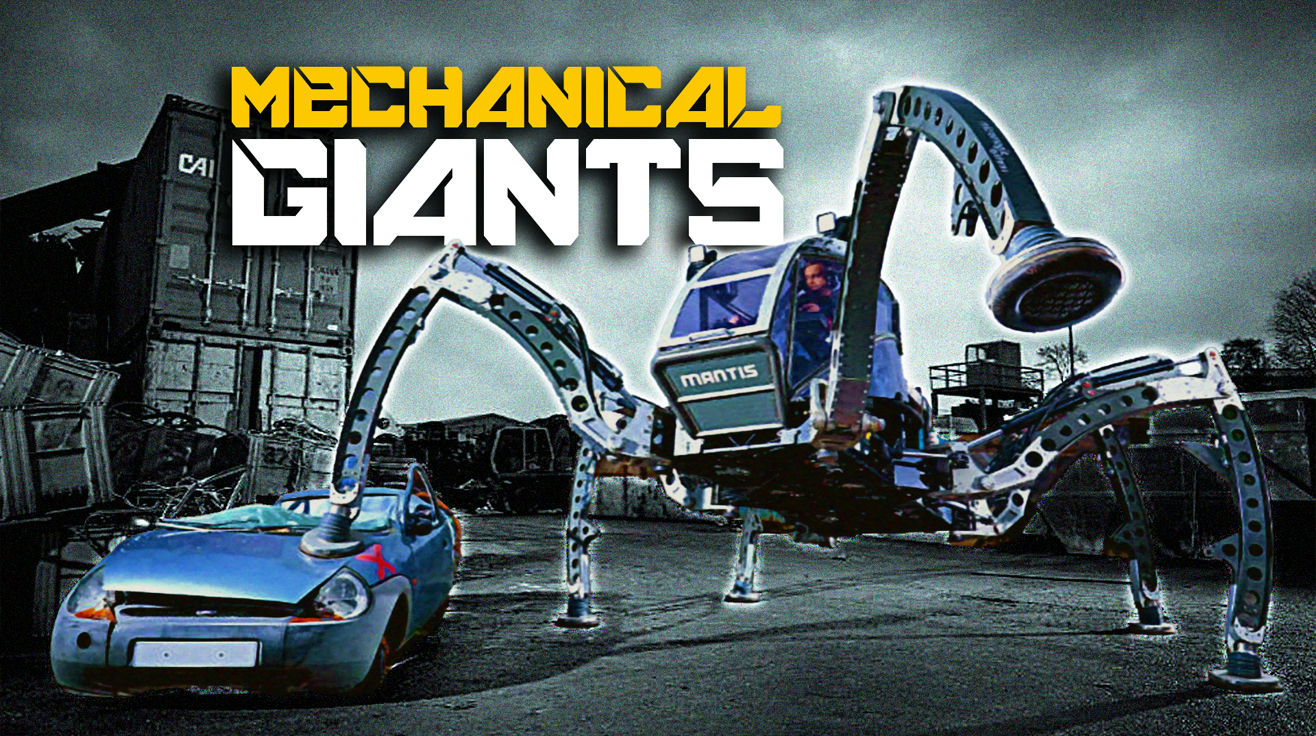
Imagine your neighbor casually mentioning they built a 9-foot tall, 4,000-pound mechanical insect in their garage. That’s essentially what Matt Denton did with Mantis, creating what looks like something that crawled straight out of a sci-fi movie and into reality. Powered by a 2.2-liter Perkins turbo diesel engine, this six-legged beast represents the ultimate expression of “because I can” engineering.
The hexapod design gives Mantis remarkable stability across terrain that would leave wheeled vehicles helplessly spinning their tires. Its movement resembles a mechanical ballet – deliberate, measured, and surprisingly graceful for something that weighs as much as a small car. Each step represents countless calculations from sensors monitoring position, balance, and ground pressure. Mantis exists in that sweet spot between practical engineering and glorious excess.
1. Mark III: America’s Robot Champion Evolves

The Mark III represents what happens when robot builders iterate on their designs through persistent engineering. This 12-ton, 430-horsepower machine from MegaBots Inc. was designed with distinctive red, white, and blue styling and eagle emblems. Created to participate in international robot competitions, it embodied American engineering ambition.
The robot initially faced technical challenges during its public debut, but engineers continued refining its systems. Eventually, the Mark III achieved movement, reportedly reaching 12.5 mph – impressive for a machine of its size and weight. The development process behind Mark III captures the reality of cutting-edge technology: behind every successful final product lies a progression of testing, adjustments, and engineering refinements that gradually transform potential into performance. Every iteration brings new lessons, mirroring the way groundbreaking technologies across industries turn high-concept dreams into everyday realities.