Parents drowning in device management might find salvation in an unlikely place: another screen.
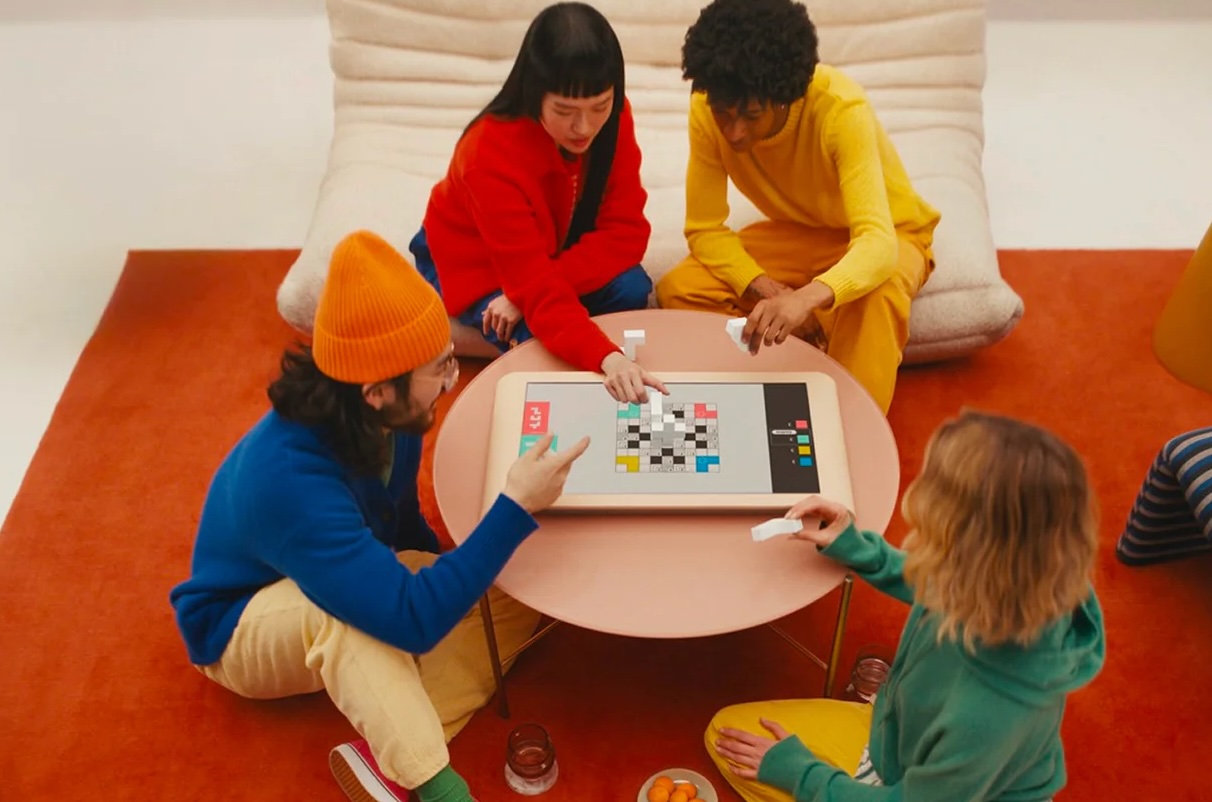
Brynn Putnam knows the family tech struggle intimately. The Mirror founder, who sold her fitness startup to Lululemon for $500 million, now wrestles with five kids and the eternal parental dilemma of quality screen time. Her solution? Board, a $500 gaming console that looks like your dining table grew a brain.
Physical Meets Digital in Premium Package
Custom capacitive technology transforms traditional gaming pieces into smart objects that respond to touch and gesture.
The 24-inch touchscreen lies flat like a traditional board game, surrounded by 50 physical pieces that interact through custom capacitive technology and embedded AI. Think Monopoly tokens that the screen actually recognizes, or building blocks that trigger digital responses when you stack them.
Putnam partnered with World of Warcraft veteran Seth Sivac to create what they’re calling the “first face-to-face gaming console.” Twelve original games launch with the system this November, developed by studios behind hits like Manifold Garden and 7 Wonders Duel. The wood-finished frame supports 4-6 players gathered around like a traditional game night, except the board adapts in real-time to your moves.
Premium Price for Premium Problems
Early adopters pay $499, but regular retail jumps to $699—serious money for family bonding.
Board’s biggest challenge involves convincing parents that another screen solves screen problems. At $699, you’re paying Nintendo Switch money for something that can’t leave the dining room. Traditional board games cost $30-60 and never need software updates.
The target audience seems clear—affluent families who’ve already bought every educational iPad game and still feel guilty about screen time. If you’re shopping at Camp (Board’s exclusive retail partner) and dropping $500 on family entertainment feels reasonable, this might work. For everyone else, a deck of cards still costs five bucks.
Betting on the Ecosystem
Success depends on attracting developers to a niche platform launching in 2026.
Putnam’s raised $15 million and hired 20 employees to build proprietary AI models in-house. The company promises a developer platform next year, betting that third-party creators will embrace tabletop gaming enhanced by machine learning.
Whether families will gather around Board instead of their phones remains the ultimate test. The hardware looks polished, the founders have serious credentials, and the problem they’re solving—disconnected families—definitely exists. The question is whether the solution requires spending Nintendo money on something that doesn’t fit in a backpack.