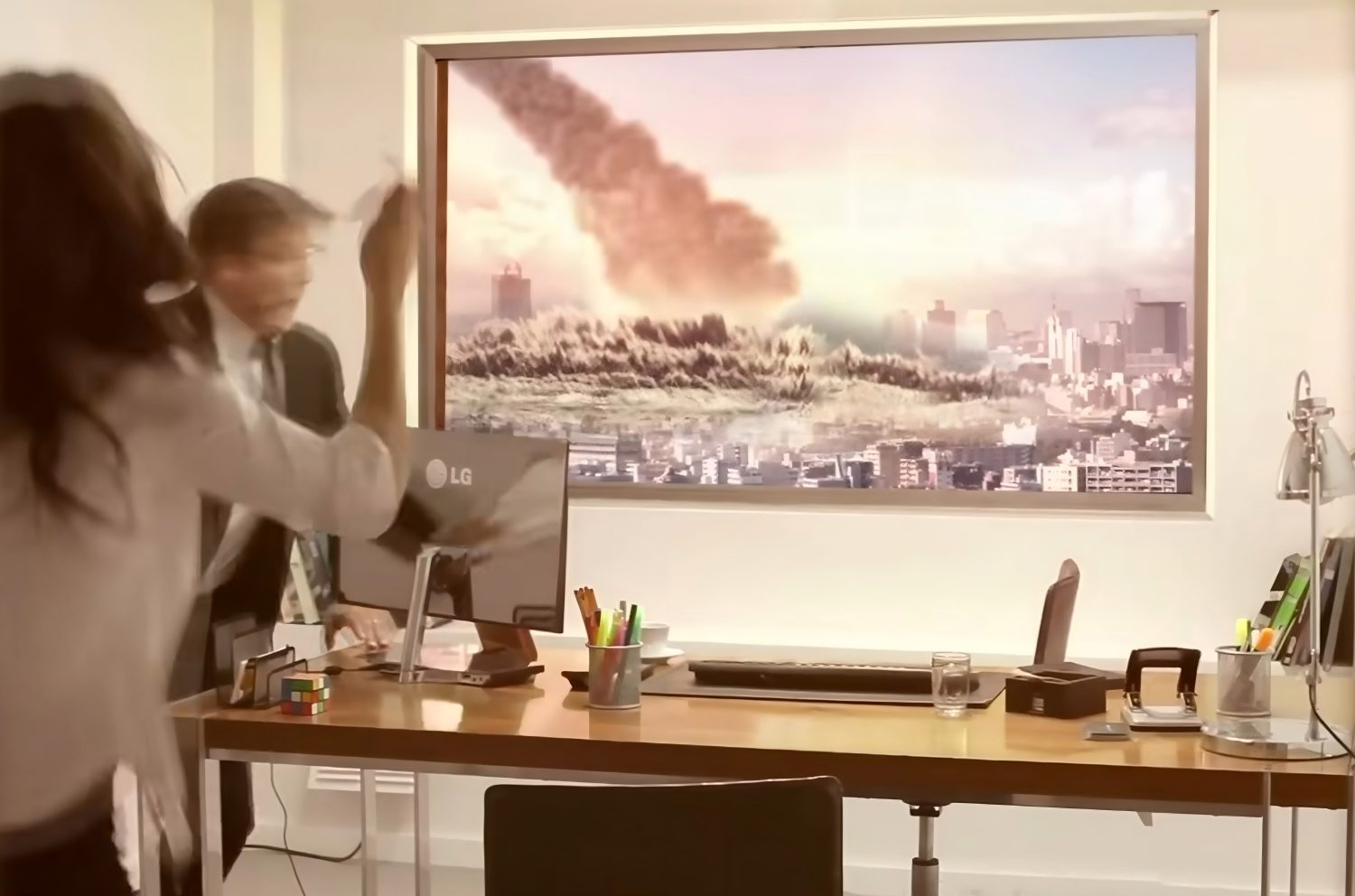
The job interview was going fine until a meteor hit the city outside the window. That’s exactly what LG engineered in 2013 — a controlled hidden-camera stunt where unsuspecting applicants sat down for interviews, unaware that the “window” behind the desk was an Ultra HD display. When apocalyptic meteor footage rolled over a city skyline, some of them genuinely thought it was over. Not the interview. Everything. It remains one of the most audacious product demos in tech marketing history.
The Setup: A Window That Wasn’t
LG built an office that looked normal in every way — except the view was a lie.
Flush to the wall and presented as a floor-to-ceiling window, the Ultra HD screen played a calm cityscape so convincingly that applicants had no reason to question it. Then the meteor hit. Panic, scrambling, one man bolting for the door — all of it captured on camera. LG packaged those reactions into an official branded video, uploaded to their YouTube channel under the title “Ultra Reality: What would you do in this situation? – LG Meteor Prank,” and left it to detonate on the internet.
Produced under LG Electronics’ official “Ultra Reality” banner, the 2013 hidden-camera spot disguised an Ultra HD display as a floor-to-ceiling office window and screened meteor-strike footage for real job applicants — or at least, people presented as such. Worth noting: some observers later questioned whether all participants were genuinely unsuspecting, so the authenticity of every reaction is best treated as likely rather than confirmed.
Why It Worked – and Why That Still Matters
Three things converged to make this stunt genuinely impossible to ignore.
Hidden-camera reactions are inherently watchable. Stack an extinction-level event scenario on top, and you’ve got something closer to a Black Mirror cold open than a TV ad. The product claim landed instantly — no spec sheet required, no pixel count recited. The screen reportedly fooled real people in real time, and that’s a more convincing argument than any press release LG could have written.
In 2013, Ultra HD was an abstraction most consumers couldn’t visualize. LG didn’t explain it. Instead, the brand weaponized the gap between what people expected screens to look like and what this one actually did. Today’s product launches still chase that same effect — immersive demos, experiential events, carefully staged spectacle. Rarely does the spectacle feel as uncontrived as it did here.
Fear, it turns out, is a remarkably efficient product demonstration. Nobody forgot that screen.