The holidays always shine a spotlight on portable tech, and this year, handheld gaming is having a moment. With end-of-year deals rolling out and travel season in full swing, more players are looking for gifts that can keep up with life on the move. For decades, Nintendo’s handhelds filled that role, offering simple but charming experiences built for long car rides, winter downtime, and everything in between.
This season feels different. Devices like Valve’s Steam Deck, ASUS’s ROG Ally, and Lenovo’s Legion Go have transformed handhelds from “fun extras” into full-fledged gaming PCs you can slip into a backpack. They give players the freedom to bring entire libraries home for the holidays, play during travel, or squeeze in high-fidelity sessions between gatherings.
And this shift isn’t unique to gaming. Across digital entertainment, holiday shoppers increasingly expect the same seamless experience whether they’re at home or on the go. Online casino platforms have evolved in the same direction, using casino rewards and loyalty systems to keep players connected and engaged across every device. It reflects a larger seasonal trend: people want their entertainment to follow them, not the other way around.
Steam Deck: The Pioneer of a New Era
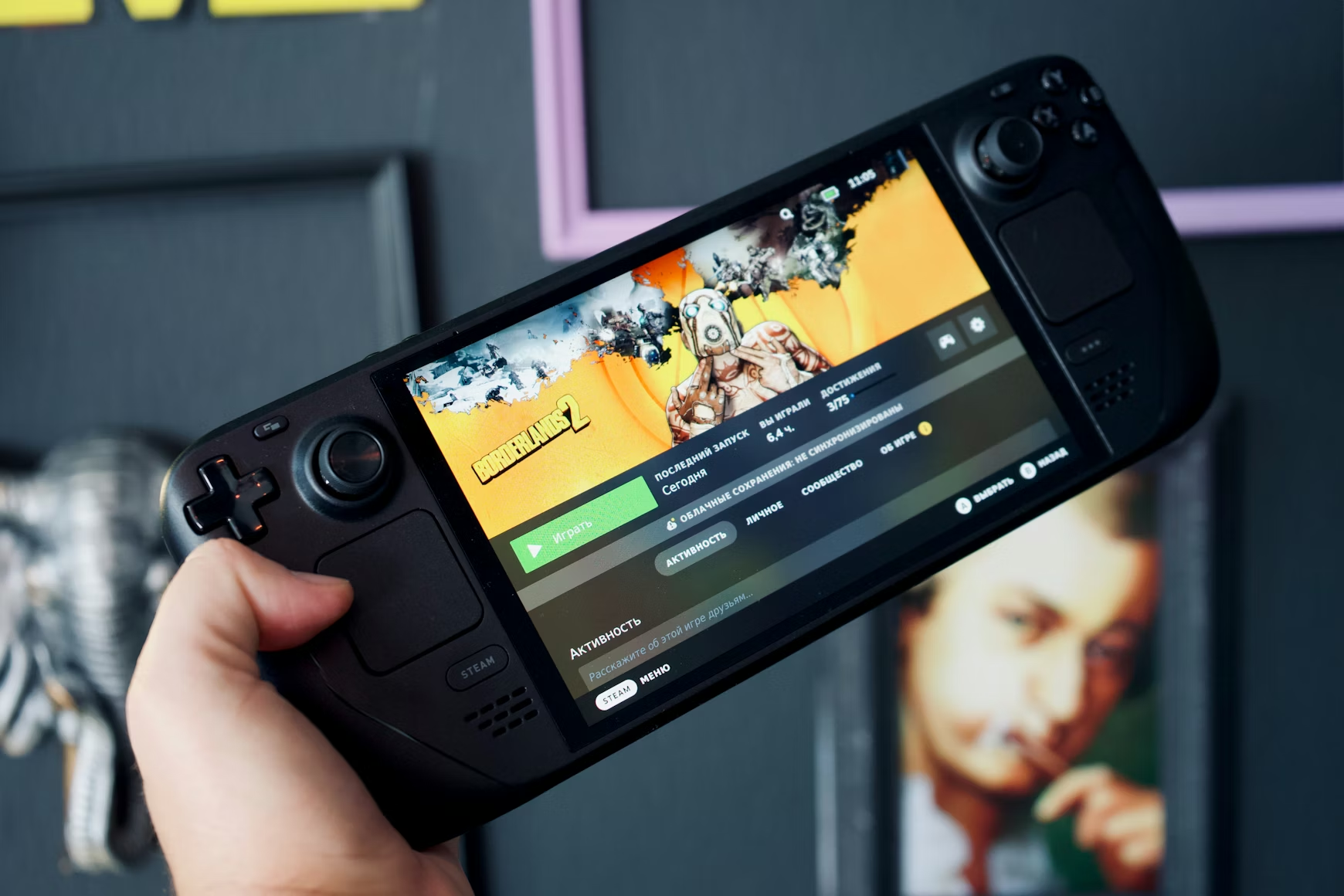
The Steam Deck was launched by Valve in 2022, and it caught the gaming industry off guard. At first glance, it appeared to be a large and bulky Switch, but inside it was a full Linux-based PC capable of playing modern games like Elden Ring and Cyberpunk 2077. The Deck wasn’t just a portable console; it was a declaration of freedom with its open architecture. You could install Windows, emulate old consoles, stream from your desktop, and even play in the cloud.
The most significant benefit was its ecosystem. Steam already had a large community of players, and the Deck was an instant entry into thousands of games. It wasn’t a PC, but it made the cut in terms of performance, although some disadvantages quickly surfaced. The interface required a level of sophistication around technology, and battery life was all over the place.
Nonetheless, Valve demonstrated that there is a market for portable PCs. It created a model of what players were looking for: a system that balanced power and versatility with value for money. But more importantly, it pushed the competition to make a better version.
ROG Ally and Legion Go: The Competition Heats Up
Enter the ROG Ally and Lenovo Legion Go. Both devices took Valve’s formula and added refinement. The ROG Ally, released in 2023, focused on performance and polish. It ran on Windows 11 by default, making it more familiar for users who were already comfortable with PC gaming. Its AMOLED screen, fast refresh rate, and lightweight design positioned it as the “premium” alternative to the Steam Deck.
The Lenovo Legion Go, meanwhile, embraced flexibility. Its detachable controllers and massive 8.8-inch screen made it something of a hybrid between a laptop and a handheld console. It also introduced clever features like a mouse mode, turning one controller into a mini joystick for desktop navigation. Lenovo’s approach leaned more toward multitasking: It was a gaming system that could also double as a productivity device, streaming hub, or entertainment center.
What these systems share is a belief. They give players a choice of how and where to play, and now consumers want their technologies to be versatile and responsive.
The Future of Handheld PCs
Handheld gaming PCs are new devices, but it seems that they are on a path that cannot be stopped. We can barely say this in the face of shrinking chips, expanding battery technologies, and evolving cloud gaming infrastructures, but portable gaming will continue to erode the divide between portable and desktop gaming experiences.
We may soon have handheld devices taking on full-size gaming rigs with modular components that work seamlessly with your home ecosystem. You can connect your ROG Ally to a monitor to play competitively at home, then take it apart on a cross-country flight with the same performance without loss of frame.
The emergence of these devices also represents a shift in the way developers consider optimizing them. Games are being conceived more in the spirit of scalability, meaning they will work as well on a desktop configuration as on a handheld, small-screen device. It is a new design ethos that rewards flexibility and player choice.