Controlling a Mars robot in real time is impractical. Radio signals take up to 20 minutes to travel one way, making joystick navigation unworkable for real-time teleoperation. That fundamental constraint is what the German Space Agency’s Valles Marineris Explorer program, known as VaMEx, is designed to work around.
What VaMEx Actually Is
Since 2012, researchers have been developing robots that work together like a field crew rather than waiting on orders from Earth.
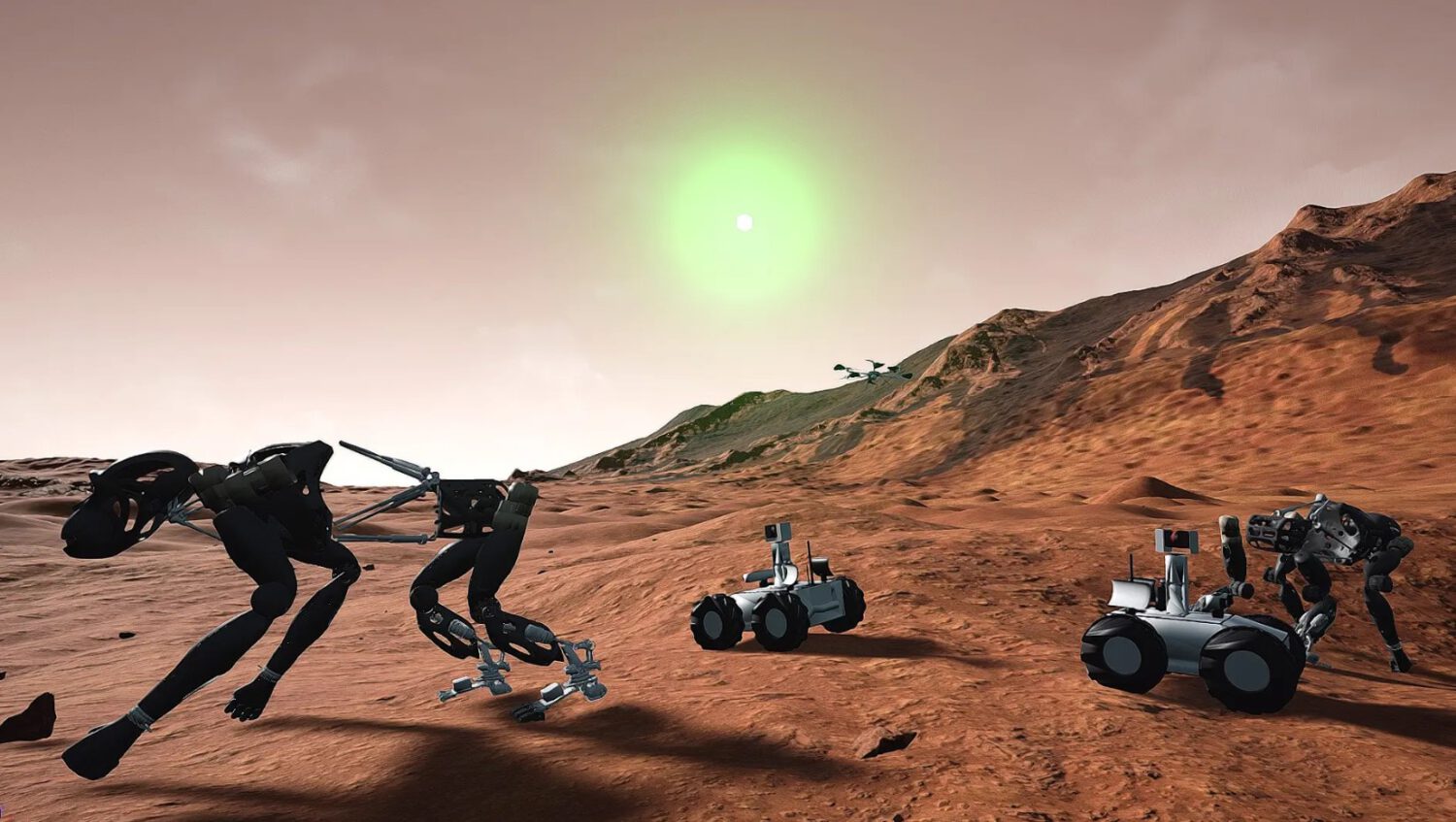
Funded by the German Space Agency (DLR) and in development since 2012, VaMEx targets Valles Marineris, a canyon system roughly 4,000 kilometers long that spans a significant portion of the Martian surface. The program’s core idea is a heterogeneous swarm: aerial vehicles, wheeled rovers, and compact crawlers. Each unit is built for different terrain and shares information over a local network.
Why a Swarm Beats a Single Machine
Distributing tasks across specialized robots improves both coverage and resilience on a planet where repairs are impossible.
Flying robots can survey broad areas quickly, feeding terrain data to ground-based units below. Wheeled rovers carry scientific instruments across accessible ground, while smaller crawlers can investigate confined spaces such as caves, which may shelter evidence of past or present life. A swarm architecture offers potential resilience: if one unit fails, the remaining robots could continue operating, though this fault-tolerance capability is still under development.
Navigating Without GPS
Mars has no global magnetic field suitable for compass use and no navigation satellites, so the robots need a different approach entirely.
VaMEx robots will combine several independent measurements to determine position, an approach called sensor fusion. Sun and star sensors provide absolute orientation. Ultra-wideband radio beacons, which are short-range radios that precisely measure distances between devices, help calculate positions within the swarm. Onboard cameras paired with LiDAR, a laser-based distance-sensing tool, build detailed terrain maps. Robots then share position data with one another over a local network, assembling a common map without waiting for instructions from Earth.
SkyCAM’s Role in the Mission
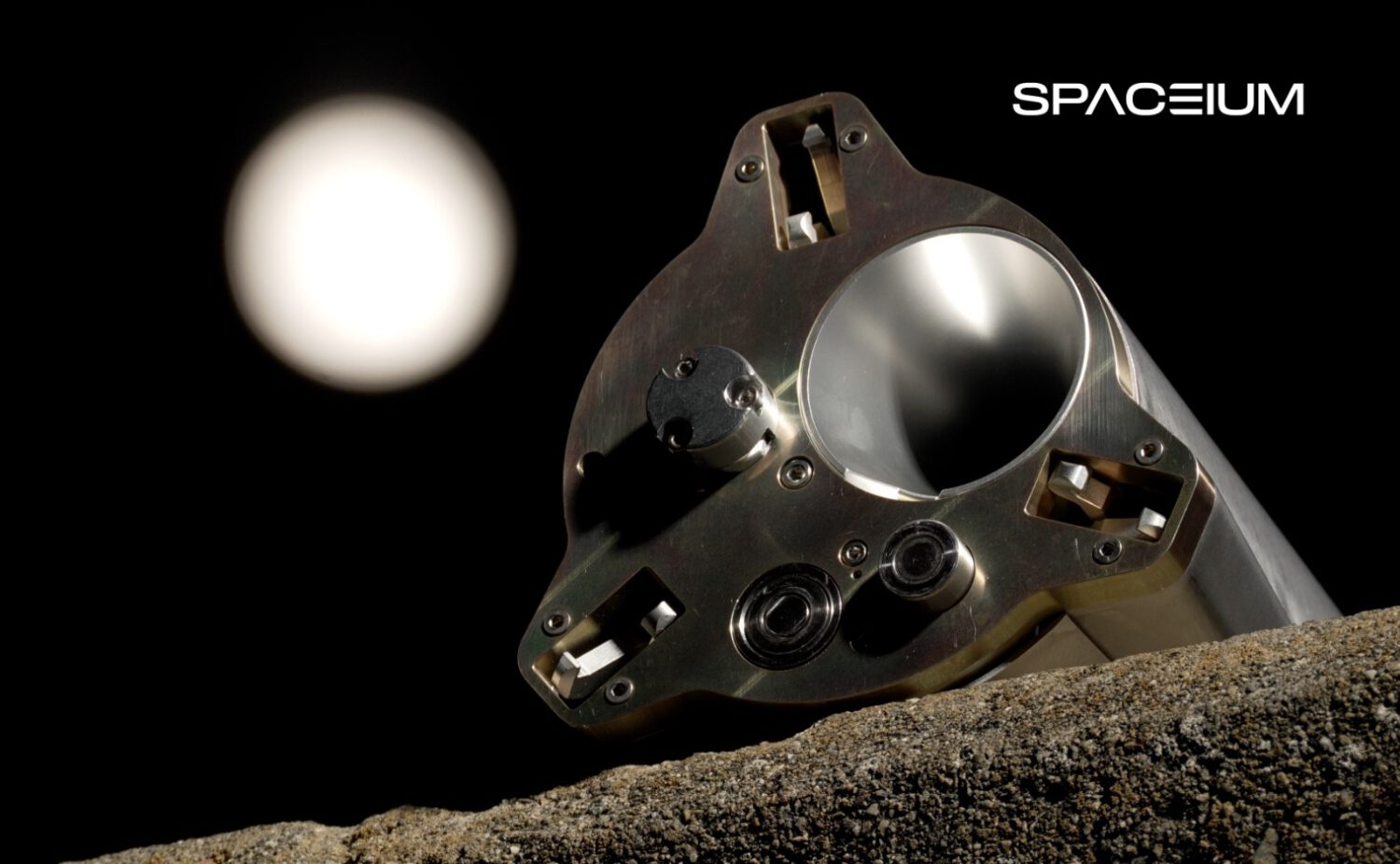
Researchers at Julius-Maximilians-Universität Würzburg developed an automated sky-observation system intended to serve both science and swarm navigation.
SkyCAM is designed to detect short-lived atmospheric and celestial events, including lightning, meteors, and cloud formation. Multiple SkyCAM stations observe simultaneously and compare data, which may allow researchers to calculate the speed, distance, and trajectory of moving objects. The observational data could also help the swarm orient itself, giving the system a proposed secondary function as a navigation aid.
Testing Before the Real Thing
A Mars-analogue field mission in 2027 will put SkyCAM and the Janus rover through their paces before any hardware reaches Mars.
SkyCAM is planned for integration with the Janus rover and field testing during AMADEE-27, a Mars-analogue mission tentatively scheduled for April 5–18, 2027, in Portugal, pending confirmation of those details from the University of Würzburg. The entire VaMEx program advances through these analogue field tests, not through hardware already deployed on Mars.
What This Could Actually Mean for Science
The swarm’s ability to reach difficult terrain matters for astrobiology, but finding life would require far more than better robots.
The swarm’s ability to reach terrain that conventional rovers may struggle to access, including underground caves, is what makes VaMEx scientifically relevant to astrobiology. Detecting evidence of life would still require additional instruments and independently verified biological or geological data. For now, VaMEx remains a technology-development effort, building the tools that a future life-search mission might actually use.