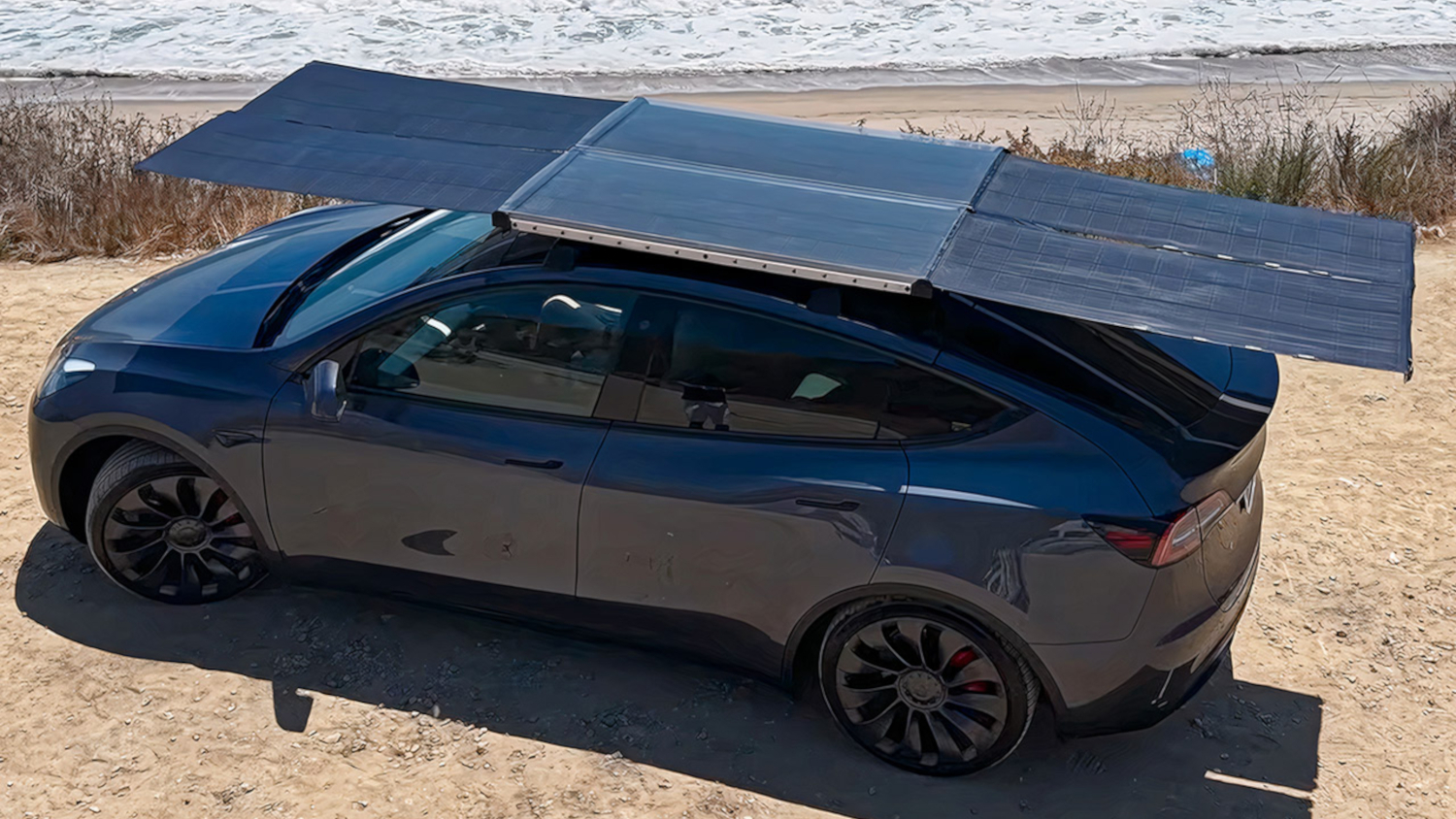
Mounting fixed solar panels on a vehicle roof has always involved a tradeoff between camp utility and highway practicality. DartSolar’s expandable roof rack attempts to resolve that tension by keeping panels folded during travel and sliding them outward only after parking.
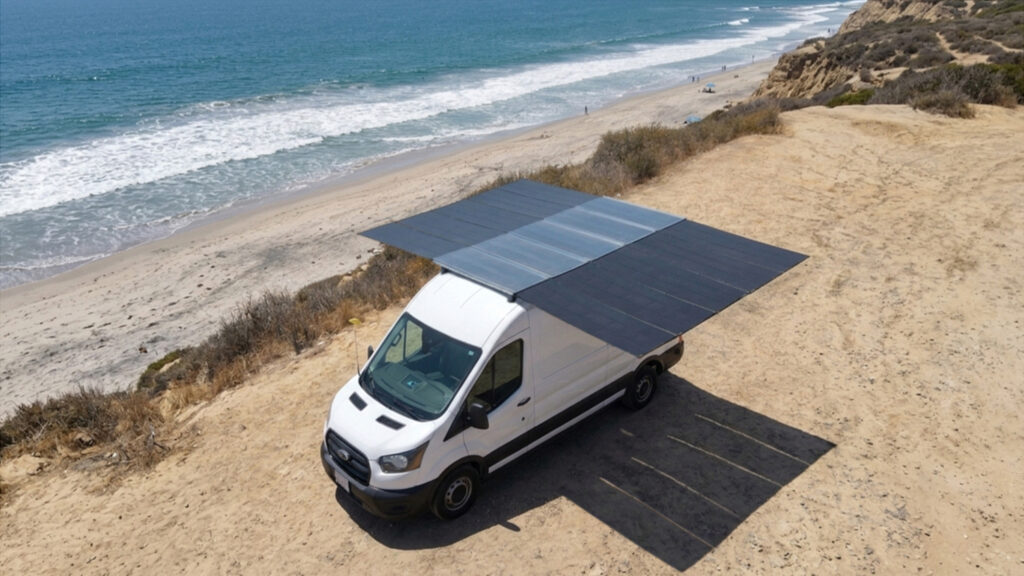
Each 500-watt module combines three 170-watt panels: one stationary and two that telescope sideways in a matter of seconds, according to the company. The deployed span reaches roughly 14 feet; closed, the unit measures 58 by 24 by 3 inches with a wind-facing profile of 1.5 inches high.
Materials and Electrical Setup
DartSolar uses layered panel construction and two voltage configurations to accommodate a range of portable power equipment.
DartSolar uses ETFE-coated half-cut solar cells with fiberglass backing, housed inside a polycarbonate shell on an aluminum frame. Output connects through an XT60 port and can be configured for 30-volt parallel or 90-volt series operation, depending on the receiving equipment.
The company says the system is compatible with portable power stations from EcoFlow, Jackery, and Bluetti, though the specific setup depends on each device’s input requirements. The power station is a separate purchase.
Scaling Up
A single module starts at 500 watts, but the system is designed to grow.
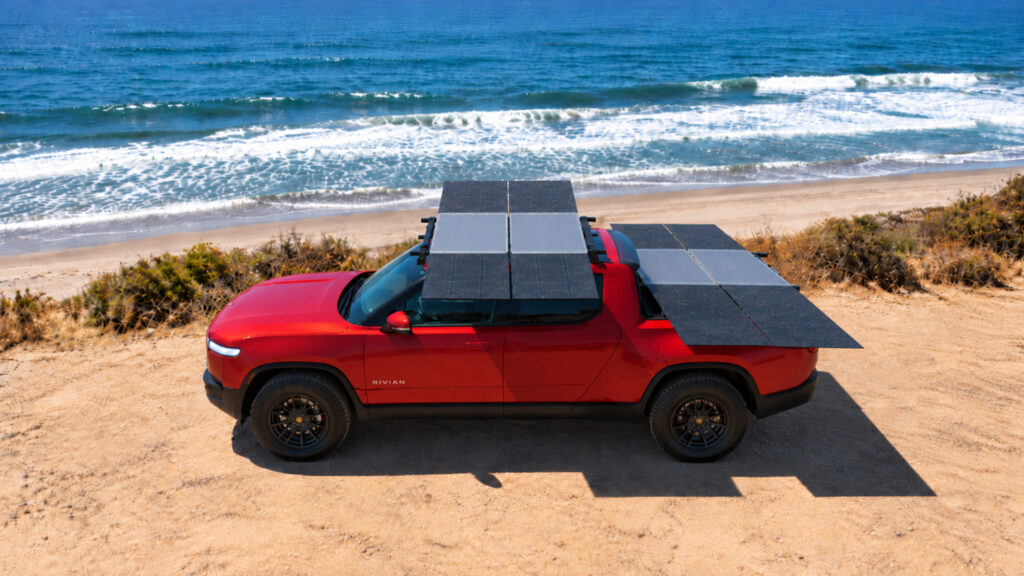
Multiple units can be combined into 1,000-watt or 2,000-watt configurations for larger vehicles or higher power demands. Buyers can start with one module and add capacity over time rather than committing to a full array upfront.
The Range Estimate Requires Context
DartSolar’s mileage figure is a company estimate under favorable conditions, not a guaranteed result.
DartSolar states the system can contribute approximately 10 to 20 miles of EV range per day. Actual energy production depends on sunlight hours, weather, shading, panel temperature, and conversion losses; the efficiency of the receiving vehicle adds another variable.
The company positions the product primarily as off-grid power for portable batteries, jobsite tools, and emergency backup rather than as a replacement for grid charging.
Weight and Space Are Real Constraints
Roof weight and deployed length both deserve attention before purchase.
One module weighs 45 pounds. A two-module installation on a sedan adds roughly 90 pounds in module weight to the roof before accounting for the rack itself, which can affect handling and must stay within the vehicle’s rated roof-load capacity.
The 14-foot deployed span also requires genuinely unobstructed parking space. Tight urban lots or cramped campsites will limit how often the system can reach anything close to its rated output.
Price and Availability
Pre-orders are open now, though the exact ship date differs between DartSolar’s product pages.
The 500-watt unit starts at $1,350 with free delivery. DartSolar’s press materials reference a December 2026 delivery window, while the current order page indicates a mid-January ship date. Buyers should confirm the schedule directly with the company before ordering.
Who This Is Actually For
The value case is strongest for buyers who already work or camp in direct sunlight and carry portable power equipment.
The product suits campers, van-life users, outdoor workers, and emergency-preparedness buyers who regularly park in direct sunlight and already use portable power stations or auxiliary batteries. Urban commuters who charge at home or at public stations face a harder financial case: purchase price, roof weight, installation requirements, and variable output all work against the math.