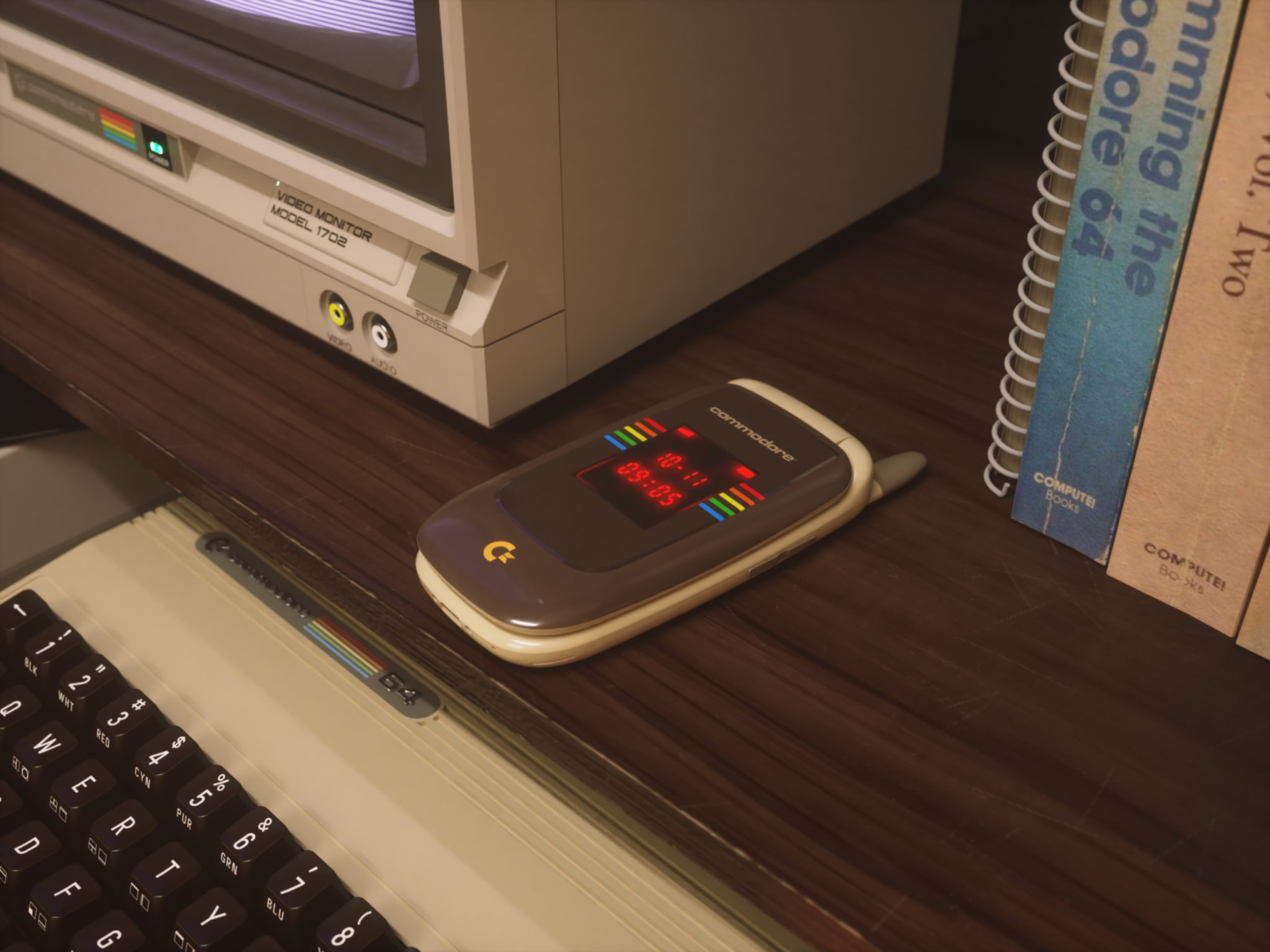
A brand famous for putting computers in living rooms is now selling a phone designed to keep you off the internet. Commodore — yes, the C64 Commodore — has announced the Callback 8020, a clamshell flip phone with a T9 keypad, no touchscreen, and patent-pending technology that blocks social media and web browsers at both the system and DNS level. Christian “Peri Fractic” Simpson, who acquired Commodore’s trademarks for a reported low seven figures, calls it “a modern phone with none of the apps that make you anxious — ads, algorithms, feeds, a browser, a bottomless inbox, or the office chat that follows you home.”
What It Actually Does
Sailfish OS and a whitelisted app store draw a hard line between useful and addictive.
The Callback runs a customized Sailfish OS — Linux-based, built by Jolla, a company of ex-Nokia engineers. An Android runtime layer reportedly supports over 99% of Android apps. Your WhatsApp runs fine. So do Signal, Spotify, and Google Maps. Browsers and social platforms, however, will never appear in Commodore’s “Commostore,” which operates on a strict whitelist.
Even sideloading TikTok wouldn’t help. DNS-level blocking prevents the app from reaching its servers. This isn’t a parental control you toggle off on a weak Tuesday — it’s baked into the architecture itself.
Key specs worth knowing:
- 48 MP Sony rear camera
- High-end DAC with HD/lossless audio support, bundled IEM earphones, FM radio, 3.5mm jack
- Built-in C64 emulator, SID music player, calculator-style external display
- Price: roughly $500 standard, $640 for a Founders Edition with a 24-karat gold Commodore button
- Targeted Q4 shipping
Premium Friction, Real Questions
Priced above rivals like the Light Phone II at $299 and Wisephone II at $400, the Callback earns its premium through audiophile hardware, Commodore nostalgia, and broader app compatibility.
The flip form and T9 keypad are what Commodore calls “mindful friction“ — the same impulse driving vinyl sales and film camera revivals. People are paying a premium to slow down, and Sailfish’s Android runtime gives the Callback more practical flexibility than most minimalist competitors. Worth noting: many Android apps are designed around touchscreens, so “technically compatible” and “actually usable” aren’t always the same thing here.
Honest questions remain. No browser means no quick search, no web-only services — that’s total removal, not moderation. Battery life, processor specs, and water resistance are all unconfirmed at announcement. The blocking technology, while patent-pending, hasn’t faced independent testing against concerns like secretly tracking users. Technically skilled users may find workarounds.
None of that necessarily disqualifies it for the target buyer. Amid school phone bans, screen-time legislation, and doomscroll fatigue hitting every demographic, the Callback is less a phone than a hardware-enforced decision. Whether that feels like freedom depends entirely on who’s holding it.