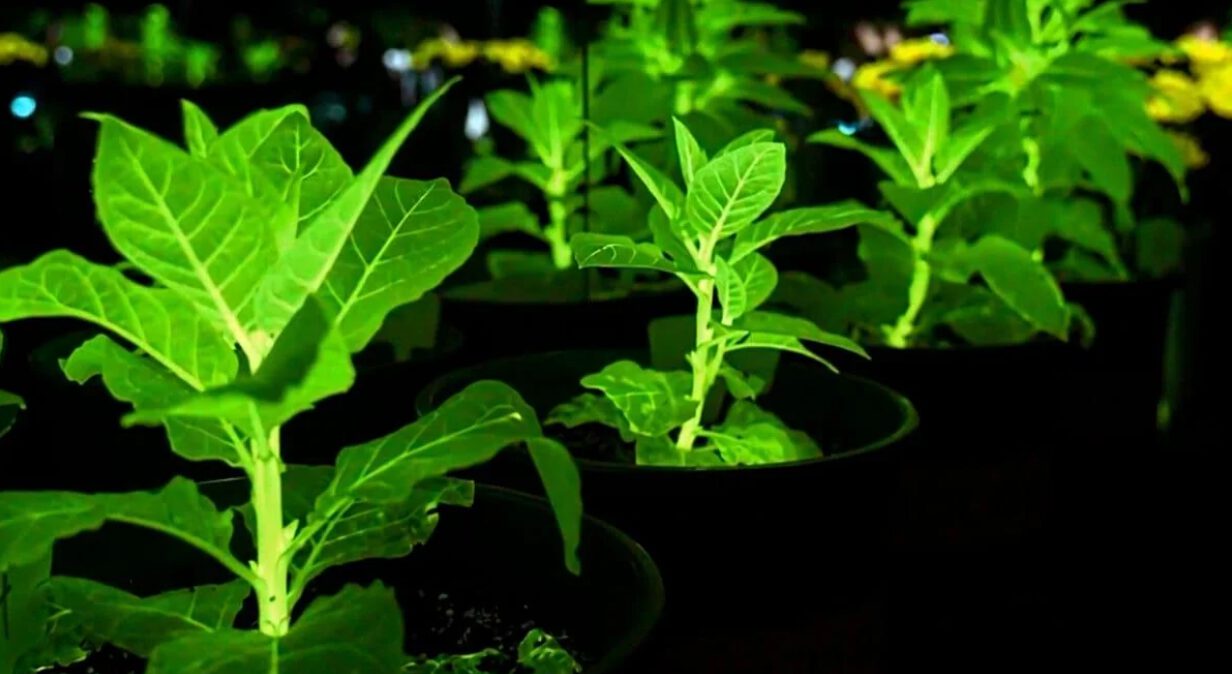
Racing to your backyard during a power outage, you grab your phone’s flashlight to navigate the dark. Soon, your garden itself might provide the glow. Chinese scientists have genetically engineered over 20 plant species to emit natural light, creating electricity-free alternatives that look like they sprouted from Pandora’s fictional forests.
Two Paths to Bio-Luminescence
Researchers split between genetic modification and phosphor injection to create sustainable lighting solutions.
Dr. Li Renhan’s team at Magicpen Bio took the genetic route, inserting genes from fireflies and luminous fungi into orchids, sunflowers, and chrysanthemums. These plants glow autonomously using only water and nutrients—no electricity required. “Imagine a valley filled with glowing plants,” Dr. Li explains, envisioning “Avatar-like valleys” that could illuminate tourism sites and urban parks.
Meanwhile, researchers at South China Agricultural University chose a different approach, injecting 6-8 micrometer phosphor particles into succulents that recharge via sunlight or LED exposure. This method creates temporary but brighter illumination compared to the genetic approach.
From Lab Dreams to Living Rooms
SCAU’s multicolored succulents and commercial petunias prove the technology works at home.
SCAU’s glow-in-the-dark succulents steal the show with their practical applications. Their 56-plant wall generates enough light for reading in complete darkness, with green emissions lasting up to two hours after charging. These aren’t just pretty novelties—they’re functional lighting alternatives that could reduce your electricity bills.
In the US, you can already buy Light Bio’s Firefly Petunias, USDA-approved since 2024 and engineered with enhanced fungal genes for safer, mushroom-like luminescence. These commercially available plants represent the first wave of bioluminescent home decor hitting mainstream markets.
The Long Road to Brightness
Decades of research finally overcome the dim glow problem that killed earlier attempts.
The journey from science fiction to garden center spans nearly four decades. The first glowing plant appeared in 1986, followed by a crowdfunded 2013 project that promised firefly-gene Arabidopsis but never delivered commercially viable products. Recent breakthroughs boosted brightness 100-fold, making these plants visible enough for actual use.
Ginkgo Bioworks now collaborates with Light Bio on variants potentially 10 times brighter than current models. As Shuting Liu from SCAU notes, “Picture the world of Avatar, where glowing plants light up an entire ecosystem.”
Your future landscape might glow without consuming a single watt. While bio-streetlamps remain years away due to intensity limitations, your garden could soon light itself—bringing that Avatar magic to your own backyard oasis.