Online shoppers who have clicked “add to cart” on a jacket only to return it three days later know exactly how that goes. OpenAI launched two new AI-powered websites ChatGPT shopping features globally on October 1, 2026: Virtual Try-On and Favorites. The rollout moves ChatGPT from text-based product recommendations into territory already occupied by Google’s virtual try-on tools and Pinterest’s visual discovery platform.
What Virtual Try-On and Favorites Actually Do
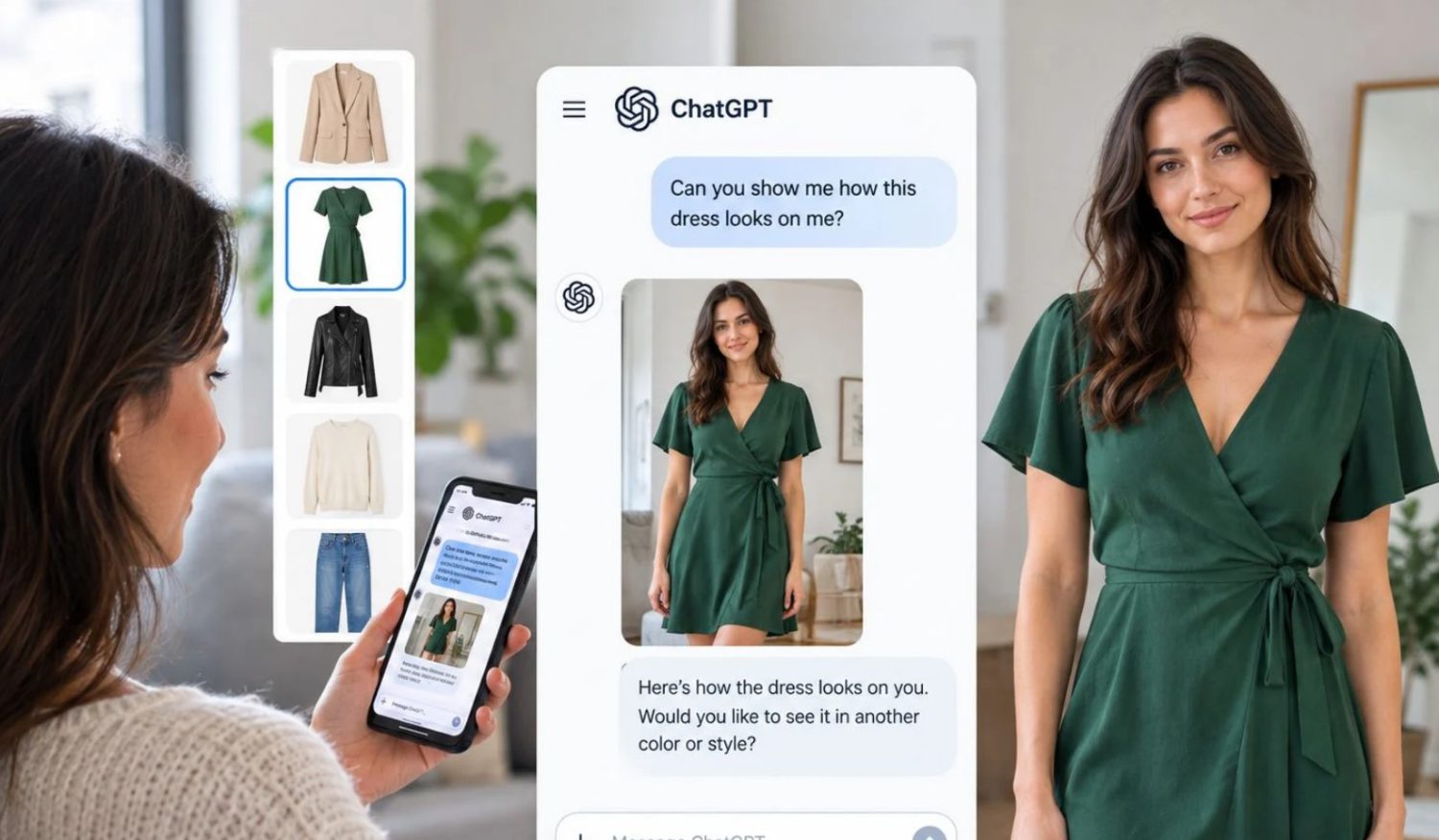
Eligible product listings in ChatGPT shopping results now display a “Try On” button. Here is what the feature set covers:
- Tap “Try On” on an eligible listing, upload a selfie or full-body photo, and ChatGPT generates an image of you wearing that item.
- Upload an item image, such as a product screenshot, and ask ChatGPT to visualize it on you directly, without starting from a product listing.
- Save products and generated try-on images to a ChatGPT Library via Favorites, then organize them into folders for later reference.
The workflow combines product search, image understanding, and image generation inside one conversation, according to OpenAI’s release notes and TechCrunch reporting.
What Is Powering the Visuals
The feature runs on ChatGPT Images 2.5, according to TechCrunch. OpenAI says the model delivers richer textures, more natural lighting, and faster generation than previous versions. The company also says it follows editing instructions more reliably and better preserves how a person looks across reference photos.
Those are OpenAI’s claims. No independent benchmark covering accuracy across body types, clothing types, poses, or lighting conditions was available at publication.
The generated image is a rough visual preview. It cannot confirm how a garment fits your body or whether the sizing runs small. It also cannot verify whether the color on your screen matches the actual item.
Where ChatGPT Fits in the Shopping Landscape
Google has been running virtual try-on features for apparel since 2023. Pinterest has spent years building visual fashion discovery into its core product. ChatGPT’s conversational layer lets you describe a style, ask follow-up questions, compare options, and generate a visual preview without switching apps, though whether that constitutes a practical advantage over existing tools has not been established by comparative evidence.
OpenAI previously tested instant checkout inside ChatGPT. According to TechCrunch, the company is now exploring a broader range of ways to influence shopping decisions. That context is worth keeping in mind, because product suggestions that feel like tailored assistance are useful, while suggestions that function as undisclosed advertising are something else entirely.
Before uploading a photo, check OpenAI’s settings. Reference photos may be saved for future try-ons and can be deleted via Settings, then Personalization, then Reference photos. OpenAI’s release notes confirm that retention; if the image includes a recognizable person, review the current privacy and data-control documentation before uploading.
The feature is worth trying if you want to narrow a long list of options before buying. Keep the retailer’s size chart, return policy, and customer reviews open in another tab, because a generated preview narrows the field but cannot do the work that actually protects your purchase. Shoppers who worry they are paying too much may find that extra research especially worthwhile.