If your indoor footage looks noisy regardless of how much time you spend in post, the phone’s small sensor is a likely culprit. Canon’s EOS R50 V is currently listed at $519.99 on Canon USA, reduced from $719.99; Canon notes that pricing and availability can change, so treat that figure as a time-sensitive promotion. If you’re weighing your options, the best cameras span a wide range of budgets and use cases worth considering.
A Video-First Body, Not a Traditional Hybrid
The R50 V is built around creator workflows rather than traditional photo-and-video balance.
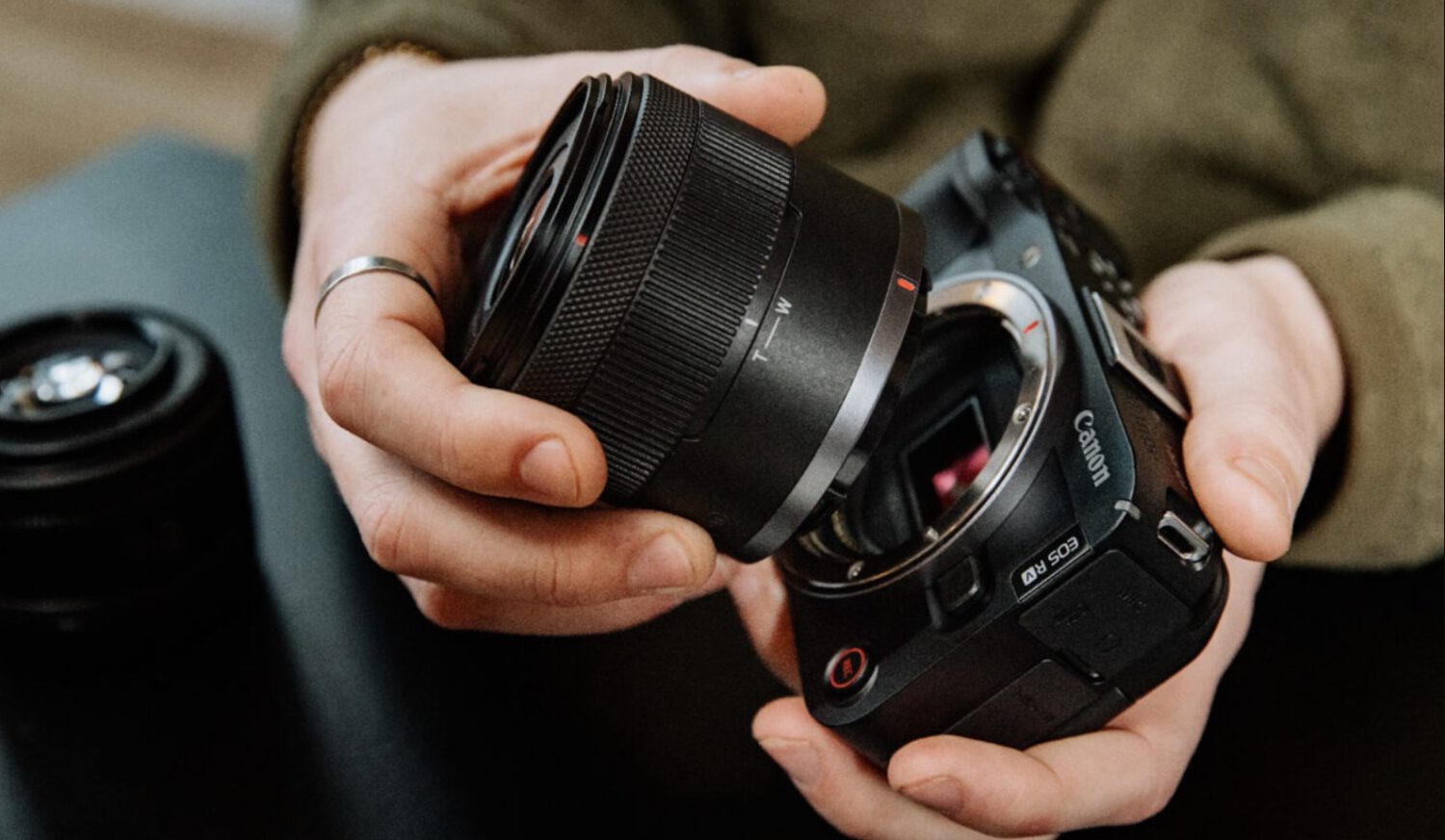
At 370g with battery and card, the R50 V is a 24.2MP APS-C mirrorless camera with a fully articulating touchscreen and Canon’s RF mount. Canon positions it as a video-specialist body, so anyone expecting a full hybrid with an electronic viewfinder should adjust expectations accordingly.
4K Credentials Worth Knowing
The R50 V’s video specifications go well beyond what most phones offer out of the box.
Full-width 4K records at up to 29.97p, oversampled from a 6K readout for sharper detail. Pushing to 4K at 59.94p introduces a crop, making lenses read more telephoto; that matters most in tight vlogging spaces where a wide angle is already borderline. Full HD extends to approximately 120p for slow-motion work. For editors who color grade, 10-bit 4:2:2 and Canon Log 3 are available, giving footage considerably more latitude than standard phone output; note that the R50 V manual should be consulted to confirm the precise recording modes available.
Autofocus Built Around Creator Workflows
Subject detection, vertical recording, and USB streaming are designed with content creators in mind.
Dual Pixel CMOS AF II handles subject detection for both video and stills, and the camera includes a product-demonstration autofocus mode designed for close-up content. The vari-angle touchscreen covers self-recording, low-angle setups, and vertical recording. Connect via USB and the R50 V functions as a UVC webcam, removing the need for a separate capture card in compatible streaming setups.
Connections That Actually Matter
Dedicated audio and video ports give the R50 V a practical edge over phones in serious recording setups.
A 3.5mm microphone input, headphone output, USB-C, and micro-HDMI are all present. For anyone running a serious recording or streaming workflow, those ports represent a step up from what a phone can offer in the same configuration.
The Lens Argument
Interchangeable lenses deliver optical background separation that phone portrait mode does not reliably replicate.
The RF mount supports Canon RF and RF-S lenses, and an EF-EOS R adapter opens up compatible EF and EF-S DSLR glass. Optical depth of field from a fast prime differs meaningfully from phone portrait mode, which relies on software estimation and varies in accuracy at subject edges. Creators already inside the Canon ecosystem can extend existing lenses to the R50 V immediately; everyone else should factor a lens into the total budget, since the $519.99 price covers the body only.
Where It Falls Short
The absence of in-body stabilization and an electronic viewfinder are the two limitations most likely to affect buying decisions.
No in-body image stabilization means handheld walking footage relies on lens optical stabilization, digital stabilization, or external support such as a gimbal or tripod. There is no electronic viewfinder, though that is unlikely to affect video-first users. A single SD card slot and no listed weather sealing in Canon’s cited specifications complete the trade-off picture.
Who Should Buy It
The R50 V fits studio-based creators well; it is a less natural fit for run-and-gun shooters.
The R50 V suits phone creators seeking better low-light quality, studio streamers, educators, small-business content makers, and Canon users who want a compact second body. It is less compelling for creators whose primary format is walk-and-talk handheld content, photographers who compose through an eye-level finder, or anyone whose shoots require weather protection.
Pricing Context
The current promotion lowers the entry cost, but the lens ecosystem is where the real investment begins.
At $519.99 per Canon USA, the body sits below the launch price range; Digital Camera World reported a US launch price of $649.99, though that figure has not been confirmed against a contemporaneous Canon announcement and should be treated as approximate. The camera’s value scales with the lenses attached, so the investment decision extends well beyond the initial body purchase.