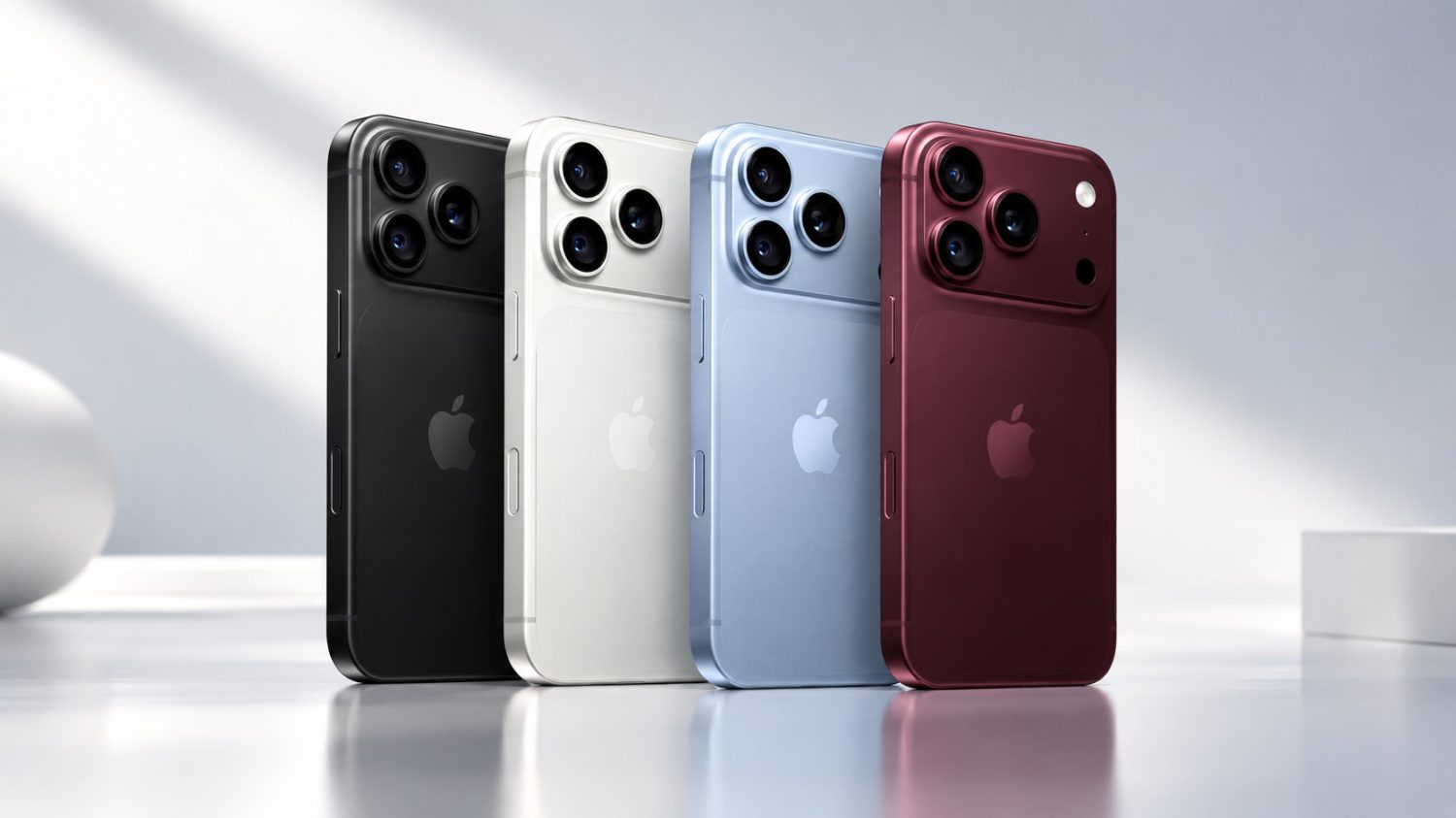
Pick the wrong color and you will be reminded of it every single day. The iPhone 18 Pro’s broad, full-width camera plateau stays exposed on most cases, unlike previous iPhone generations where a case could largely erase your finish choice from view. That structural fact changes the logic of choosing a color, making this decision more consequential than it has been in years. Before committing, it’s also worth reading up on smartphone charging tips to get the most out of whichever model you choose.
The Two Colors Worth Talking About First
Burgundy and Glacier are the most visually distinctive finishes in the lineup, each occupying different points on the spectrum between bold and understated.
Burgundy is the most expressive finish Apple has released in the current Pro lineup. It is a dark red-purple, closer to wine than anything resembling a fire-engine red, and it has no direct precedent in the recent iPhone Pro lineup, according to Apple’s Hong Kong newsroom. Even under an opaque case, the exposed camera plateau remains a visible red-purple accent on most designs, which means Burgundy makes itself known regardless of what covers the rest of the phone.
Glacier takes a quieter approach. It is a pale, cool blue, noticeably lighter and softer than the previous generation’s Deep Blue, sitting comfortably between clearly colorful and genuinely understated. One practical note for Glacier buyers: Apple’s blue case options are named Crisp Blue and Chambray Blue, neither of which is called Glacier, so matching them requires comparing the shades in person. On both finishes, Apple’s white MagSafe ring interrupts the look under a clear case, which is worth factoring in before purchasing one.
The Safe Bets
Silver and Black offer the most predictable long-term results, though they differ sharply in how forgiving they are over time.
Silver is the most versatile finish in the lineup. Its bright, reflective aluminum and glass are closely matched in tone, creating a more cohesive look than the previous generation’s two-tone Silver, according to MacRumors. When the surface chips or scratches, the exposed aluminum underneath is close enough in color to the finish that damage stays inconspicuous. That is a visual assessment, not a claim about physical toughness, but over two or three years of daily use it matters. For broader context on Apple’s product direction, it’s worth exploring where the company is headed with its hardware lineup.
Black is the other end of the spectrum: a straightforward dark neutral that returns after the previous Pro generation used Deep Blue as its darkest finish. It works best with a black case, where the camera plateau visually recedes into the design. Under a clear case, Apple’s white MagSafe ring is particularly conspicuous against the dark back, and chips or scratches exposing lighter aluminum will stand out in a way they are less likely to on Silver.
On most cases, a meaningful portion of your chosen finish will remain visible around the camera plateau, which means color coordination matters more on this phone than on many previous models.
Choosing by Case Habit
The finish that works best for you depends largely on how you use cases, according to MacRumors.
Silver is the practical default for anyone who rotates through cases regularly, since it is neutral enough to avoid clashing with nearly any color. Burgundy pairs best with Apple’s coordinated Burgundy Silicone and TechWoven cases for a matched appearance. Black recedes into black cases but becomes a large, contrasting dark section when paired with light or clear ones. Glacier pairs naturally with pale, white, or neutral cases, where its soft blue reads as a quiet accent rather than a conflict.
The camera plateau will be visible every time you set the phone down or hand it to someone. Silver is the right call if you want flexibility and a finish that ages gracefully. Burgundy is the right call if you want the phone to make a deliberate visual statement. If a case rotation is central to how you use a phone, Silver is the clear starting point. Everything else follows from there.