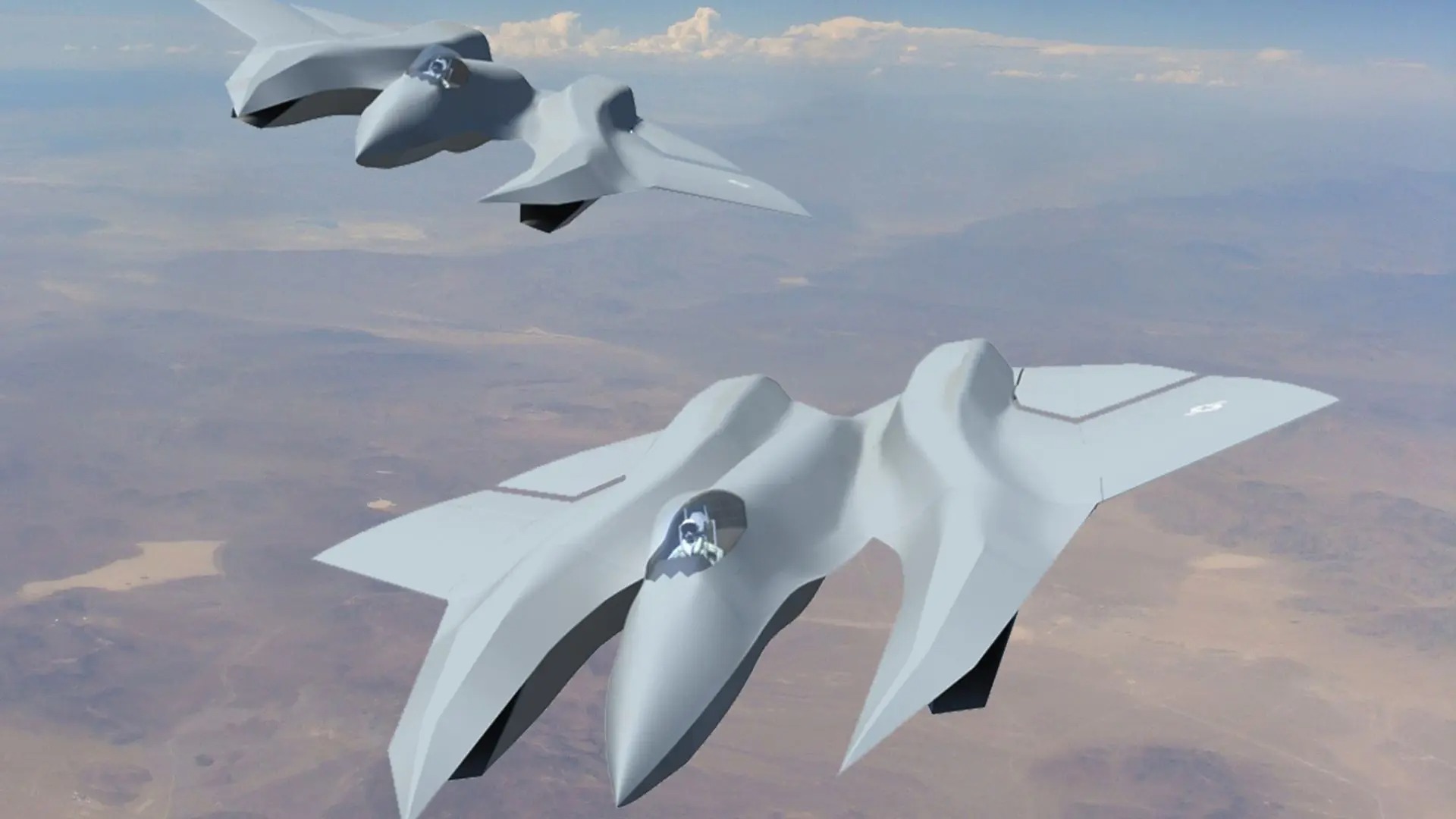
A 25-employee company from Niagara Falls just claimed it can build a fighter jet that flies four times the speed of sound. The SM-39 Razor, Stavatti Aerospace’s latest concept, looks like Batman’s ride redesigned by aerospace engineers who drew inspiration from science fiction. With its triple-fuselage batwing silhouette and purported Mach 4+ capabilities, this underdog entry aims to crash the Navy’s F/A-XX fighter competition dominated by defense giants Boeing and Northrop Grumman.
Physics-Defying Performance Claims
Stavatti’s specs sound more like video game stats than real aircraft capabilities.
The SM-39 Razor’s claimed performance reads like a wish list written by someone who’s never heard of thermodynamics. Twin E1400 afterburning turbofans supposedly push this 70-foot beast past Mach 4 while maintaining stealth characteristics. The company claims it can carry 25,000 pounds of weapons internally while achieving a 100,000-foot ceiling and 1,400-nautical-mile tactical radius.
These numbers would make the SR-71 Blackbird jealous. If true, this thing could fly from New York to Miami faster than your Uber arrives during peak traffic.
Reality Check From the Physics Department
Turbofan engines weren’t designed for near-hypersonic flight, and thermal physics doesn’t care about marketing claims.
Here’s where Stavatti’s fever dream meets aerospace reality. Managing airflow at near-hypersonic speeds creates thermal challenges that melt traditional materials and compromise stealth coatings. Most hypersonic vehicles use scramjets or rockets, not turbofans, for good reason.
Stavatti’s track record doesn’t inspire confidence either—30 years of concepts but zero full-scale prototypes delivered. Compare that to Boeing’s decades of actual carrier aircraft production and Northrop’s stealth expertise proven in combat.
Navy Pushes Forward Despite Skepticism
F/A-XX program gets funding boost while industry veterans question timeline feasibility.
According to defense reports, the Navy secured up to $897 million in FY2026 funding for the F/A-XX Engineering & Manufacturing Development contract. The Chief of Naval Operations is pushing for acceleration against threats from Iran and China. Boeing and Northrop Grumman remain the realistic frontrunners to replace aging F/A-18E/F Super Hornets by the 2040s.
Whether Stavatti’s submission even gets serious consideration remains unclear. But the batwing design has already captured imaginations among defense tech enthusiasts who appreciate audacious engineering—even if the physics don’t quite add up.
The SM-39 Razor represents everything people love about underdog innovation stories, wrapped in a design that screams “future warfare.” Too bad the laws of thermodynamics rarely bend for startups.