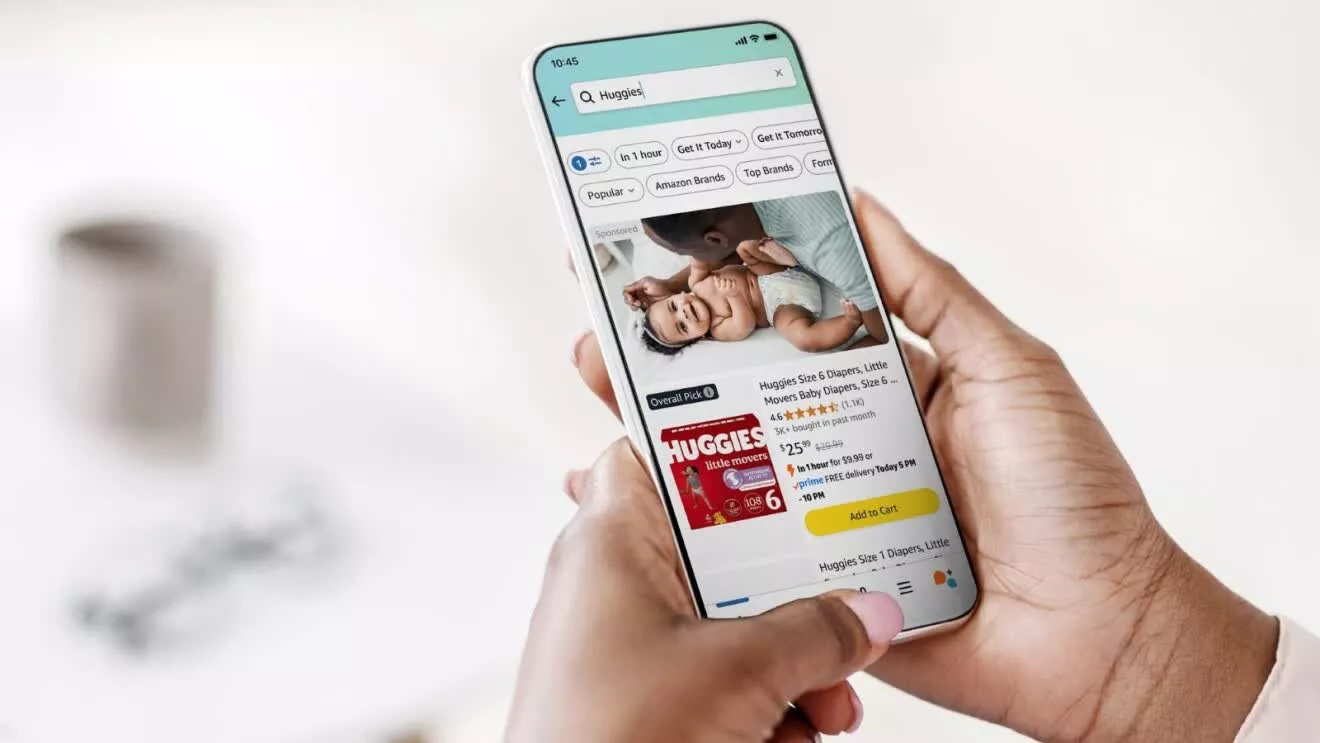
Your grocery run just became a financial decision. Amazon’s latest 1-hour and 3-hour delivery options put a price tag on impatience—$9.99 and $4.99 respectively for Prime members, double that for everyone else. While you’re busy calculating whether emergency toilet paper justifies ten bucks, Amazon is quietly testing how much convenience culture will tolerate.
The Premium Rush Economy
Amazon transforms delivery speed into tiered revenue streams across thousands of cities.
The service spans hundreds of cities for 1-hour delivery and over 2,000 locations for the 3-hour option, covering 90,000+ products from pantry staples to electronics. Seven days a week, using existing same-day infrastructure enhanced with dedicated workstations and yellow packaging labels. You can browse eligible items through new “in 1 hour” and “in 3 hours” filters—assuming your wallet can handle the sticker shock.
The Non-Prime Penalty
Pricing structure reveals Amazon’s strategy to extract value from urgency while pushing Prime adoption.
Non-Prime customers face brutal economics: $19.99 for 1-hour delivery, $14.99 for 3-hour service. That’s a 100% premium for 1-hour delivery and 200% markup for 3-hour service over Prime pricing, making emergency deodorant cost more than a Netflix subscription. Meanwhile, standard same-day delivery remains free for Prime members, creating a three-tier system that turns your delivery timeline into a class marker. Amazon’s Udit Madan frames this as helping “customers who are busier than ever,” but the pricing suggests it’s really about monetizing desperation.
Déjà Vu Economics
Amazon’s second attempt at ultrafast delivery follows the failed Prime Now experiment and rising competitive pressure.
This isn’t Amazon’s first rodeo with ultrafast delivery. Prime Now launched in 2014 with similar promises but died quietly in 2021—apparently ahead of its time or behind on profitability. The company recently piloted 30-minute delivery in Seattle and Philadelphia, while Walmart pushes sub-three-hour options nationwide. With Amazon’s same-day deliveries jumping 70% in 2025, the infrastructure finally exists to make speed profitable rather than just impressive.
The convenience economy now has official pricing. Your move depends on whether saving an hour feels worth more than your morning coffee budget.