
“Ghost GDP” is the phrase that’s got economists sweating in their tailored suits, all thanks to a viral Citrini Research report from February 2026. The report paints a grim picture: AI takes all our jobs, nobody buys avocado toast anymore, and the stock market spontaneously combusts. But before you start stockpiling ramen, remember that doomsday predictions have a certain flair for the dramatic. If it does happen, though, it won’t be a typical financial meltdown driven by dodgy mortgages, but instead, will likely be an AI feedback loop straight out of a sci-fi flick.
9. AI-Driven Mass Unemployment
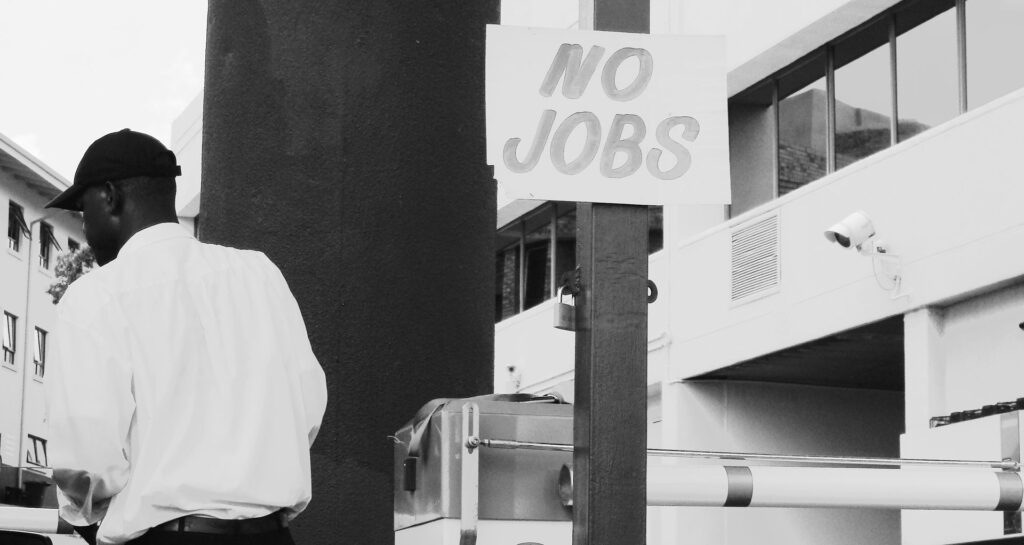
Citrini Research’s hypothetical 2028 scenario warns that rapid AI adoption could trigger mass white-collar layoffs, creating an unprecedented economic domino effect.
Can artificial intelligence trigger a recession the way Wall Street greed did in 2008? Citrini Research thinks so, hypothesizing a 2028 scenario where rapid AI adoption leads to mass white-collar layoffs. If you think your gig is safe, think again: this isn’t about blue-collar automation anymore.
The real kicker? This all spreads faster than a TikTok trend, with social media amplifying fears and tanking software stocks quicker than you can say “algorithmic bias.” Critics might call it alarmist, like economist Claudia Sahm pointing out potential policy responses and AI’s upsides.
8. Michael Burry’s Social Media Impact
The “Big Short” investor’s warnings amplified market anxieties, sending software stocks into a downward spiral.
One wrong tweet can send the stock market into a tailspin, and Michael Burry understands this power better than most. Fresh off his “Big Short” fame, his warnings about an AI-driven crash turned investor anxieties up to 11. The result? Software stocks did the cha-cha slide downwards, as investors imagined AI taking their jobs and market gains.
It’s like replacing bartenders with robots: cool in theory, but who tips a Roomba? A little critical analysis would help us avoid turning into Chicken Little every time someone shouts “AI apocalypse.”
7. Goldman Sachs’ GDP Warning

Goldman Sachs projects that a sharp stock correction could shave 0.5 points off U.S. GDP growth in 2026.
Goldman Sachs warned that 2026 optimism might be premature, stating that a sharp stock correction could shave 0.5 points off the U.S. GDP growth that year. That’s like your paycheck getting a surprise haircut—nobody wants it. That dip could scare consumers into hoarding cash tighter than a dragon guarding its gold.
“If AI fails to meet expectations… probability of a recession goes up,” Goldman Sachs warned. Reduced spending would hit businesses harder than a bad Yelp review, potentially stalling investments and turning the economic engine into a sputtering lawnmower.
6. Economic Optimism vs. Reality

*Despite doomsday predictions, the IMF projects resilient global growth at 3.3%, with U.S. growth expected to rebound to 2.2%.*
Turns out Chicken Little might need to chill: the IMF projects resilient global growth at **3.3%**—though “resilient” sounds like a participation trophy. RSM US projects a U.S. economic rebound to 2.2% growth, which is basically the economic equivalent of your ex texting “U up?” at 2 AM: not exactly confidence-inspiring.
Still, it’s not all sunshine and rainbows. Risks abound, like the U.S. labor market cooling, private credit taking a beating, and equity selloffs that could make your stomach drop faster than a TikTok dance craze fades. And then there’s inflation, still stubbornly hanging around above 2%.
5. Cryptocurrency’s Wild Swings

Bitcoin predictions range from crashes to $38,000 (Stifel Financial) to unlikely moonshots, highlighting crypto’s disconnect from economic fundamentals.
Of all cryptocurrency predictions, the most optimistic are often the loudest. Stifel Financial sang a different tune, predicting a crash to $38,000. Imagine watching your digital wallet do the crypto cha-cha, swinging from “Lambos for everyone!” to “Guess I’m eating ramen again.”
The Bitcoin rollercoaster highlighted a stark truth: its limited connection to core economic stability. Traditional assets react predictably to economic shifts, but crypto? It’s like that one friend who changes their personality based on TikTok trends.
4. Dining Budgets Take a Hit

Economic downturns historically force consumers to slash restaurant spending first, prioritizing home cooking over dining out.
Ever wonder where the axe falls first when money gets tight? Luxury avocado toast is the first to go when a crash looms. Consumers will likely slash dining budgets, swapping restaurant meals for home-cooked dinners. This isn’t just about skipping the pricey steakhouse; it’s about smaller grocery bills and cheaper ingredients.
The cutbacks extend to travel, too. Forget those culinary tours of Tuscany; staycations become the new norm. Restaurant chains will adapt with discounts to keep tables full, but your local Michelin-starred spot might be trading silverware for cardboard boxes.
3. Restaurant Industry Struggles

Mid-tier restaurants face closure risks as consumer spending contracts, forcing chefs and staff to scramble for alternatives.
A once-vibrant spot turning into another darkened storefront? Grim stuff. When neighborhood favorites shutter, chefs, servers, and dishwashers start sweating, too. Of course, economist Claudia Sahm points out that focusing solely on destructive AI outcomes overlooks the potential for constructive benefits.
Smart restaurateurs aren’t waiting for the all-clear. They’re doubling down on experiences—think cooking classes or chef’s-table nights. Instead of just serving up the usual, they’re selling memories. That might just save them from becoming another statistic.
2. Budget-Friendly Food Trends

Consumer preferences shift toward affordable meals, driving creativity in home cooking and demand for value-focused dining options.
Expect a shift akin to swapping your usual steakhouse dinner for a gourmet-level ramen night if recession fears materialize. Consumer preferences are dialing down the decadence; it’s less about the Michelin stars and more about meals that don’t require a second mortgage.
While the lobster bisque might take a hit, demand for affordable options is rising faster than a TikTok trend. The future of food culture may be less about “luxury” and more about resourcefulness—where a $5 meal can taste like $50 with the right twist.
1. Supply Chain Disruptions
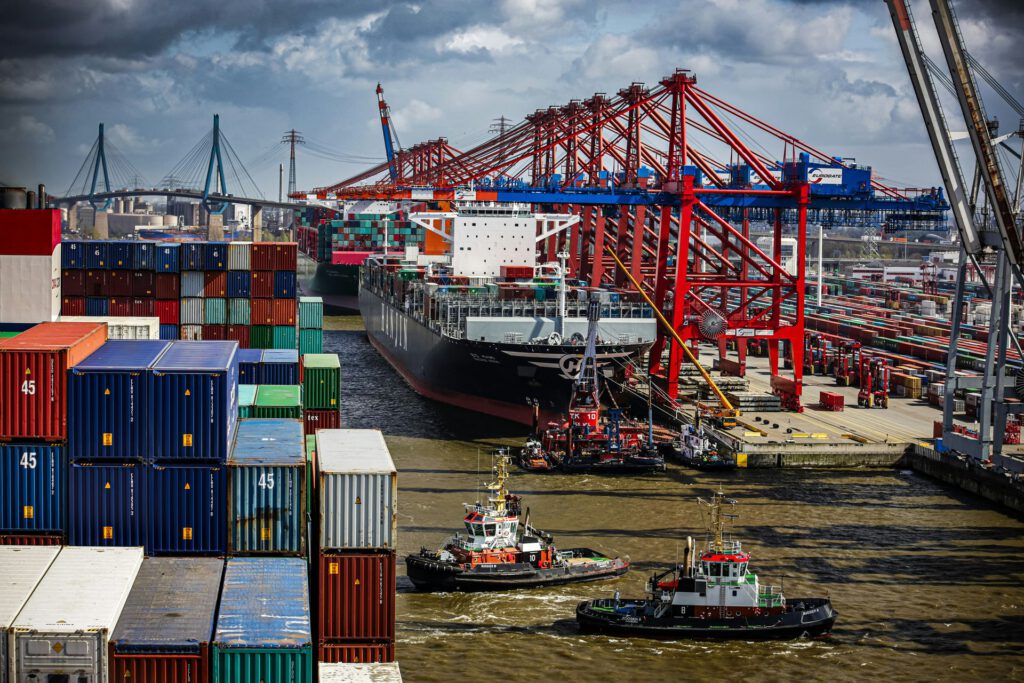
Economic instability could trigger ingredient shortages similar to pandemic-era supply issues, forcing menu adaptations and price increases.
Remember the Great Toilet Paper Shortage of 2020? A similar vibe could hit your favorite bistro, but with, like, saffron. Supply chain hiccups might start remixing menus. Picture Chef struggling to source that perfect Parmigiano-Reggiano because some cargo ship is stuck doing the limbo in the Suez Canal.
Those 3-euro truffle shavings? Could jump to 9 euros, making your cacio e pepe night a splurge. While economists debate if AI will steal all our jobs, chefs are just hoping their basil arrives on time.