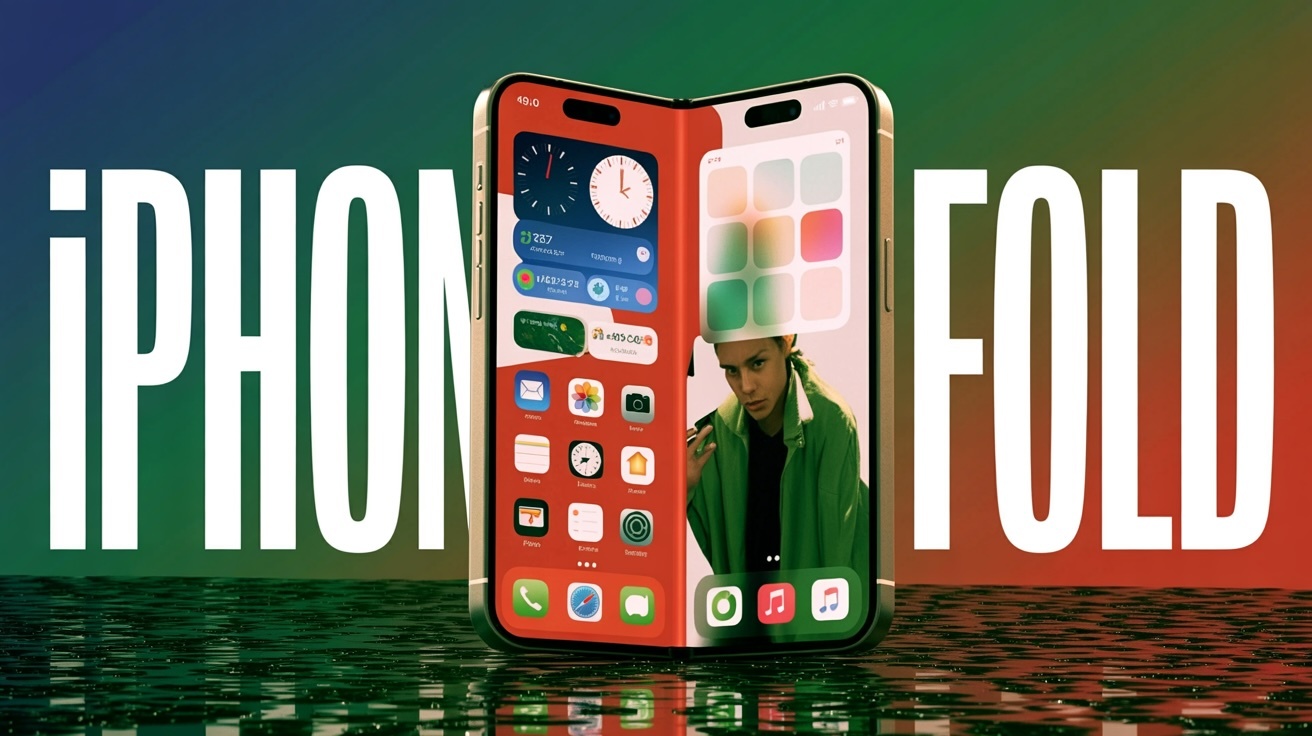
Apple’s rumored foldable iPhone supposedly measures just 9 millimeters when closed—thinner than your current iPhone 15. That’s the headline from Jon Prosser’s latest leak, complete with 3D renders that paint Apple’s first foldable as an engineering marvel. There’s just one problem: Prosser is currently being sued by Apple for previous leaks, making this feel like a middle finger wrapped in metal and glass.
The Specs That Seem Too Good to Be True
According to Prosser’s Christmas Eve reveal, the foldable iPhone packs a 5.5-inch external display and 7.8-inch internal screen into that impossibly svelte 9mm profile. When unfolded, each half measures roughly 4.5 millimeters—dimensions that would make Samsung’s chunky 12.3mm Galaxy Z Fold 6 look like a brick by comparison.
The renders show a book-style design with dual rear cameras, suggesting Apple prioritized elegance over the camera bump arms race that defines current Pro models. Prosser’s track record before his legal troubles showed mixed accuracy, but these specifications would represent a genuine engineering breakthrough if delivered.
Engineering Claims Meet Legal Reality
Prosser claims Apple solved foldables’ biggest visual compromise through metal plate pressure distribution and liquid metal hinge integration. The supposed result? A nearly invisible crease that would embarrass every competitor’s display fold line.
But recent supply chain reports suggest complete crease elimination remains elusive, and conflicting leaks disagree on basic specs like external display size. When your source is simultaneously fighting Apple’s legal team over previous disclosures involving iOS 26 and Liquid Glass technology, every claim deserves extra scrutiny.
Premium Pricing Meets Market Reality
If these specifications prove accurate, you’re looking at a fall 2026 launch alongside the iPhone 18 generation—and a price tag exceeding two grand. That premium asks tough questions about trade-offs. Extreme thinness typically means compromised battery life, reduced structural integrity, or both.
Meanwhile, Samsung and Google already offer proven foldables with established app ecosystems at lower prices. Apple’s betting that crease reduction and brand prestige justify a $200-300 premium over established competitors.
Your foldable future might hinge on whether Apple’s engineering wizardry proves real or remains another leak that promises more than physics allows. Watch for supply chain confirmations and patent filings that could separate genuine innovation from wishful speculation.