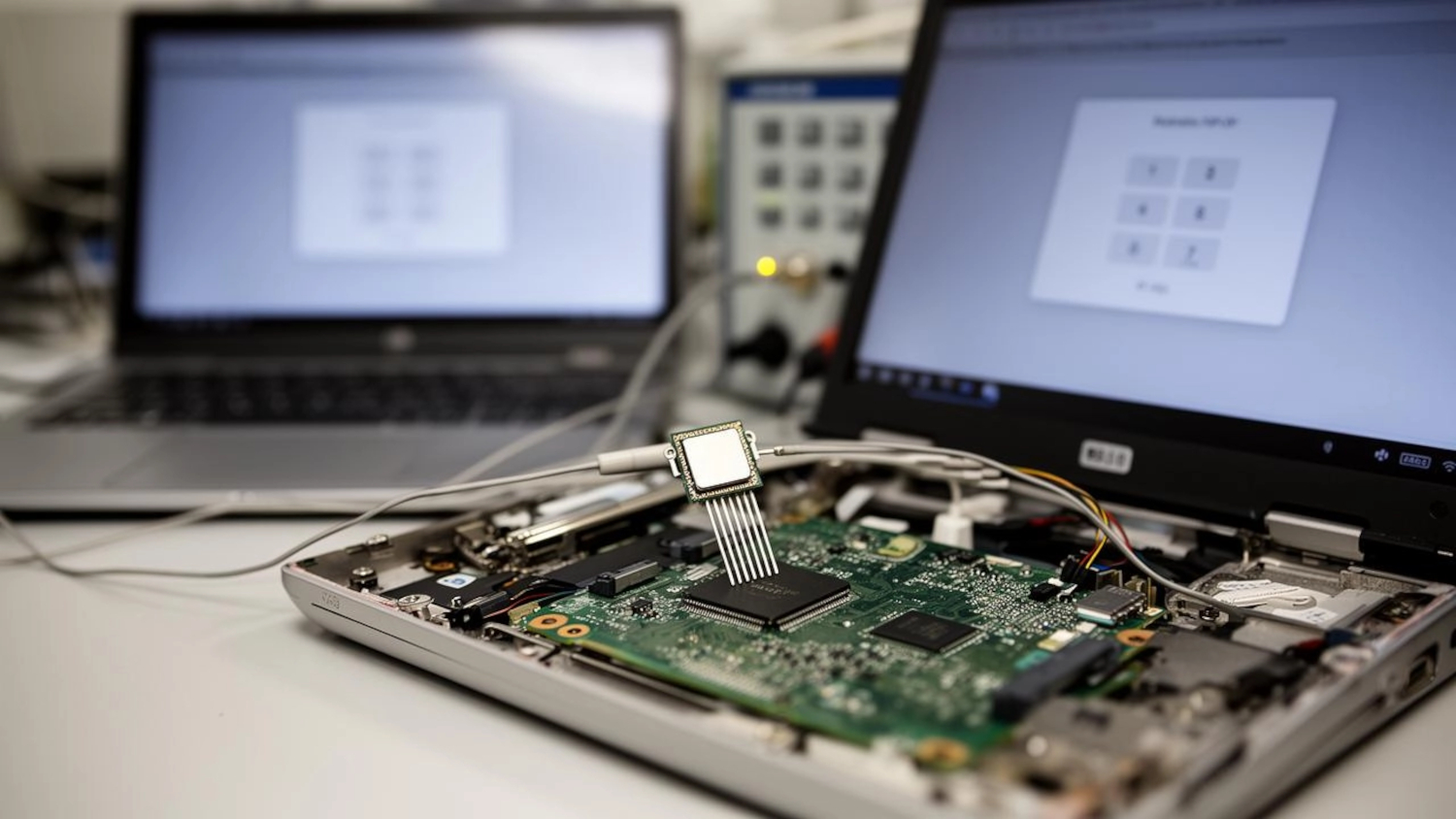
A six-digit BitLocker PIN is supposed to take roughly 19 years to brute-force under normal lockout conditions. Researchers at Technische Universität Berlin found that figure drops to about 20 days when the hardware mechanism enforcing lockout delays can be bypassed entirely due to an AMD firmware flaw. AMD has since acknowledged the issue and planned firmware remediation.
The attack requires physical access to the machine, which is a significant constraint. Physical theft is nonetheless the core threat that BitLocker is designed to address.
How the Lockout Gets Erased
The attack does not break BitLocker’s encryption; it nullifies the counter system that prevents an attacker from guessing PINs without limit.
Replay-protected monotonic counters (RPMCs) protect the persistent security state that records failed PIN attempts, enabling the system to impose delays and lockouts after a set number of wrong guesses. The attack forges or rolls back those counters so the lockout never engages.
With the counter neutralized, an attacker can guess PINs continuously. The TU Berlin researchers demonstrated a BitLocker attack at approximately 34.1 PIN attempts per minute using the Winbond rollback path on an Intel laptop, producing the 20-day worst-case exhaustive-search estimate, according to their paper published on arxiv.org.
Two Separate Flaws, Broad Potential Exposure
The research identifies distinct vulnerabilities in Winbond SPI flash silicon and AMD firmware, each allowing counter values to be manipulated through different methods.
The Winbond vulnerability targets SPI flash chips with RPMC functionality. Voltage glitching causes the chip to leak its RPMC authentication HMAC key. That key then lets an attacker forge counter values and restore the system to a pre-lockout state.
Winbond holds more than 25% of the NOR-flash market, according to the research, and the affected component appears in both Intel and AMD systems. The number of exposed PCs cannot be determined from the available information. Because the defect is in the silicon itself, a software or BIOS update cannot necessarily repair it, and chip replacement may be required.
The AMD firmware flaw is a separate issue. AMD’s nonvolatile-storage controller does not verify whether an RPMC increment actually succeeded, so an attacker can interfere with that increment while the system continues operating as though the counter advanced normally.
Tested AMD hardware spans Zen 2 through at least an AI 5 330 laptop, though that range does not establish that every processor or device in it is affected. The full list of vulnerable models has not been established. The researchers note the flaw can affect systems running Microsoft Pluton fTPM.
Windows Hello Carries the Same Risk
The same counter-bypass techniques reduce a four-digit Windows Hello PIN from a 69-day brute-force problem to roughly 40 hours.
The consequences reach beyond local file access. A compromised Hello PIN can expose device-bound keys and enterprise single sign-on credentials, raising the stakes for organizational security , a concern that mirrors risks seen in any surveillance app that quietly harvests credentials.
Vendors Notified, Root Cause Largely Unfixed
The researchers disclosed their findings to affected vendors, but remediation commitments remain limited.
The researchers disclosed the findings to AMD and Microsoft and documented follow-up communications. At the time the paper was written, no major firmware or hardware vendor had committed to fixing the root-cause vulnerabilities. AMD has since acknowledged the issue and assigned it CVE-2026-43613, with planned firmware mitigations reported for affected product lines.
Secondary reporting indicates Microsoft changed its setup flow to recommend six-digit Windows Hello PINs over four-digit ones, though an official Microsoft primary source has not been confirmed. That change expands the search space an attacker must cover, but it does not close the counter-bypass vulnerability.
What to Do Now
Users and IT teams should treat any physical loss of an affected device as an immediate security event, not a recoverable inconvenience.
Install any BIOS or firmware update your device manufacturer releases for this issue. Use the longest PIN your platform supports, and treat physical loss or theft of an affected machine as a serious compromise event requiring immediate action. Awareness of physical access risks is an important part of any hardware security posture.
Enterprise teams should prioritize devices carrying device-bound keys or SSO credentials. Those machines warrant layered controls including remote-wipe capability, rapid credential revocation after any loss or theft, and strict device inventory management.