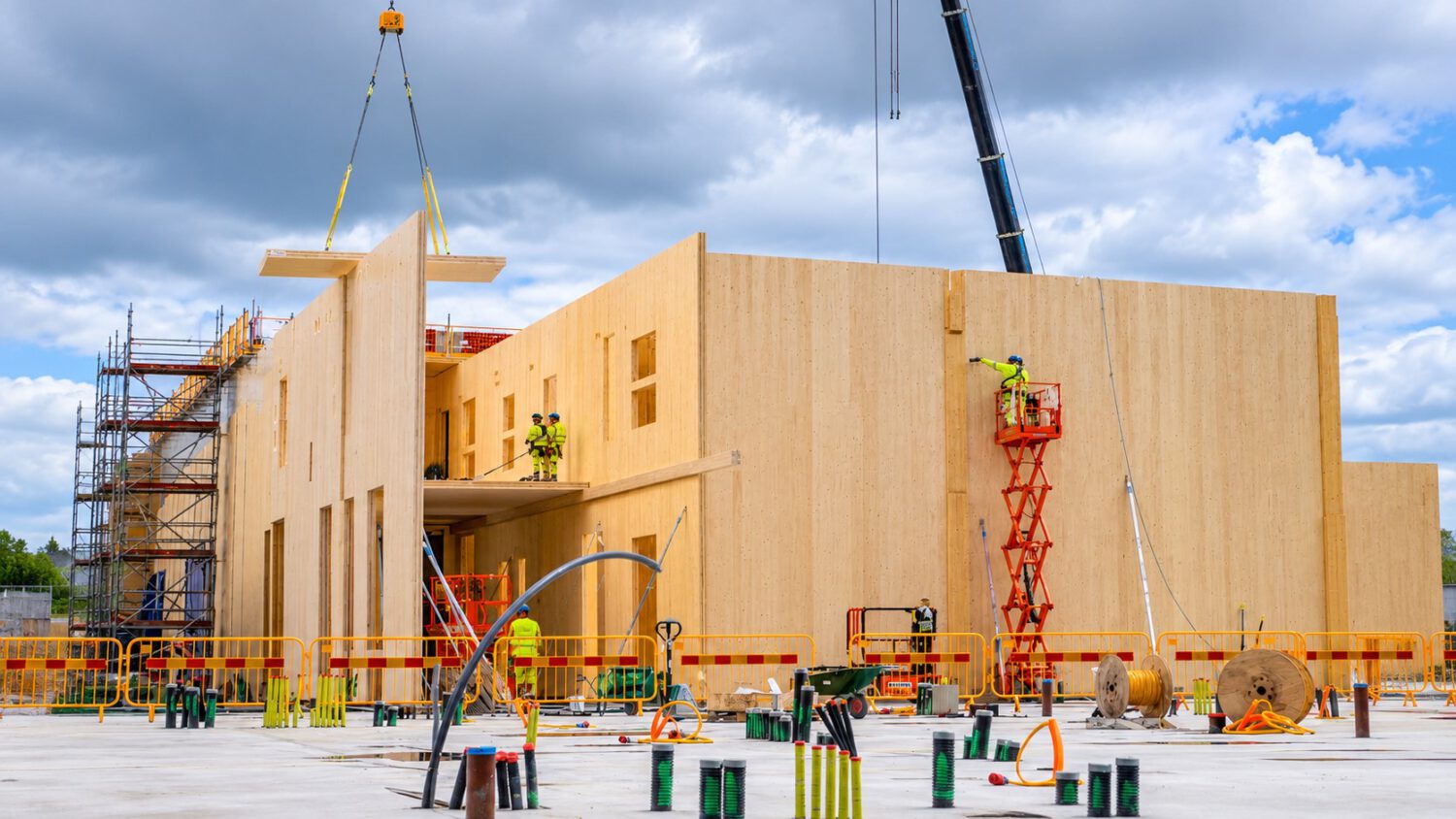
Cross-laminated timber frames EcoDataCenter 1 in Falun, Sweden, making it what EcoDataCenter describes as the world’s first data center built substantially from wood. The company says its facilities can be constructed with up to 95% wood, a structural choice with direct implications for how much carbon is stored in the building versus released during construction.
Renewable Electricity, With an Asterisk
The electricity mix is fully renewable on paper, though the procurement methodology behind that claim remains unverified.
According to EcoDataCenter’s 2024 sustainability report, the Falun site runs on 100% renewable electricity, sourced from a mix of 75% hydropower and 25% wind. Those figures are company-reported and have not been independently verified against physical supply contracts or procurement methodology.
The 60% Construction Claim Needs Context
A reported carbon-footprint reduction looks significant, but its boundaries have not been independently validated.
EcoDataCenter reports a 60% lower construction carbon footprint compared with conventional steel-and-concrete builds, attributing the reduction to timber and other low-carbon materials. That figure comes from the company’s own sustainability reporting and should not be read as an independently validated industry benchmark.
Efficiency Numbers That Are Moving in the Right Direction
EcoDataCenter’s reported energy-efficiency scores have improved year over year, though measurement boundaries differ across reporting periods.
Power Usage Effectiveness, or PUE, measures total facility energy against energy consumed by IT equipment alone. A score of 1.0 would mean zero overhead. EcoDataCenter reported a Falun PUE of 1.28 in 2024 when backup-fuel test runs were included, and 1.25 when they were excluded. Its 2025 sustainability report puts the Falun figure at 1.20.
Waste Heat Goes Somewhere Useful
Surplus heat from the site feeds an adjacent industrial process, though the share of total waste heat actually reused remains modest.
Surplus heat from the Falun site feeds pellet production at a connected combined heat-and-power facility, turning a data center byproduct into an industrial input. EcoDataCenter’s 2024 report states that reused heat represented 6% of total energy use across all its reported sites for that period; the company’s 2025 report lists the Falun-specific figure for 2024 at 1%, so readers should treat the two numbers as measuring different scopes.
Backup Generators Increasingly Use an Alternative Fuel
HVO has replaced a majority of diesel in Falun’s backup systems, though diesel remains part of the reported fuel mix.
Falun’s backup generators have shifted substantially toward hydrotreated vegetable oil, or HVO, a fuel derived from waste vegetable oil and animal fats. EcoDataCenter’s 2024 report states that HVO accounted for 65% of Falun’s backup-generator fuel that year, with diesel still present in the mix. HVO carries its own sustainability questions, including land-use pressures and indirect emissions, that the company’s current reporting does not fully resolve.
Local Roots, Not an Externally Imposed Footprint
EcoDataCenter reports community investment and local sourcing, though specific employment and spending figures have not been independently verified.
EcoDataCenter says the Falun project was developed with local involvement rather than arriving as an externally negotiated hyperscale deal, though that characterization has not been confirmed by an official municipal record or attributable primary-source interview. The company reports local sourcing, training programs, and community investment alongside the facility’s development; specific employment and spending figures remain unverified.
Renewable Electricity Doesn’t Cover Everything
Operational emissions fall when the grid is clean, but the full climate picture extends well beyond electricity.
Operational electricity emissions drop sharply when the grid is clean. Chip manufacturing, hardware supply chains, land use, water systems, and the accelerating energy demands of AI workloads all sit outside that accounting, and a complete climate picture requires life-cycle analysis that goes well beyond what EcoDataCenter’s self-reported figures currently establish.
A Model Worth Watching, With Geography Attached
Falun’s combination of interventions is notable, but its replicability depends on conditions Sweden’s location and infrastructure happen to provide.
Falun’s approach brings together timber construction, renewable electricity, heat recovery, and locally oriented planning in ways that most facilities have addressed separately, if at all. Whether any of that transfers to regions without Sweden’s renewable grid, cold climate, available water, and district-heating infrastructure is the question the broader industry has yet to answer.