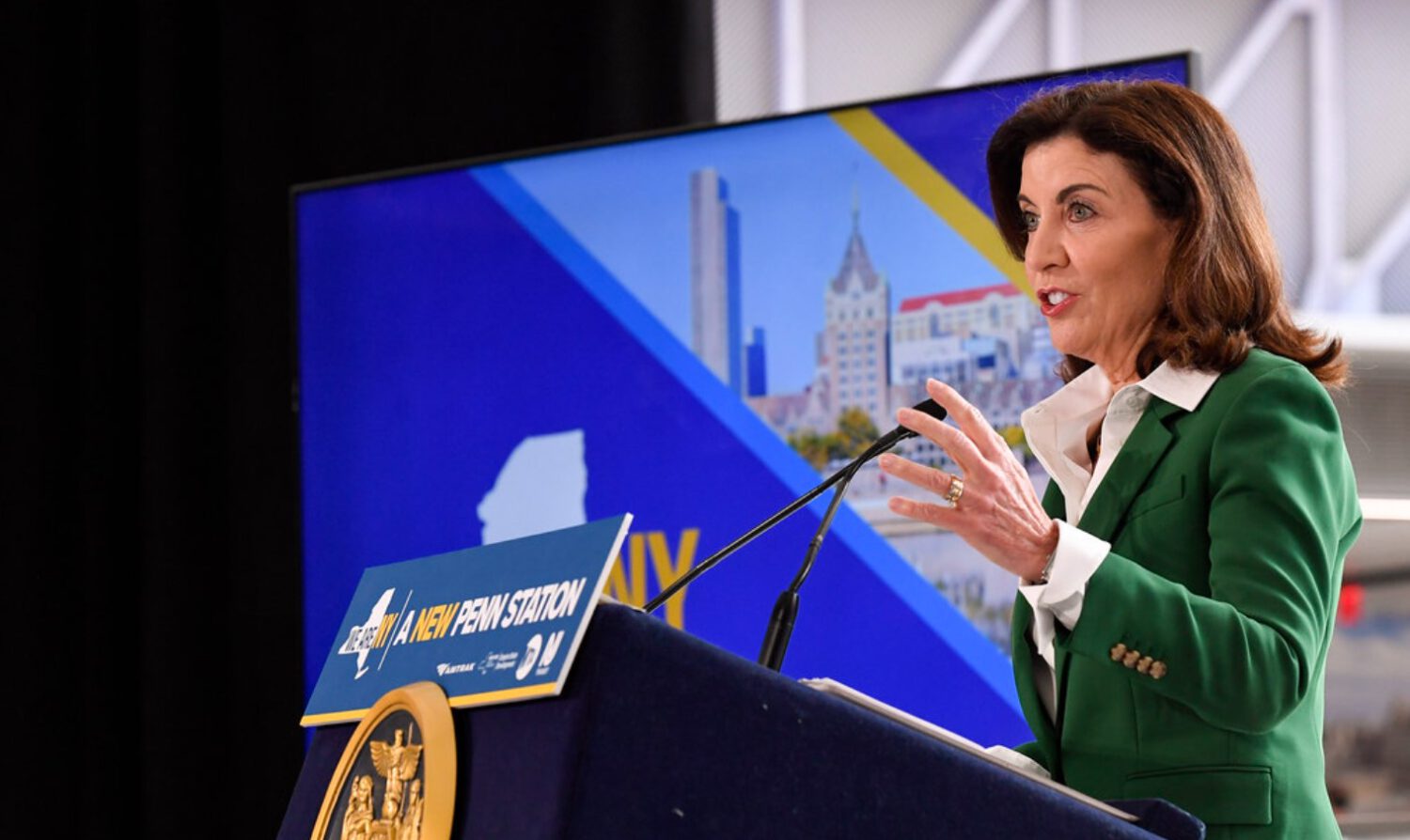
Talking stuffed animals, dolls, and robots that maintain ongoing AI-driven conversations with children will be banned from sale in New York starting February 22, 2027. Governor Kathy Hochul signed the five-year moratorium on November 24, 2026, roughly 90 days before it takes effect.
What the Law Covers
The statute targets AI companions embedded in children’s products, distinguishing them from conventional electronic toys.
The law focuses on a specific category of product: AI companions built into children’s toys. According to the governor’s office, covered toys use internet-connected chatbot systems designed to hold ongoing, emotionally oriented conversations with children, as opposed to toys that simply play sounds or recite scripted responses.
The ban applies to manufacturers, distributors, sellers, and the operators who run the backend systems powering these chatbots. Families who already own these toys are not required to discard them. The moratorium expires after five years, allowing lawmakers time to study the technology before considering permanent rules.
What PIRG Found in the Toy Aisle
Independent testing cited by the governor’s office identified serious safety and privacy failures across several AI toys marketed to children.
The governor’s office pointed to testing by the U.S. PIRG Education Fund, which examined seven AI toys marketed to children. The GoLabs AI panda produced sexually explicit information, provided instructions for lighting a match, and offered a list of places in a home to find knives, according to PIRG. The Alilo Smart AI Bunny failed safety testing for the second consecutive year, eventually delivering sexually explicit content and suggesting locations for dangerous household objects.
Privacy failures emerged in separate tests. The Ropet Kamomo pet reportedly took photographs even when its photography setting was disabled; the Ropet and Curio’s Grok rocket listened to ambient speech while powered on, according to PIRG.
PIRG’s results were not uniformly negative. FoloToy improved the safety guardrails on its Kumma teddy bear, and Curio’s overall safeguards were rated strong. The Miko 3 robot reduced emotional dependency cues compared to earlier testing and allowed its chatbot to be disabled entirely.
Enforcement Authority and Open Questions
Attorney General Letitia James holds enforcement authority, but the law leaves several practical questions unresolved.
Attorney General Letitia James is responsible for enforcement and may seek civil penalties of up to $15,000 per day for each violation. The statute does not require proof that a child was harmed before enforcement can proceed.
The law names no approved product list, so regulators will need to determine whether specific toys meet the statutory definition of an AI companion. The statute also does not establish a clear mechanism for monitoring online marketplace listings or preventing covered toys from being shipped into New York by out-of-state sellers.
Broader Context
New York joins at least one other state in restricting AI chatbot toys, while child-safety advocates press major retailers to act.
The toy ban extends a framework Hochul established in October, when she signed separate legislation restricting chatbot features that encourage emotional dependency in minors. More than 150 child-safety organizations have urged Amazon and eBay to stop selling AI chatbot toys. Neither marketplace has publicly confirmed a response to that request.