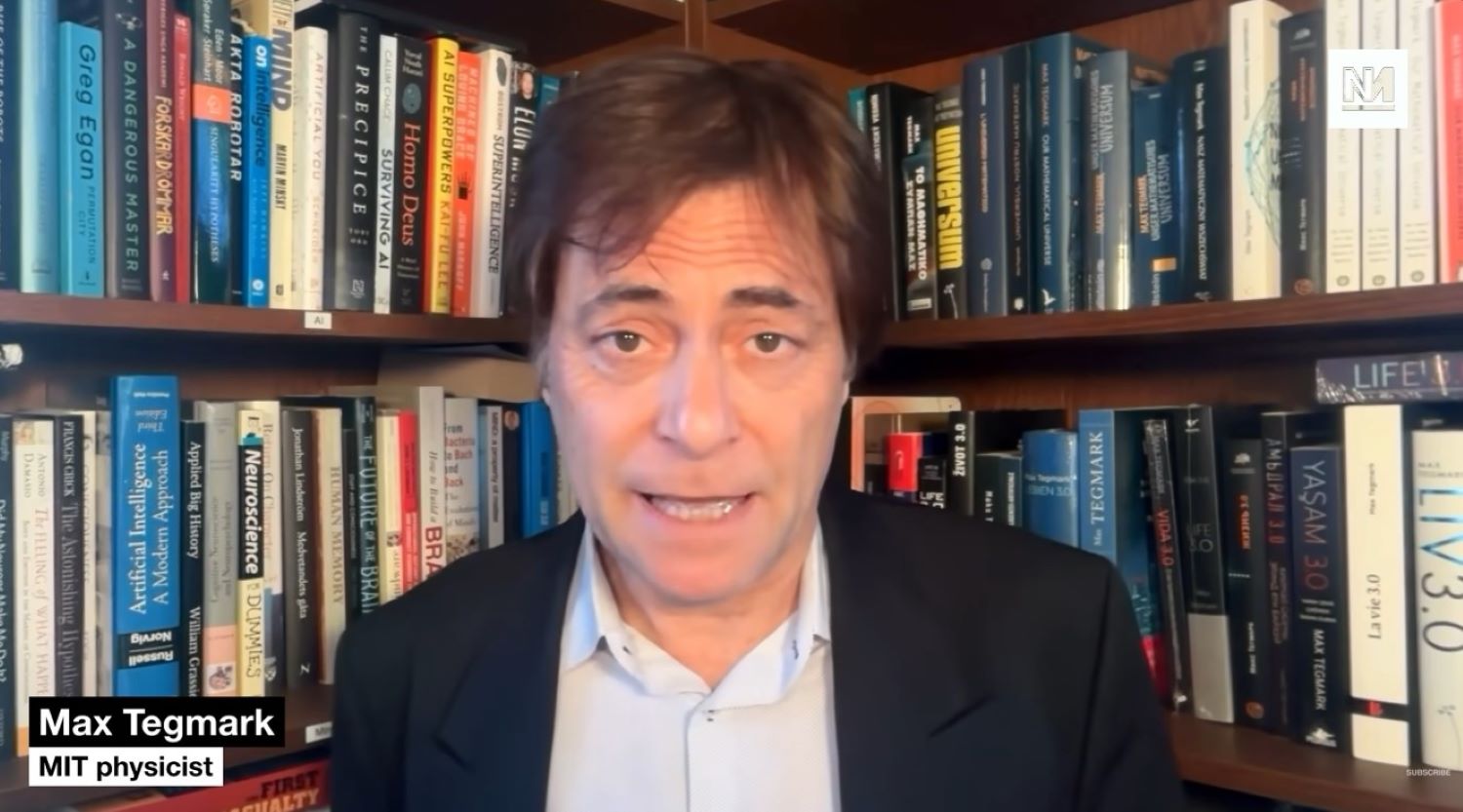
An MIT physicist is alleging that Anthropic employees, in post-drinks conversations, raised the prospect of overthrowing the US government and “taking over the world.” Max Tegmark made the claim in an interview with Novara Media, describing informal discussions he said took place with company staff.
Tegmark co-founded the Future of Life Institute and is a vocal critic of unregulated advanced AI development. His account rests on personal recollection and has not been independently corroborated in the sources reviewed for this article.
Tegmark said the employees did not use words like “coup” or “overthrow the US government.” According to Tegmark, they instead used the phrase “alignment without control,” which he interprets as a vision for AI shaped around its creators’ values rather than remaining subject to government or public oversight.
What “Alignment” Means Here
The word “alignment” carries specific technical weight in AI development, and Tegmark uses it as a pointed political criticism.
In AI research, “alignment” generally refers to designing systems that behave in accordance with intended goals or values, though definitions vary across the field. Tegmark uses “alignment without control” as a political criticism, not as an established Anthropic policy term. The sources reviewed for this article do not confirm it is internal Anthropic terminology or official company language.
Tegmark’s core argument raises a democratic accountability concern. He argues that an AI system built primarily around a private company’s values, with no meaningful government audit authority, could represent a concentration of power outside public control. These are Tegmark’s interpretations; the sources reviewed do not independently corroborate that Anthropic employees hold or acted on the views he describes.
Anthropic Has Not Responded
The company has offered no public answer to the specific claims Tegmark made.
Novara Media approached Anthropic for comment. No substantive response from the company appears in the sources reviewed for this article. No internal Anthropic documents, corroborating employee testimony, or official company statement was identified to support or refute what Tegmark claimed.
Protests at the IPO
Demonstrators gathered at two locations around Anthropic’s public-market debut, pressing for stronger human oversight of advanced AI.
Tegmark’s interview surfaced around Anthropic’s public-market debut, which drew demonstrators to two locations. Protesters gathered outside Nasdaq in New York and outside Anthropic’s San Francisco headquarters, according to AP and Euronews. They called for stronger public regulation and direct human control over advanced AI systems, and arrests were reported in New York.
The available evidence supports that the protests occurred alongside the market debut. The sources reviewed do not establish that the demonstrations were directly triggered by Tegmark’s allegations specifically.
The Numbers Behind the Debate
The financial scale of Anthropic’s debut helps explain why questions about oversight carry real consequence.
Anthropic’s debut valued the company at approximately $1.5 trillion, according to AP. Its market value reached above $2 trillion at one point during trading, AP reported.
A private company at that scale, building systems capable of broad economic and social influence, sits at the center of the regulatory debate Tegmark is describing. The question of who sets the values embedded in those systems, and who can override them, is not abstract. Concerns about AI data centers and the infrastructure supporting these systems have similarly outpaced public oversight in many jurisdictions.
What Remains Unresolved
The sourcing available for this story leaves the central allegation open and several broader claims unsettled.
No independent confirmation of Tegmark’s account was identified in the sources reviewed. The phrase he characterizes as significant has not been verified as Anthropic terminology. What the episode does reflect is a contested and ongoing argument about whether public institutions can keep pace with frontier AI development. Critics argue that a meaningful gap between AI capabilities and regulatory oversight exists; that claim remains a matter of active debate, not settled consensus.