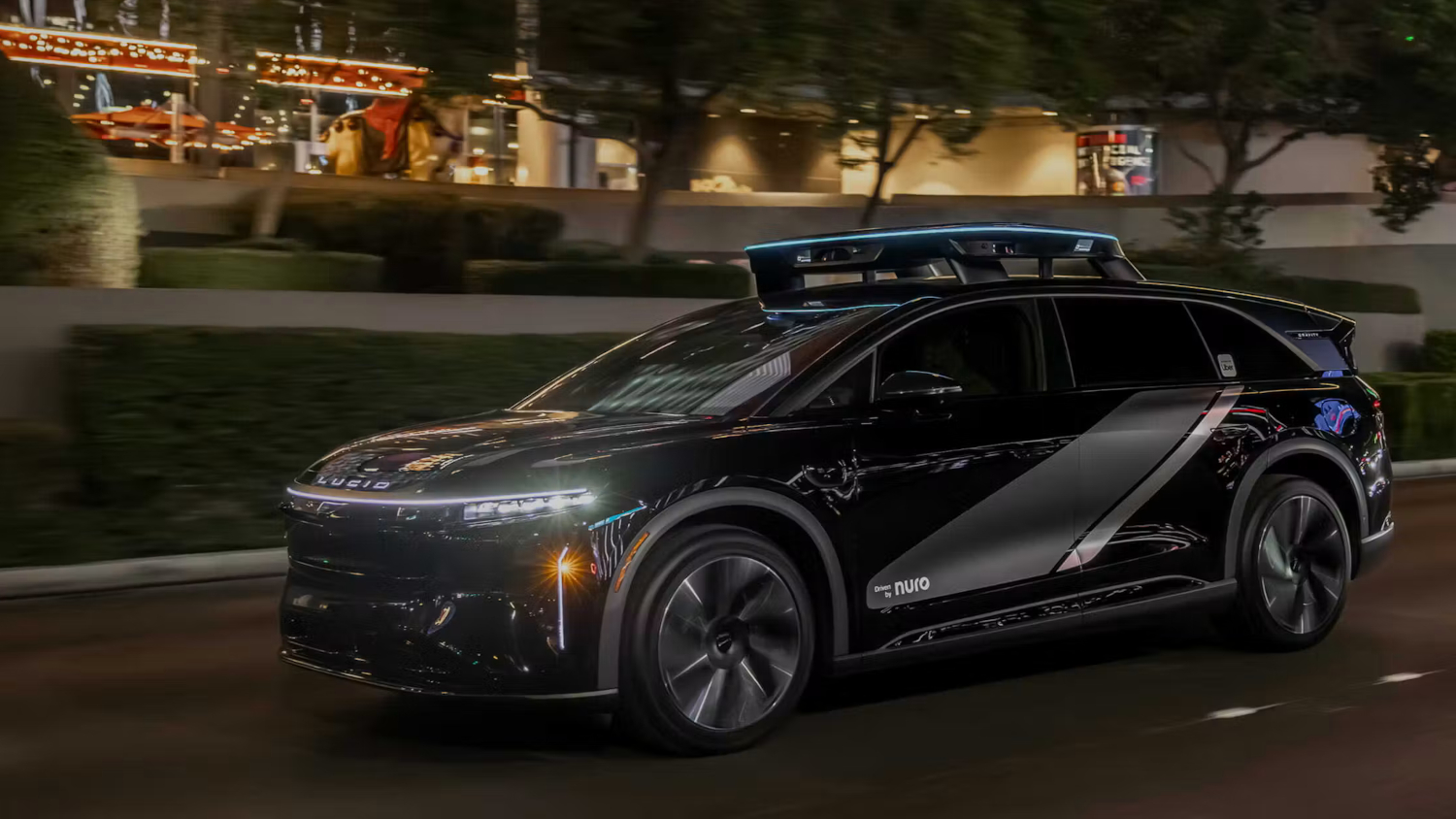
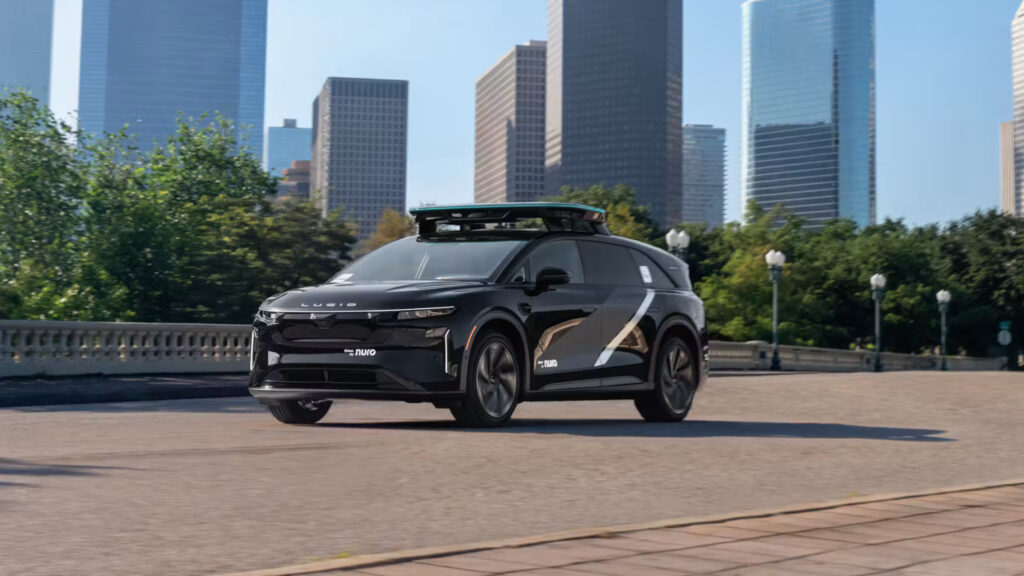
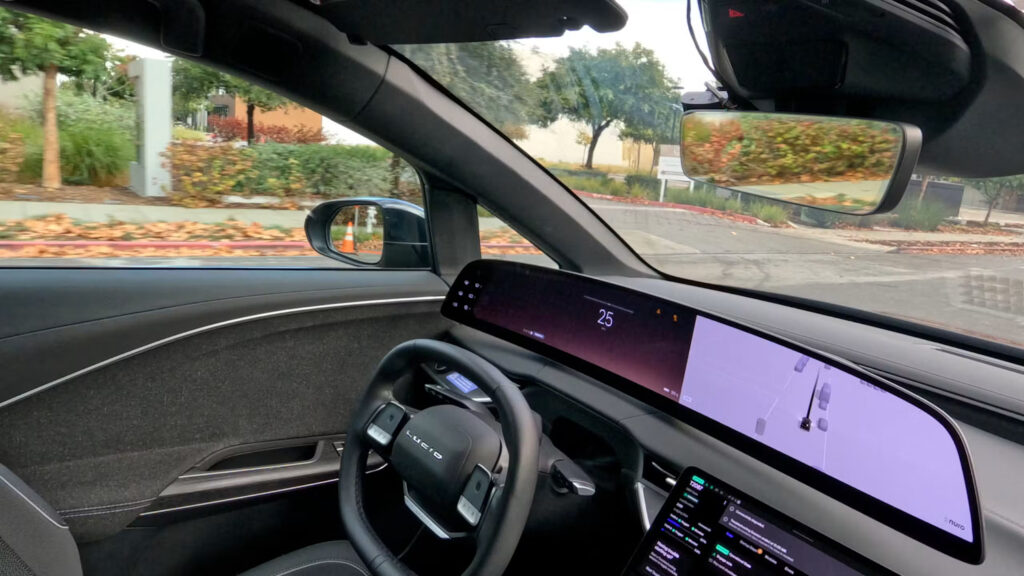
Fully driverless Lucid Gravity robotaxis are now operating on public roads in four Bay Area cities: Palo Alto, Mountain View, Los Altos, and Sunnyvale. The milestone follows a California DMV driverless testing permit granted to Nuro in May 2026, which legally cleared the way to remove the human safety operator from inside the vehicle.
Testing Is Not a Taxi Service
No member of the public can hail one of these vehicles today.
This is still a testing phase, with employee rides planned as the next validation step before any commercial launch. The driverless permit supports autonomous testing, not unrestricted paid passenger service.
How the Program Got Here
Nuro spent nearly a year running supervised tests before reaching this point.
Nuro had been running supervised testing, with a safety operator present, in the Bay Area and Houston since December 2025. Removing that operator represents the next level of validation, supplemented by closed-course testing and simulation running in parallel, according to BusinessWire.
The Launch Window Is a Target, Not a Guarantee
The commercial timetable has already shifted once, and 2027 should be read as a goal rather than a commitment.
Bay Area commercial service is aimed at the first quarter of 2027, with Houston expected to follow later that year. The original target was 2026, and the fact that it has since moved makes the new date a reasonable goal rather than a firm promise.
Three Companies, Three Jobs
The partnership assigns distinct responsibilities to each company based on existing strengths.
Lucid manufactures the Gravity SUV and handles vehicle production. Nuro supplies the autonomous-driving system, called the Nuro Driver. It uses a redundant sensor suite combining cameras, lidar, and radar. Uber gives riders access through its app and has focused specifically on the in-cabin experience, according to TechCrunch. The exact structure of Uber’s fleet ownership or operational role has not been confirmed in the available sources.
The Money Behind the Bet
Uber’s financial commitments reach roughly $1 billion across its two partners.
Uber committed roughly $500 million to Lucid and nearly $500 million to Nuro, per TechCrunch reporting. The vehicle purchase agreement covers at least 35,000 Lucid vehicles equipped with the Nuro Driver, giving Lucid a committed fleet customer at a scale that consumer EV sales alone rarely guarantee.
What Each Company Actually Needs From This
Each partner enters the arrangement with a distinct strategic need.
Lucid gains manufacturing predictability from Uber’s purchase commitment. Nuro gains a high-profile commercial test of its strategy of licensing autonomous-driving technology to automakers and mobility platforms, rather than focusing on autonomous delivery vehicles. The arrangement gives Uber a path to premium autonomous rides without the cost of building an entire vehicle and driving stack internally, as The Verge reported.
The Questions Nobody Has Answered Yet
Pricing, liability, weather limits, and fleet size at launch all remain unresolved.
Whether riders will pay standard Uber rates or a premium tier has not been confirmed. Liability in a crash, remote-assistance structure, weather performance limits, and planned fleet size at launch are also open, according to Axios. Those details matter considerably for anyone assessing whether the service can function at commercial scale.
Driverless testing on public roads is a legitimate milestone, and the partnership’s financial scale is substantial. Getting from that milestone to a functioning commercial service, with paying customers and clear operational rules, is the harder task ahead. The 2027 date is the next marker; whether it holds is the more consequential question.