Archaeologist Israel Peña was not expecting a human when he first examined the bones at the Felipe Ángeles International Airport construction site in Santa Lucía, State of Mexico. Their size suggested something else entirely, possibly a camel, before the full excavation revealed the remains of a person.
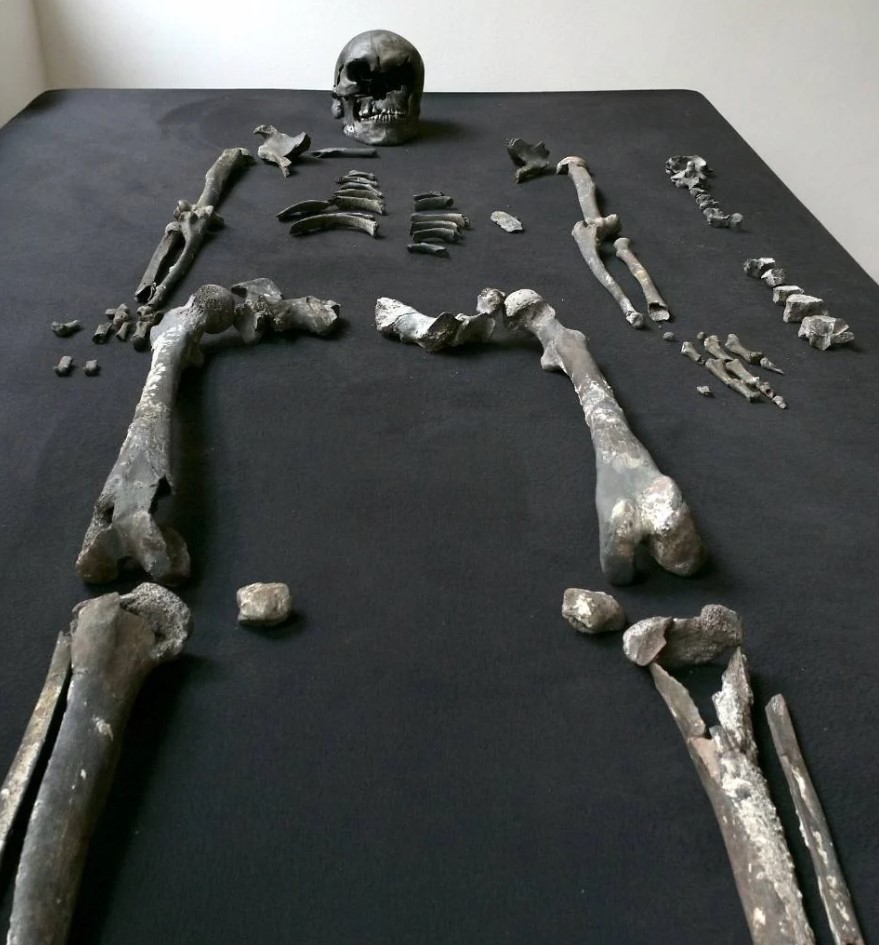
Mexico’s National Institute of Anthropology and History (INAH) named the individual Yotzin, from the Nahuatl word meaning “unique.” The skeleton is approximately 80% complete and includes part of the skull.
Who Yotzin Was
Osteological analysis produced a detailed physical profile of a young adult male who lived at the end of the last Ice Age.
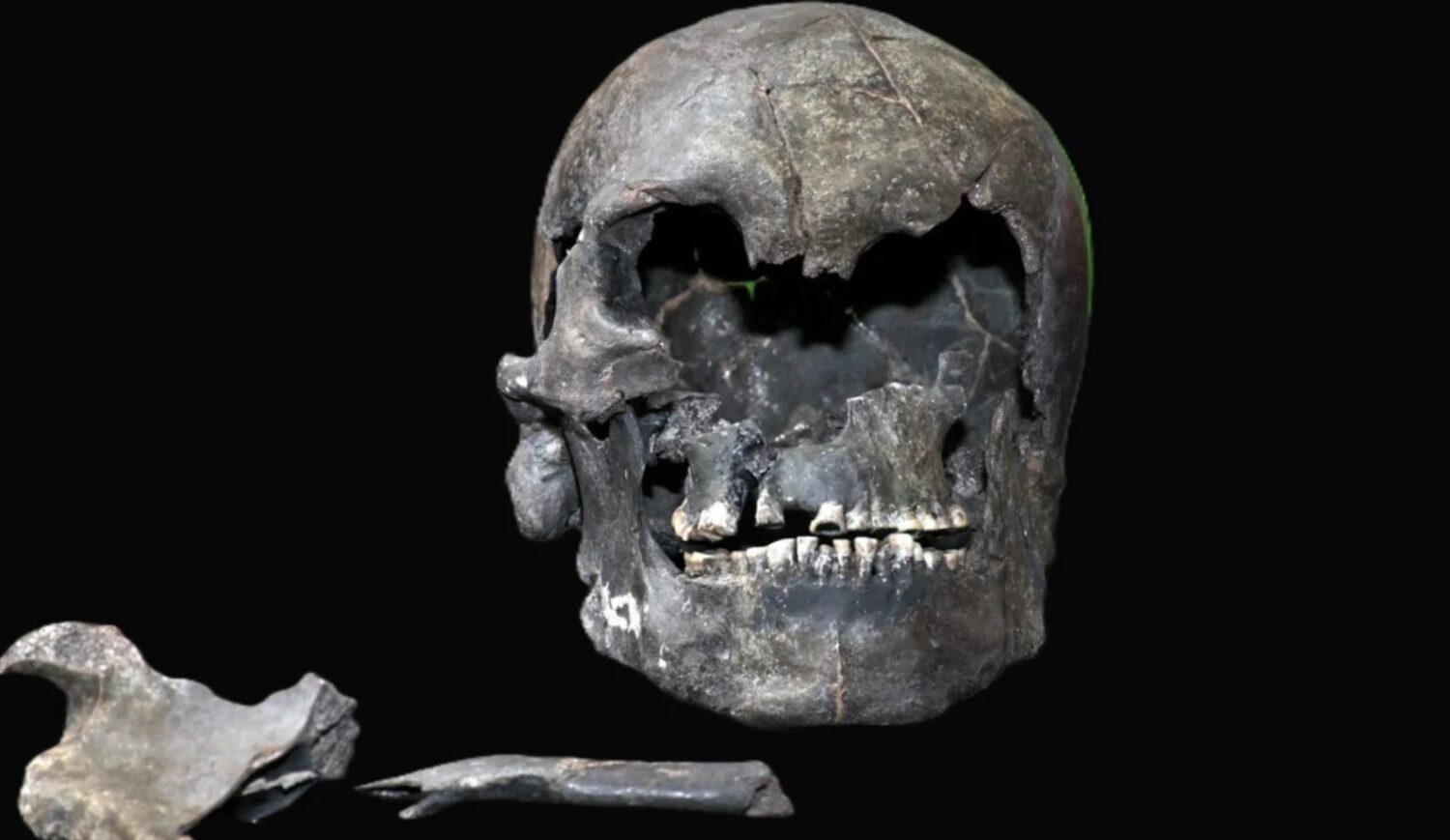
Osteological analysis identified Yotzin as an adult male, roughly 25 to 30 years old and about 1.75 meters tall. The ribcage did not survive, and the skull carries a fracture near the nose and left eye.
The bones darkened over time, likely associated with preservation in the wet, swampy sediment where he was buried. His teeth show heavy wear but no cavities, which INAH researchers suggest may reflect a pre-ceramic hunter-gatherer diet of roots, hard bark, and similar materials rather than sugars, though the dental evidence is interpretive rather than direct proof of what he ate.
What Two Labs Found
Two independent laboratories dated the remains using different methods, placing Yotzin at the boundary of the Pleistocene and Holocene epochs.
A Belgian laboratory, whose name INAH has not publicly released, analyzed endogenous collagen and returned a range of 13,087 to 12,987 years before present. The University of Georgia analyzed bioapatite and produced a range of 12,050 to 11,700 years before present.
Together, the results place Yotzin at the transition between the Pleistocene and the Holocene. That marks the tail end of the last glacial period, when ice sheets were retreating and central Mexico’s landscape looked nothing like it does today.
What the Date Does, and Does Not, Establish
The dating results are significant, but they carry an equally important limitation.
According to INAH, Yotzin ranks among the 23 oldest human skeletons known from the Basin of Mexico and is potentially associated with the earliest populations recorded in the Americas. The dates do not establish his migration route, precise origins, or biological relationship to later populations.
The INAH announcement does not provide the full technical details needed to independently assess the chronology, including laboratory protocols, calibration choices, or contamination controls. The results should therefore be treated as preliminary pending further review.
A Site With a Long Archaeological History
The area around Felipe Ángeles International Airport has been yielding prehistoric discoveries for decades.
The region around Felipe Ángeles International Airport has been producing prehistoric finds since at least the 1940s and 1960s. Construction-related rescue work uncovered multiple osteological collections, which INAH identifies alongside Yotzin as Tlatel 7, Xaltocan, and Sin Cuadrícula 5.
Researchers also noted that Yotzin’s physical traits differ from other remains recovered at the site. That observation may suggest the area saw occupation by distinct populations at different points in time.
Why 2027 Could Matter More Than 2021
The genomic results expected in early 2027 may ultimately reveal more about Yotzin’s ancestry than the dating alone.
According to reporting on INAH’s work, physical anthropologist Arturo Talavera González suggested that determining Yotzin’s lineage may ultimately be more informative than the ancient date alone. Genomic results are expected as early as the first quarter of 2027, which could allow researchers to compare Yotzin with other ancient individuals and living populations. That comparison could contribute to unresolved debates about how and when humans first moved through the Americas.