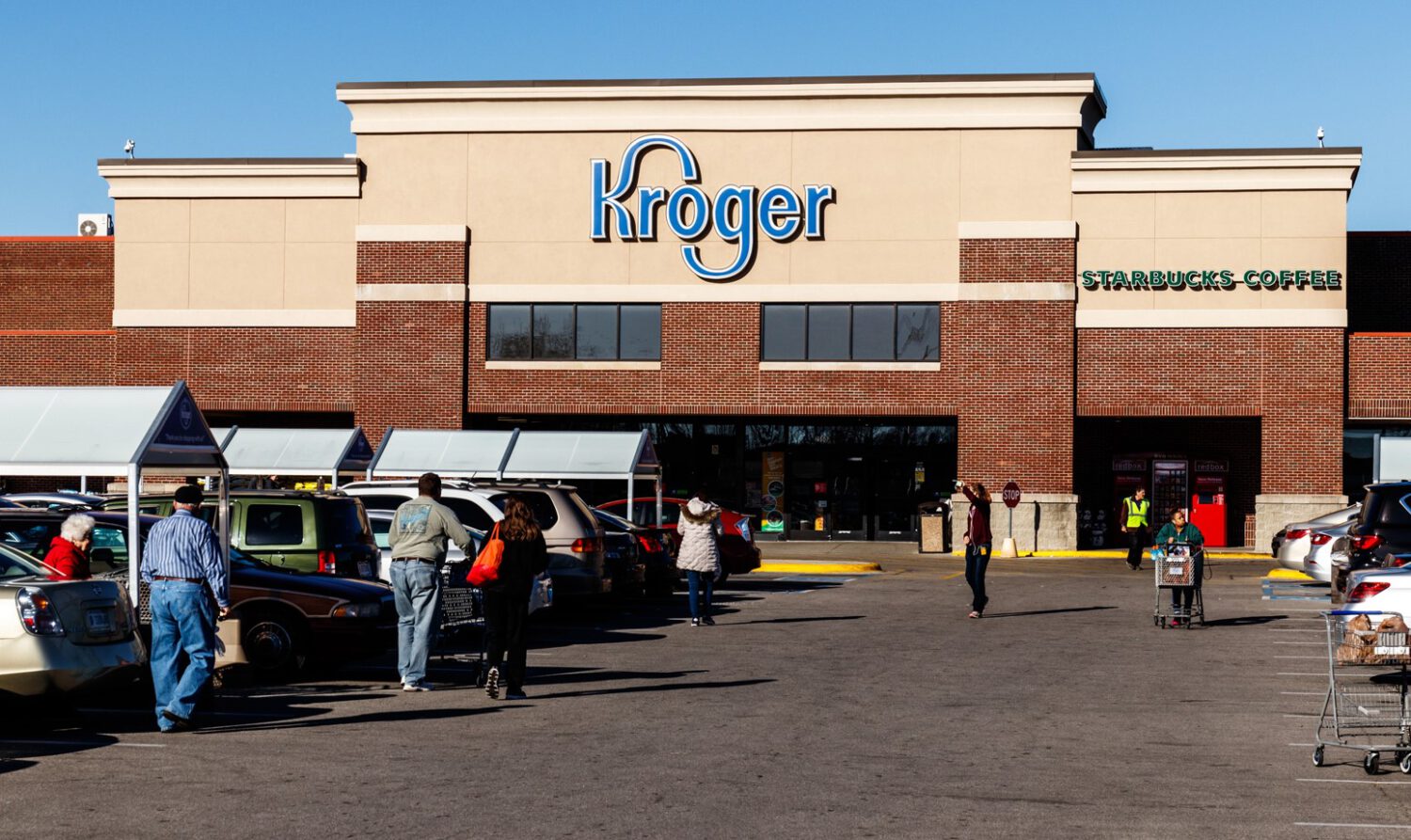
Kroger’s proposed $1.65 billion acquisition of Giant Eagle, expected to close in 2027 pending regulatory approval, is drawing scrutiny that extends well beyond store counts and shelf prices.
The American Economic Liberties Project estimates Kroger already controls roughly 43% of the Columbus grocery market. AELP says the combined company could approach 50%, and the group identifies three locations where Kroger and Giant Eagle stores currently sit directly across from one another.
AELP argues that eliminating head-to-head competition at those locations could give surviving stores greater pricing power. That is an antitrust argument from an advocacy organization, not a conclusion regulators have reached.
The Data Subsidiary Most Shoppers Have Never Heard Of
Kroger’s customer-data arm, 84.51°, has drawn attention from both Senate investigators and consumer advocates.
Kroger’s wholly owned customer-data-science subsidiary, 84.51°, was formed after Kroger acquired the U.S. assets of dunnhumby’s American business in 2015. Senate Judiciary Committee hearing documents identify 84.51° as Kroger’s retail-analytics arm; AELP estimates its operations generated approximately $527 million in 2024, though that figure has not been independently reconciled against Kroger’s filings and may represent revenue, operating profit, or net income.
According to the AELP report, Kroger’s loyalty program encompasses roughly 63 million customers whose purchase data can be archived and analyzed when a loyalty card is used. AELP also says Kroger may share or sell personal data for marketing and advertising purposes under its privacy policy, a characterization that should be verified against Kroger’s current published disclosures. Kroger has been secretly tracking users in ways that parallel broader consumer-surveillance concerns raised by advocacy groups. Kroger’s response to these claims has not been obtained and should be sought before treating them as settled fact.
What a Merger Could Mean for Giant Eagle’s Customer Data
Combining two loyalty ecosystems would expand the volume and geographic reach of data available to the merged company, though the scope of any transfer remains unconfirmed.
Absorbing Giant Eagle’s loyalty program would expand both the volume and the geographic reach of information available to the combined company. The scope of any such data transfer would depend on transaction terms, regulatory conditions, and applicable privacy law; the acquisition announcement does not confirm that Giant Eagle customer data would be combined with Kroger’s or used by 84.51°.
Electronic Shelf Labels and the Pricing Question
AELP argues that Kroger’s planned shelf-label rollout could support individualized pricing, but the company denies that characterization.
Electronic shelf labels are central to AELP’s pricing concern. The group points to Kroger’s reported plan to install them chainwide by the end of 2027, arguing the infrastructure could eventually support individualized pricing tied to personal data. Kroger has denied using electronic shelf labels for customer surveillance or dynamic pricing, and that denial warrants prominent placement alongside the advocacy group’s concern.
The AELP report does not establish that Kroger currently charges different shoppers different prices for the same product. The relevant distinction is between ordinary loyalty discounts and coupons on one side, and individualized price-setting derived from personal purchase history on the other. The report documents concern about the latter, not proof of it.
Unverified Surveillance Claims and What Congress Is Watching
In-store tracking allegations from AELP remain unconfirmed, while a Senate hearing has placed Kroger’s data operations under congressional scrutiny.
In-store tracking allegations in the AELP report remain unconfirmed. AELP alleges Kroger’s data collection may extend to CCTV footage, parking-lot monitoring, and automated license-plate readers; these claims require verification against Kroger’s current privacy policy and store-specific practices. Separately, facial-recognition functionality in Cooler Screens digital refrigerator displays has not been independently confirmed.
A Senate Judiciary Committee hearing titled “Your Data, Their Profit: The Consumer Cost of AI Surveillance Pricing” placed 84.51° within a broader congressional examination of how retailers use consumer data and analytics. The merger still requires regulatory approval, and the competition and data-governance questions it raises are ones that policymakers may examine as part of that process.