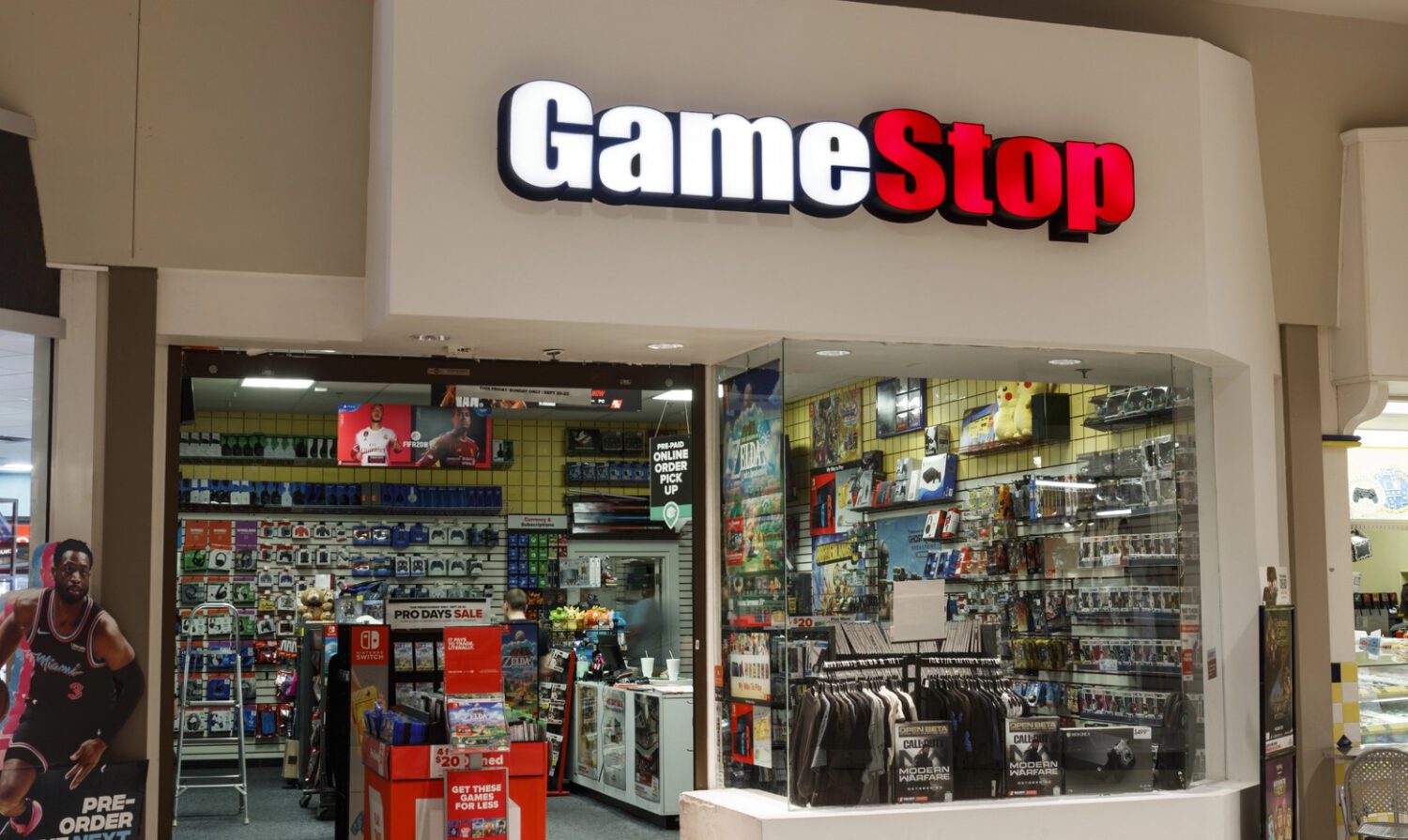
Right before one of gaming’s largest launches in recent memory, GameStop CEO Ryan Cohen told Bloomberg something that sounded almost quaint. “When you buy a game, you should be able to sell it, trade it or lend it to a friend.”
He did not name Grand Theft Auto 6. He did not need to.
Cohen’s commercial interest here is straightforward. Pre-owned and refurbished products accounted for roughly 22% of GameStop sales, according to Eurogamer; that figure should be verified against GameStop’s filings before publication. That interest does not make his argument wrong, but it belongs in the frame.
What That Box on the Shelf Actually Contains
At least some retail copies of GTA 6 ship as packaging containing a download code rather than a disc, a format commonly called “code in a box.”
The box looks like a product you can resell. It is not.
Once that code is redeemed, the game exists as a license tied to an account. You cannot take it to a used-game counter. You cannot hand it to a friend who wants to try it.
The Deeper Question: License or Purchase?
The debate moves well past GameStop’s balance sheet once you ask what a digital purchase actually entitles a consumer to keep.
A physical disc is a transferable object. A digital license is a permission, and that permission can become inaccessible if a platform drops support, suspends an account, or shuts down servers. Readers curious about extreme cases can explore video games that were banned outright and what that meant for owners.
U.S. Representative Ritchie Torres addressed that distinction directly on his official congressional website. “A game that can be taken away the moment a company pulls the plug is not a purchase,” Torres wrote. “It is a rental disguised as a sale.”
Torres announced the proposed Power To The Players Act, which would direct the FTC to establish rules protecting consumers’ ability to own and continue playing purchased games. The proposal would also require developers to provide an offline mode before shutting down online servers. This is announced legislation, not enacted law; its formal introduction and progress through Congress remain unverified.
What Publishers Are Actually Saying (and Not Saying)
Cohen’s argument about publisher motives is his own characterization, not a position publishers have collectively stated.
Cohen argues that digital-only releases “take away competition” by eliminating the used-game market. The structural reality is less contested. Digital distribution can remove manufacturing, shipping, and inventory costs, and it eliminates the secondhand market as a cheaper alternative to new sales , another example of paying too much without realizing it. Publishers have not uniformly stated those as their reasons for discless releases.
Worth noting: even physical discs are not purely physical anymore. Day-one patches, online activation requirements, and mandatory downloads mean that a disc can increasingly function as a license key with more durable packaging. GTA 6’s launch puts that question directly in front of lawmakers, retailers, and every consumer who thought they were buying a game.